The Big Picture
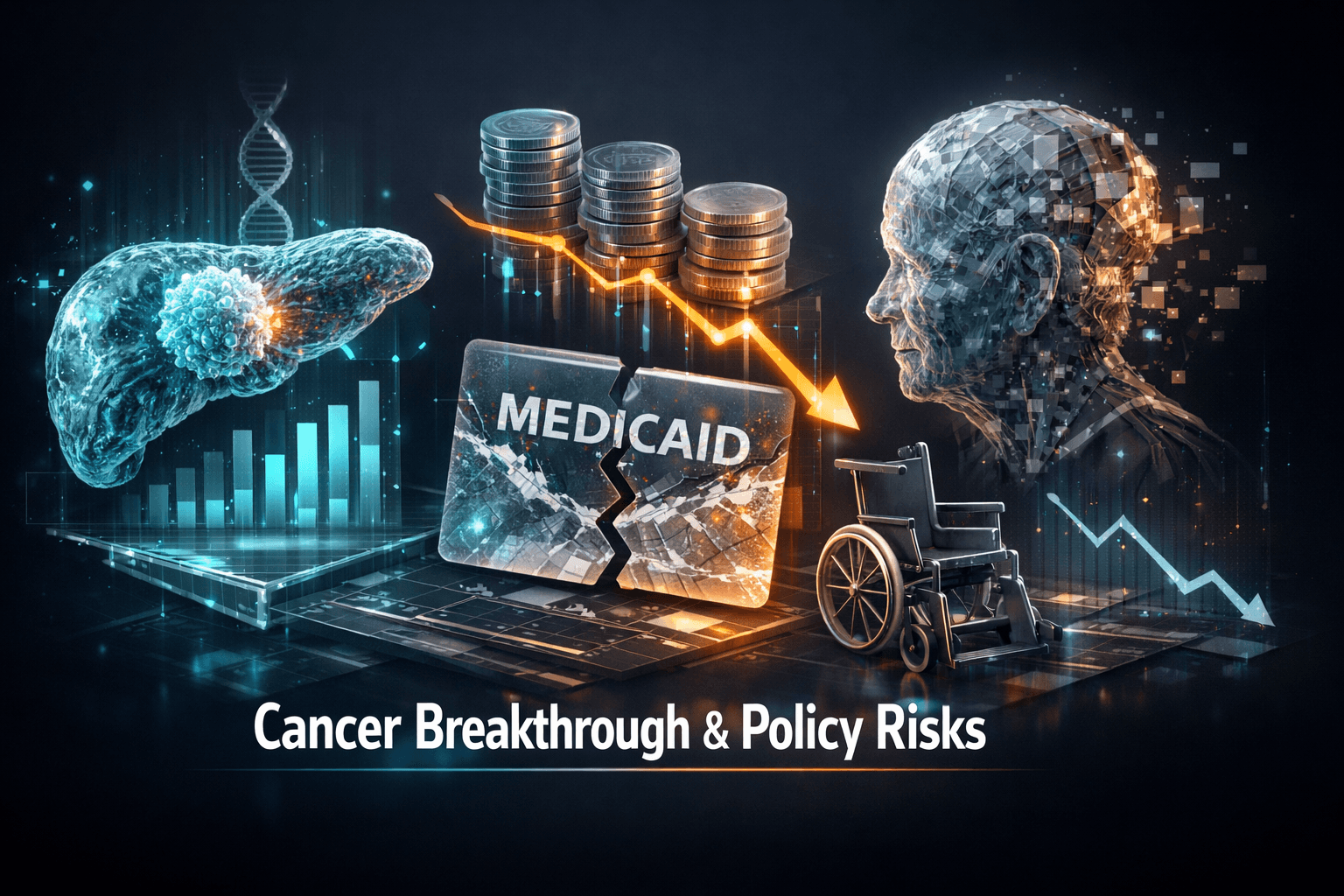
Today’s biggest healthcare development is a major pancreatic cancer breakthrough that has experts excited and planning for what comes next, signaling a potential inflection point for a notoriously difficult disease.
At the same time you should be watching policy and care delivery stories that could reshape margins and reimbursement, including Medicaid funding disputes, caregiver wage cuts, and new HHS discussions on antidepressant prescribing. That mix of clinical progress and policy pressure means both opportunity and risk for healthcare investors today.
Market Highlights
Quick facts and headlines you can scan this morning.
- Pancreatic cancer: STAT reports a breakthrough therapy that has specialists optimistic about improved outcomes, while raising questions about rollout, access, and follow-up trials.
- Medicaid policy: California’s use of Medicaid dollars for housing and food drew GOP criticism, and state-level funding cuts are putting family caregivers at financial risk.
- Care delivery innovation: Healthcare Dive features trends in whole-patient oncology support, automation for independent practices, and AI tools to fight payer denials, all aimed at improving efficiency and revenue cycle performance.
- Research updates: New studies highlight rising dementia rates in parts of Latin America, fresh clues for RSV treatment in infants, and a notice about rising anaplasmosis cases in Canada.
Key Developments
Pancreatic cancer breakthrough and what it means
STAT reports a major advance in pancreatic cancer therapy that has clinicians excited, calling it the biggest breakthrough in years. Experts are already considering the next steps: confirmatory registrational trials, combination strategies, and how to deliver the new therapy to eligible patients.
For you as an investor, breakthroughs like this can change clinical practice and shift partnering and licensing dynamics, but they also bring questions about pricing, reimbursement, and long timelines for broad uptake. How quickly will payers adapt, and will follow-on studies replicate the initial results?
Policy pressure: Medicaid, caregiver wages, and antidepressant guidance
State budget moves are front and center today. KFF reports that California’s Medicaid spending on housing and food drew sharp GOP criticism, even as Gov. Gavin Newsom defends holistic models for high-cost patients. Separately, STAT highlights that several states are considering steep cuts to caregiver wages, a change that could increase financial stress for families and impact long-term care delivery.
On the federal side, STAT’s reporting that HHS is meeting with clinicians about curbing antidepressant use points to potential changes in clinical guidance. These policy shifts could affect payer mix, utilization patterns, and service demand, so you’ll want to track state budget actions and any formal HHS guidance as it emerges.
Care delivery, automation, and revenue cycle innovation
Healthcare Dive pieces underline an accelerating trend: whole-patient support in oncology, automation in independent practices, and AI tools to combat payer denials. These changes aim to improve outcomes and reduce administrative friction, and they could boost margins for providers that scale them effectively.
If you follow health IT, RCM, or value-based care plays, look for adoption signals, pilot wins, and contract announcements that show tangible cost savings or revenue recovery. These operational improvements can act as the glue between clinical advances and bottom-line performance.
What to Watch
Here are actionable items and upcoming catalysts to monitor today and this week.
- Regulatory and trial updates on the pancreatic therapy, including press releases, investigator briefings, or new trial initiations, which will drive sentiment and partnership discussions.
- State budget votes and formal HHS guidance on antidepressant prescribing, which can change demand patterns and reimbursement rules for behavioral health services.
- Announcements from health systems or vendors about AI-driven denial management or automation pilots, because measured wins could translate into contract rollouts.
- New epidemiology reports, such as the Latin America dementia finding and Canadian anaplasmosis alerts, which can affect health system planning and public health spending in affected regions.
- Research publications or press briefings on the RSV study that calls for therapies targeting both virus and immune response, keep an eye on trial designs and sponsor commentary.
What should be on your watchlist right now, and how will you act on early signals? Keep your alerts set for company statements, state budget calendars, and regulatory notices.
Bottom Line
- Major clinical innovation, notably in pancreatic cancer, provides a clear upside narrative for biotech and specialty oncology players, but commercialization and payer dynamics remain key unknowns.
- Policy and funding risks, from Medicaid funding debates to potential caregiver wage cuts and HHS guidance on SSRIs, create near-term uncertainty for providers and social-service models.
- Operational advances in AI, automation, and whole-patient support are constructive, and they may offer near-term margin relief for health systems and practices that adopt them successfully.
- Public health alerts, including rising dementia in parts of Latin America and new tick-borne disease concerns in Canada, underscore long-term demand shifts and the need for preventive investment.
- Stay selective and data driven, tune your alerts to regulatory and trial milestones, and remember that clinical breakthroughs often take time to translate into durable revenue streams.
FAQ Section
Q: How soon could the pancreatic cancer breakthrough affect company revenues? A: It depends on trial readouts, regulatory filings, and payer decisions; expect a multi-quarter to multi-year timeline before material revenue impact.
Q: Will Medicaid policy changes affect hospital margins right away? A: Some effects can be immediate for providers in states that change funding or reimbursement rules, but the full impact usually unfolds over budget cycles and contract renegotiations.
Q: Are AI and automation investments likely to reduce denials and improve cash flow? A: Data suggests targeted AI in revenue cycle management can lower denials and speed collections, but results vary by vendor, integration quality, and practice scale.