The Big Picture
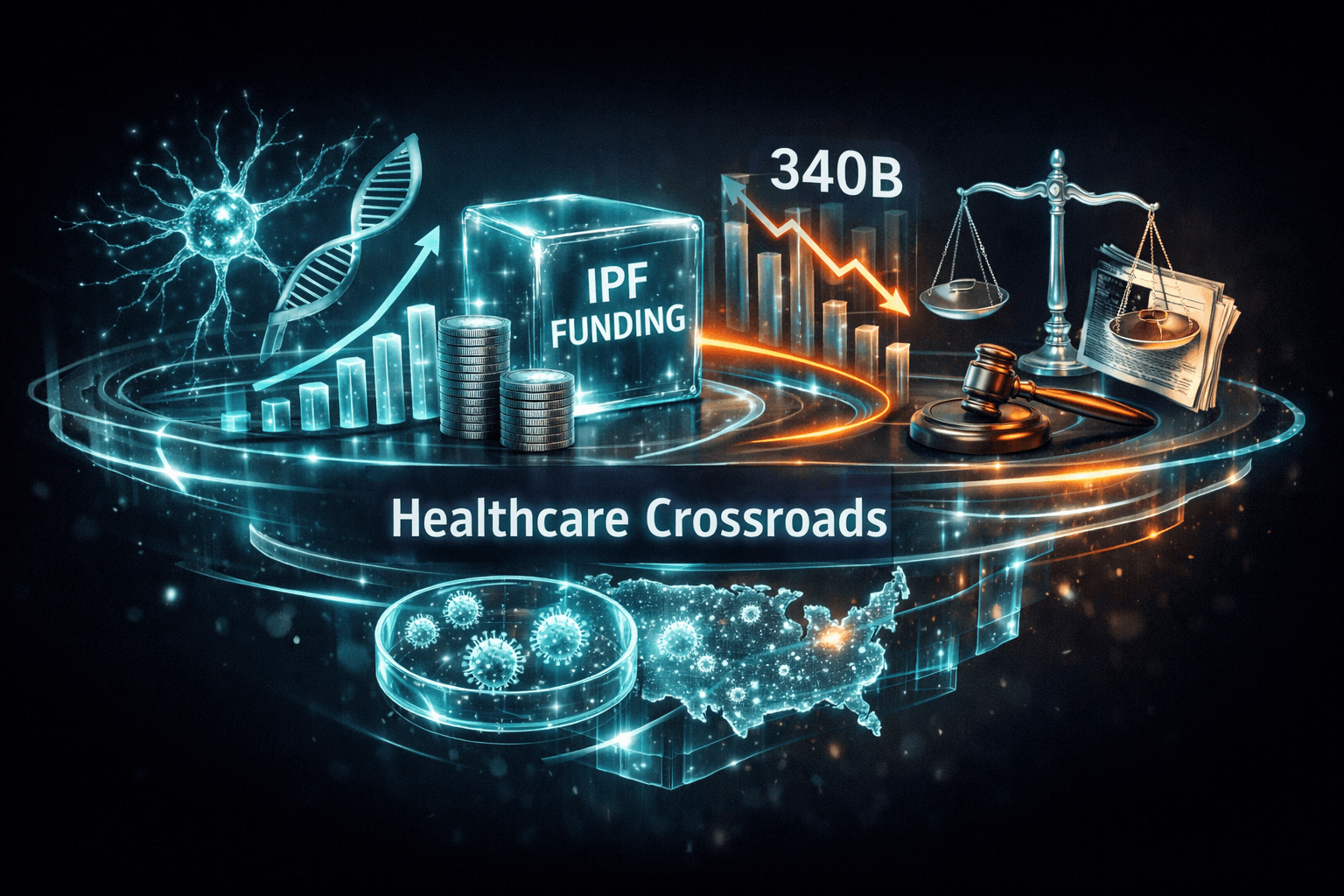
Healthcare headlines on Jul 3 present a mixed bag for investors, with scientific progress and venture funding offset by policy disputes and public-health outbreaks. You should be tracking both innovation stories and regulatory or epidemiological risks, because they can move different parts of the sector in opposite directions.
Markets are closed for Independence Day today. The last trading day was Thursday, July 2, and trading resumes Monday, July 6, so consider these developments as you position into the long weekend.
Market Highlights
Here are the quick facts and numbers from the top stories to know before Monday.
- ALS research: An experimental drug showed preclinical promise at protecting nerve cells from ALS-related damage, a development that could drive long-term interest in neurodegenerative R&D.
- Biotech financing: Celea, a PureTech-backed startup, raised $180 million to develop a next-generation idiopathic pulmonary fibrosis therapy, signaling investor appetite for specialty respiratory assets.
- Policy and dollars: Elevance Health, $ELV, says a Medicare Advantage stars recalculation cost it roughly $115 million, prompting a lawsuit against CMS.
- 340B debate heats up: STAT reports Medicare proposals to cut hospital reimbursements tied to 340B drugs, while lawmakers pressed Eli Lilly, $LLY, to extend discounts to hospitals.
- Outbreaks and public health: DR Congo’s Ebola outbreak has topped 400 deaths, and more than 120 passengers and crew were infected with a contagious stomach virus on a cruise that docked in San Francisco.
Key Developments
Experimental ALS drug offers early promise
Medical Xpress reports an experimental agent that appears to shield nerve cells from ALS-related damage, based on preclinical data published Jul 3. The story is a reminder that high-impact neurological programs can take years but often attract premium valuations if clinical translation succeeds.
For you, that means watching follow-up studies and any biotech companies that license or advance similar mechanisms into human trials. Early science can drive speculative gains, but it's a long road to commercial revenue.
Funding boost for IPF candidate signals investor appetite
Celea, a startup spun out of PureTech, closed a $180 million financing to develop a treatment for idiopathic pulmonary fibrosis, positioning itself as a potential challenger to Roche’s Esbriet. That much cash suggests backers expect a differentiated product and are willing to fund a multi-year development plan.
If you follow small-cap biotechs or venture-backed platforms, note that larger rounds like this can seed a pipeline that feeds public markets later. Which companies might partner with or compete against Celea down the line is worth watching.
Policy and legal fights heat up over 340B and Medicare ratings
Regulatory friction is front and center. STAT reports Medicare is again proposing cuts tied to the 340B hospital drug discount program. At the same time, lawmakers urged $LLY to provide 340B discounts to hospitals. These are concrete policy levers that could affect hospital margins and drug manufacturers’ commercial dynamics.
Meanwhile Elevance Health, $ELV, sued CMS after a recalculation of Medicare Advantage star ratings left it out $115 million, according to Healthcare Dive and STAT. That legal spat underscores how payment methodology changes can have immediate P&L consequences for insurers and plan sponsors.
What to Watch
Several near-term catalysts and risk factors could move sector sentiment next week. Which ones deserve your attention?
- Regulatory moves on 340B: Watch rule-making calendars at CMS and HHS for proposed or final guidance. Policy changes could shift hospital reimbursement and pharmaceutical pricing dynamics.
- Legal developments: Track court filings in the Elevance v. CMS case for timing and potential financial disclosures. You should also note any legislative activity related to 340B and drug pricing that could affect major pharma names.
- Biotech pipelines and financings: Look for follow-up announcements from Celea and any public-company partnerships tied to pulmonary fibrosis assets. Pipeline readouts or IND filings can be volatility triggers.
- Outbreak monitoring: Global public-health developments matter to healthcare supply chains, CRO operations, and vaccine or therapeutics makers. Monitor CDC and WHO updates on the DR Congo Ebola outbreak and domestic cluster reports for the cruise ship stomach virus.
- Health IT and interoperability: ONC’s note that fewer health information exchanges report info-blocking could influence software vendors and hospitals. Expect more reporting on data flows and potential vendor behavior investigations.
How should you weigh public health risks versus policy shifts? Both can be market-moving, but they affect different subsectors. Keep allocation and risk tolerance in mind.
Bottom Line
- Neutral sector posture: positive science and fundraising are balanced by regulatory, legal, and public-health headwinds.
- Watch rule-making and litigation timelines for 340B and Medicare Advantage star ratings, since these have direct financial implications for hospitals, insurers, and drug makers.
- Follow early clinical updates from ALS programs and funding milestones at firms like Celea for long-term biotech signals, but expect high volatility and long timelines.
- Public-health outbreaks are an immediate risk to operations and sentiment, so track official updates from CDC and WHO while markets are closed.
- You're best served by selectivity and staying informed on both clinical readouts and policy shifts, because both can change sector trajectories quickly.
FAQ Section
Q: How will a $180 million financing for an IPF startup affect public biotech stocks? A: Large private rounds can signal investor confidence and may pressure public peers in the same niche, but financings typically take years to translate into partnering or public exits.
Q: What immediate impact could 340B payment proposals have on hospitals and drug makers? A: Proposed 340B cuts can reduce hospital drug reimbursements and reshape pricing strategies. Analysts note that implementation timelines and legal challenges will influence the ultimate financial effect.
Q: Should you expect broad sector volatility because of the DR Congo Ebola outbreak and cruise ship infections? A: Outbreaks can create short-term volatility in certain subsectors, including vaccines, diagnostics, and travel-related healthcare services. Data suggests broader sector moves depend on outbreak scale and containment progress.