The Big Picture
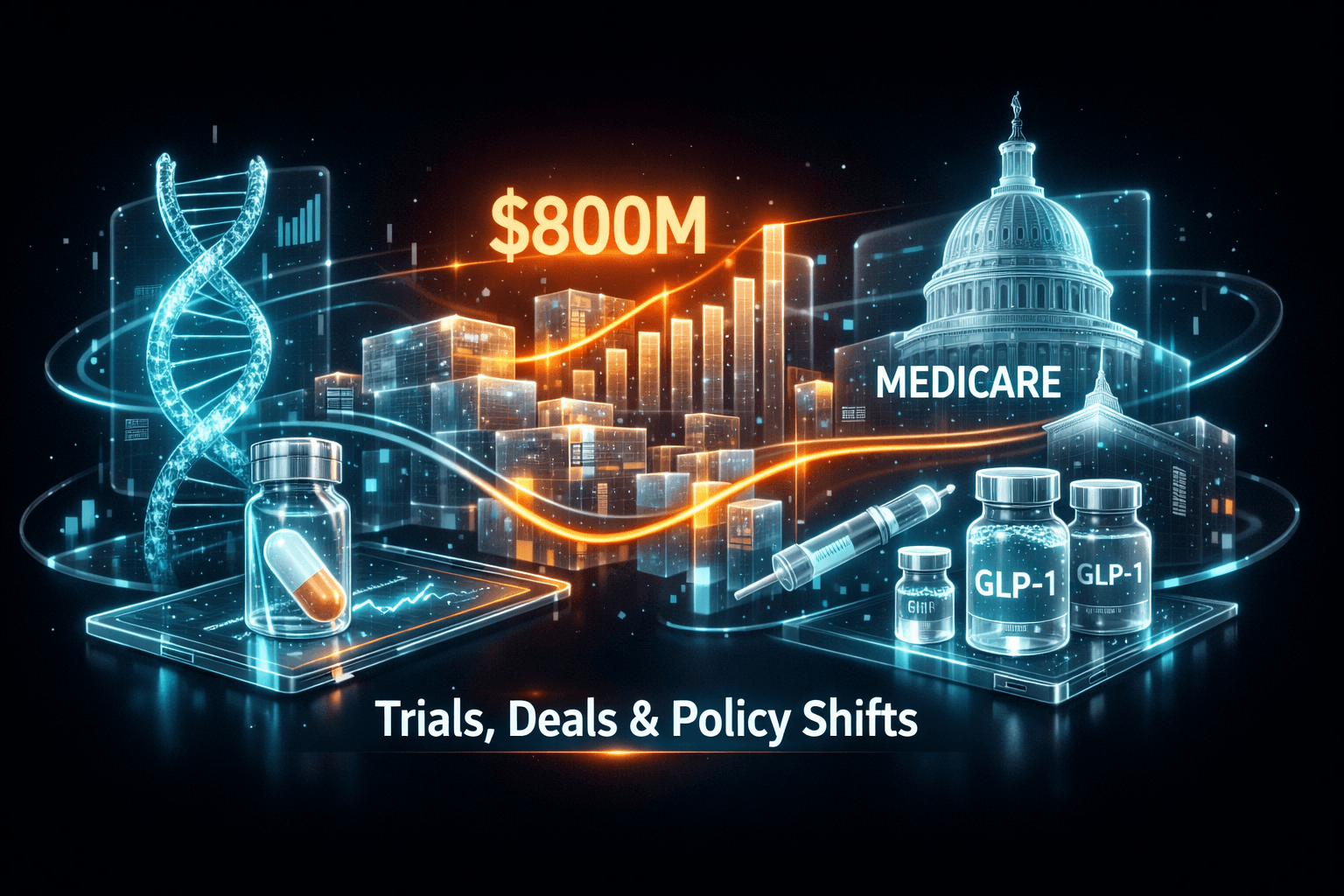
Today's healthcare tape was defined by a split between scientific momentum and rising policy and payer scrutiny. You saw concrete clinical progress and a near $800 million deal in the biotech corner, while policy moves around GLP-1 coverage and PBM regulatory outcomes reminded investors of mounting cost and oversight risks.
Why this matters to you is straightforward: scientific wins and deals can drive selective upside for drug developers and acquirers, but expanding coverage and regulatory settlements could pressure margins for payers and increase scrutiny across the supply chain.
Market Highlights
Major themes moved parts of the sector in different directions. Here are the quick facts to scan before you dig deeper.
- Late-stage clinical progress: Phase II data reported meaningful efficacy for zenocutuzumab in NRG1-positive cholangiocarcinoma, showing a near doubling of progression-free survival compared with historical expectations.
- Deal activity: Ipsen announced a proposed acquisition of Swiss Memo Therapeutics in a potential deal worth up to $800 million, giving Ipsen an experimental late-stage asset for a virus that affects kidney transplant patients.
- Policy and payer pressure: A KFF analysis suggests nearly 4 million Medicare beneficiaries could qualify for GLP-1 weight-loss drugs under a proposed program, raising potential multi-billion dollar cost implications for Medicare and downstream effects for drug makers and payers.
- Regulatory developments: A federal court dismissed PBMs' countersuit against the FTC after recent insulin settlements, signaling continued regulatory heat on pharmacy benefit managers including Express Scripts, Caremark and Optum Rx.
- Science and platform moves: Anthropic released Claude Science, aimed at laboratory and drug discovery use, and synthetic biology groups reported creation of a candidate synthetic cell, both highlighting accelerating tools for R&D.
Key Developments
Promising Phase II data in rare bile duct cancer
Investigators from the eNRGy trial reported that zenocutuzumab produced manageable side effects and clinically meaningful efficacy in patients with NRG1-positive cholangiocarcinoma. The report cites about a near doubling of progression-free survival versus standard expectations in previously treated patients, suggesting a meaningful clinical signal for a rare, hard-to-treat tumor.
For you, that means drug developers with targeted oncology portfolios may see renewed interest, especially where rare biomarker-defined indications can command premium pricing and faster regulatory pathways.
Ipsen moves to buy Memo Therapeutics for up to $800M
Ipsen's proposed acquisition of Memo Therapeutics, potentially worth $800 million, brings an experimental therapy aimed at viruses common in transplant patients into Ipsen's pipeline. The deal underscores continued strategic M&A in specialty biotech, as larger firms buy late-stage assets to bolster portfolios.
Deal activity often creates re-rating opportunities for acquirers and targets, but you should watch execution risks and integration timelines closely. Who ends up with the commercial rights matters for long-term revenue mix.
Medicare GLP-1 eligibility and PBM regulatory fallout
A KFF analysis found nearly 4 million Medicare beneficiaries could meet criteria for GLP-1 weight-loss treatments under a new program, a development that could cost Medicare billions and reshape demand for $LLY and $NVO products. At the same time, a court dismissed PBMs' countersuit against the FTC after insulin settlements, signaling regulatory pressure on intermediaries like Express Scripts, Caremark and Optum Rx.
Combined, these stories are a shot across the bow for payers and pharmacy middlemen. Will expanded coverage drive persistent prescription growth that forces payers to renegotiate fees? That's a question you should be tracking.
What to Watch
Keep an eye on upcoming catalysts and risk factors that could move the sector tomorrow and beyond.
- Further readouts and peer-review of zenocutuzumab data, plus any companion diagnostics updates that affect patient selection and commercial potential.
- Regulatory and cost discussions around Medicare coverage for GLP-1s, and any Congressional or CMS statements that could change implementation or eligibility.
- M&A execution details from Ipsen on the Memo deal, including timelines for trial readouts and potential milestones or contingent payments.
- PBM and payer regulatory actions, and any ripple effects on drug net pricing or formulary placement for high-cost therapies.
- Adoption of AI and synthetic biology platforms such as Claude Science, which could accelerate preclinical pipelines. How quickly will drugmakers integrate these tools into discovery workflows?
Bottom Line
- Clinical and M&A news today support selective upside in biotech and specialty pharma, particularly for targeted oncology and rare-disease assets.
- Policy shifts around Medicare GLP-1 coverage and PBM settlements create headwinds for payers and could alter net pricing dynamics across the sector.
- Platform advances in AI and synthetic biology are long-term positives for R&D productivity, but near-term commercial impacts will take time to materialize.
- Watch trial readouts, deal terms and regulatory statements closely, because those catalysts will determine winners and losers in the near term.
- Data suggests a mixed outlook, so adopt a selective approach to exposure and monitor upcoming events that could change the narrative.
FAQ Section
Q: How could Medicare expanding GLP-1 access affect drug makers? A: Expanded coverage could boost demand for GLP-1 drugs and benefit manufacturers, but it may also invite pricing pressure and payer negotiations that affect net revenue.
Q: What does the zenocutuzumab Phase II result mean for investors? A: The near-doubling of progression-free survival versus historical expectations suggests clinical value in a rare indication, which could increase interest in developers or partners working on NRG1-positive tumors.
Q: Should I expect immediate market consequences from PBM legal and regulatory actions? A: Regulatory settlements already settled some disputes and a recent court dismissal signals continued oversight, which can incrementally pressure PBM margins and influence formulary strategies over time.