The Big Picture
Healthcare traded on a mix of policy pressure, corporate shakeups and scientific progress today, leaving investors with divergent signals as the second half of 2026 begins. Major stories ranged from a sizable buyout after a clinical failure to systemic concerns about younger patient volumes and high-profile investigative reporting into hospital operators.
That combination matters because it highlights two realities you need to keep in mind: regulatory and payer dynamics can quickly reshape revenues, while innovation and clinical catalysts can reaccelerate growth for the right companies. Which of those forces wins out will influence sector performance into H2 earnings season.
Market Highlights
Here are the quick facts and figures that shaped trading and investor focus today.
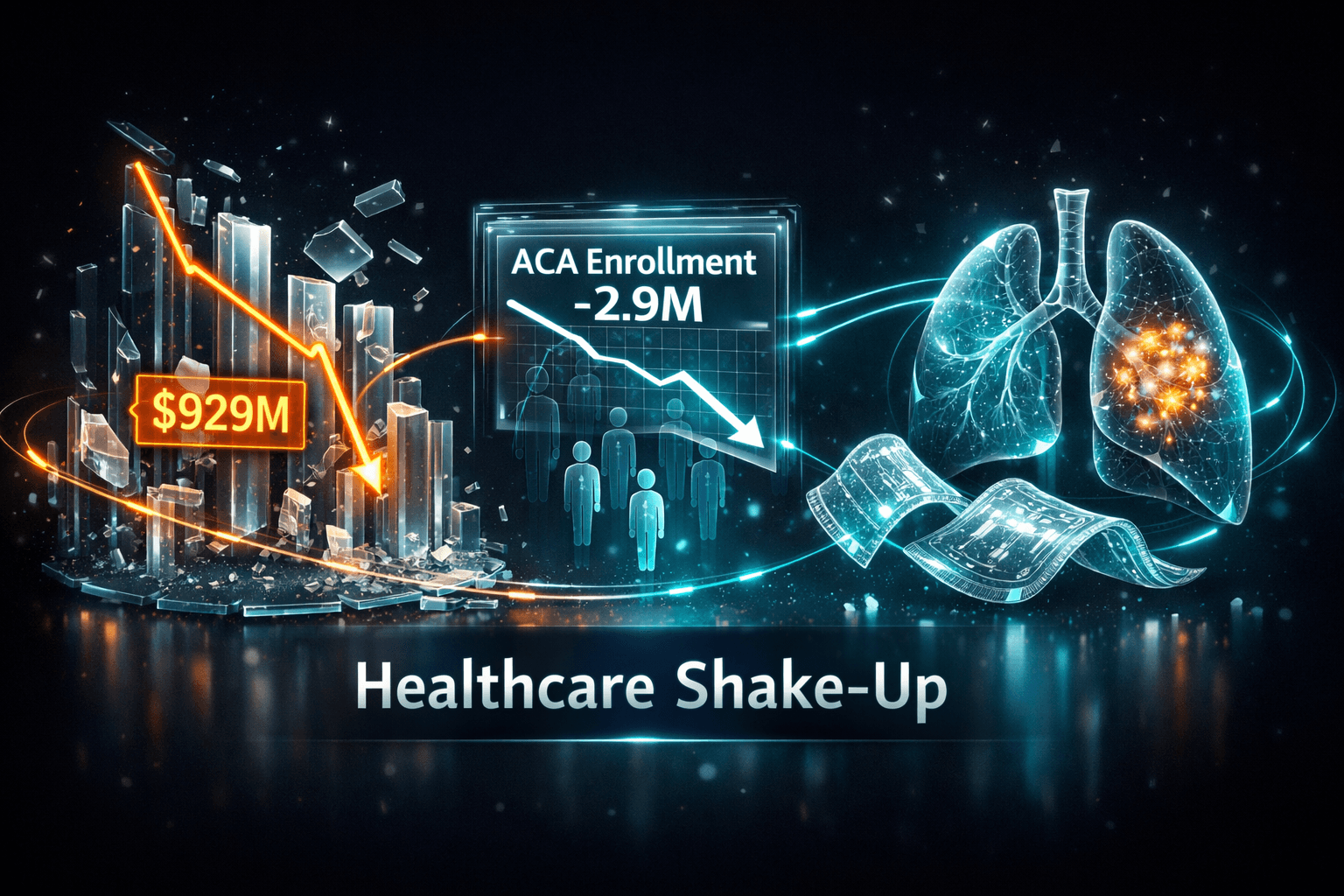
- Theravance Biopharma, $TBPH, agreed to a $929 million buyout by Zymeworks, $ZMW, after clinical setbacks, a material corporate development for the small-cap biopharma space.
- Federal data show ACA enrollment declined by nearly 3 million following subsidy changes, a headwind for insurers and safety-net providers that rely on stable plan membership.
- STAT investigations into micro hospital operator Nutex Health and unredacted California hospital lawsuit filings put compliance and reimbursement practices under fresh scrutiny, feeding sector risk narratives.
- On the innovation side, university teams published advances: a biodegradable wireless knee pressure sensor and new findings on how leukemia cells invade lung tissue, both of which may inform future device and therapeutic development.
Key Developments
Theravance buyout after clinical setbacks
Theravance Biopharma agreed to be acquired for $929 million by Zymeworks following a failed late-stage drug program for a low blood pressure indication. Analysts say the deal crystallizes value for shareholders and shifts assets into a royalty/management model under Zymeworks.
For you that means the small-cap biopharma landscape is still being reshaped by clinical risk, with M&A acting as a backstop for companies that struggle to clear late-stage hurdles.
Policy and institutional pressure: ACA, Nutex, hospital disclosures
ACA enrollment fell by nearly 3 million this cycle after federal subsidies were reduced, a trend that could lower revenue for insurers and increase uncompensated care for hospitals. At the same time, STAT’s probe of Nutex Health and unredacted California lawsuit comments raised questions about billing practices and consultant relationships that policymakers and payers may scrutinize.
Those stories pose near-term headwinds for margin stability among some provider groups, and they underscore why regulatory and reimbursement monitoring remains essential if you have exposure to insurers or regional hospital operators.
Science and regulatory moves: sensors, leukemia, and peptide advisers
R&D news balanced today's headlines. University of Connecticut researchers reported a biodegradable wireless pressure sensor for knees that could guide rehabilitation and reduce re-injury. NYU Langone investigators mapped how leukemia cells enter and damage lung tissue, which could inform future therapies for respiratory complications in blood cancers.
The FDA advisory roster also added longevity and wellness physicians to a peptide-focused panel, a development that may presage looser guidance for certain peptide products. That regulatory angle could create opportunities but also invite scrutiny over safety and compounding oversight.
What to Watch
As trading continues, keep an eye on a few near-term catalysts and risks that will shape sector momentum into July.
- Earnings and guidance from insurers and large provider systems, which will reflect the impact of lower ACA enrollment and payer mix shifts.
- Biotech trial readouts in H2 2026 highlighted by industry trackers, particularly in lung cancer, Alzheimer’s and autoimmune conditions, which could swing sentiment if results surprise to the upside.
- Regulatory activity on peptides after the new FDA advisory appointees meet, plus any follow-on reporting from STAT about hospital billing and consultant relationships, which could prompt policy or enforcement moves.
- Integration and financing updates from the $929M Theravance transaction, including any restructuring plans under Zymeworks that affect royalties or asset sales.
- Clinical validation steps for device innovations like the biodegradable knee sensor, including potential partnerships with medtech firms that could accelerate commercialization.
How do you prioritize these items? Focus on companies with diversified revenue, strong cash positions and clear timelines for clinical or regulatory milestones.
Bottom Line
- Sentiment across healthcare is mixed, with policy and investigative headlines creating near-term pressure while R&D and trial catalysts provide upside potential.
- The $929 million Theravance deal underscores how M&A can resolve clinical setbacks, but it also highlights late-stage risk in biopharma pipelines.
- Nearly 3 million fewer ACA enrollees is a material trend that may affect insurer top lines and hospital uncompensated care in coming quarters.
- Scientific advances in sensors and leukemia biology offer long-term growth opportunities, but commercialization timelines remain uncertain.
- Monitor regulatory and legal developments closely, they can change the landscape quickly and materially for provider and medtech names.
FAQ Section
Q: What does the Theravance buyout mean for biotech M&A activity? A: The deal shows strategic buyers and royalty firms will step in after clinical setbacks, suggesting M&A will remain a route to salvage value for companies that miss late-stage endpoints.
Q: How might ACA enrollment declines affect healthcare stocks? A: Lower enrollment can reduce insurer revenue and raise uncompensated care for hospitals, pressuring margins until enrollment or subsidy policy changes reverse the trend.
Q: Will the new FDA peptide advisers speed product approvals? A: The panel appointment signals a willingness to reexamine peptide policy, but any regulatory change will depend on deliberations, safety data and formal rulemaking, so timelines remain uncertain.