The Big Picture
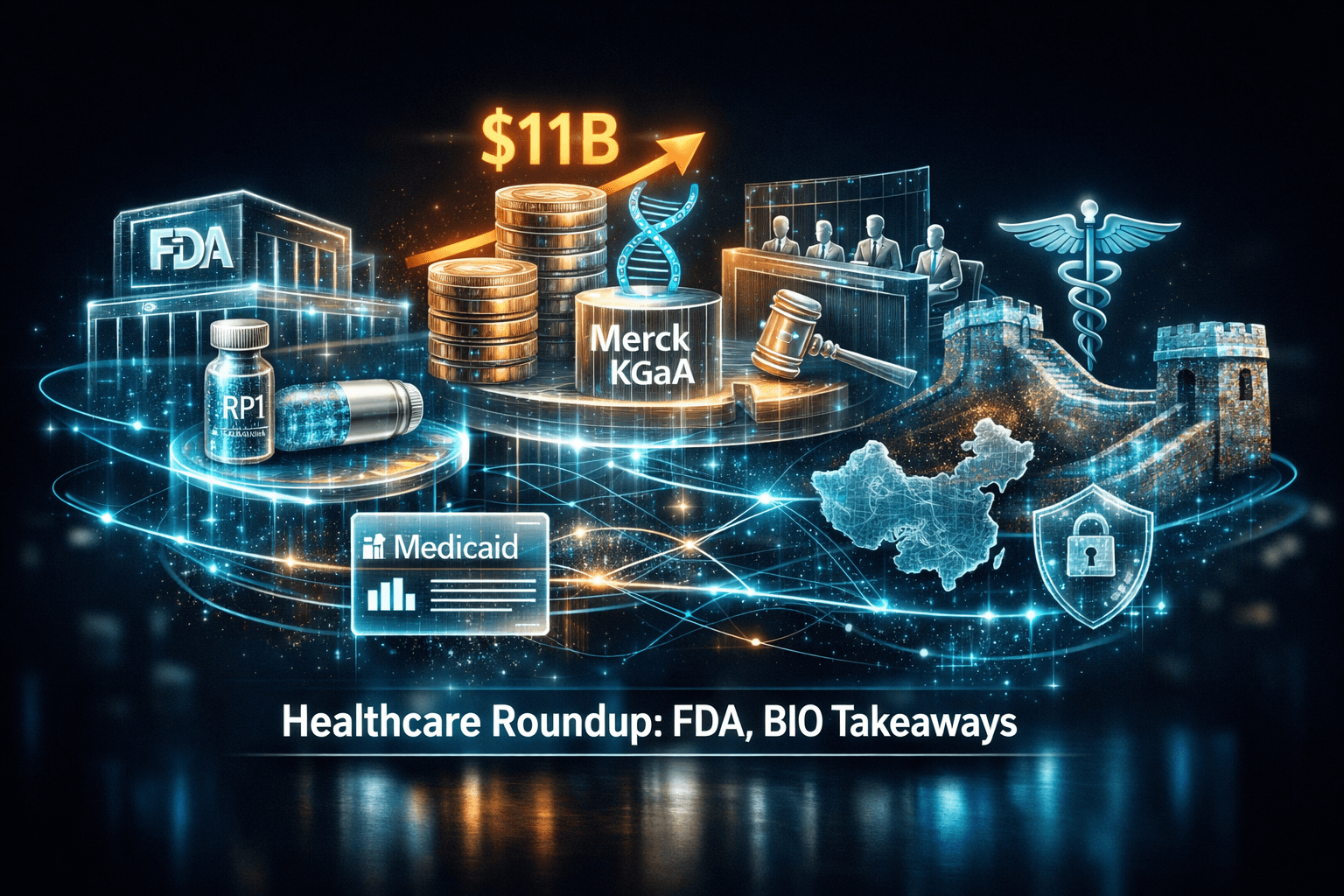
Regulatory and corporate moves at the end of June gave the healthcare sector a mixed set of signals heading into the long weekend. The FDA accepted a Replimune filing and Merck KGaA spent roughly $11 billion on life sciences services, indicating continued deal activity and regulator engagement.
At the same time, policy and legal friction cropped up across the industry, from a House hearing on Medicaid integrity to concerns about restricting deals with Chinese biotech partners. What does that mean for you as an investor? It suggests selective opportunities, but also that political and regulatory risks could reappear quickly.
Market Highlights
Key facts and numbers you should note from the weekend's reporting. Markets were closed on Sunday; the last U.S. trading day was Friday, June 26.
- Regulatory: The FDA accepted an application from Replimune, highlighting shifting attitudes at the agency, $REPL.
- Deals and capital: Merck KGaA reportedly committed about $11 billion to life sciences services, and a Definium stock offering raised $800 million, underscoring ongoing M&A and financing activity.
- Biotech data: Revolution Medicines, $RVMD, detailed additional RAS-blocking data at BIO, keeping RAS-targeted programs in focus.
- Patient impact figures: A new MS study presented at EAN found 51% of respondents say MS affects their social life and 48% say it affects work, showing large quality-of-life burdens.
Key Developments
FDA acceptance and deal activity
The FDA accepted Replimune's filing, which analysts note is another sign the agency may be open to advancing innovative oncology biologics. Meanwhile, Merck KGaA's roughly $11 billion move into life sciences services and an $800 million Definium offering show capital is still flowing into the sector.
For you, that means more deal-driven headline risk and opportunity. Keep an eye on filings and follow-on data that could influence sentiment for small-cap biotechs such as $REPL and later-stage names tied to RAS programs like $RVMD.
BIO 2026: AI, federal policy and China deal concerns
STAT's BIO coverage highlighted AI buzz and growing debate over federal policy, especially the possibility of tighter rules for deals with Chinese biotech firms. Executives and investors at the conference warned blanket restrictions could chill cross-border investment and slow commercialization.
How might that affect your watchlist? If proposals gain traction, smaller companies that rely on China partnerships for manufacturing or co-development could face delays or valuation pressure.
Patient-care research and public health signals
Clinical and safety updates over the weekend were practical and patient-focused. A first peer-reviewed assessment of the Energizer Ultimate Child Shield button battery suggests the titanium-based design can reduce tissue injury, yet clinicians say swallowing remains an emergency. That underscores product-level safety gains, but not a change in clinical protocols.
Behavioral therapy research from Radboud University found therapy can be as effective as medication for Tourette syndrome, which may shift treatment patterns for some patients. Separately, the MS quality-of-life data from EAN quantifies nonphysical burdens, and KFF highlighted ongoing concerns such as sunscreen ingredient policy and rural dialysis clinic closures that affect access to care.
What to Watch
Over the coming weeks, a few catalysts and risks could move sentiment in healthcare. You should track these items closely and update your watchlist accordingly.
- Regulatory calendar: Look for target FDA decision dates and additional filings from oncology and biotech firms, including follow-on communications regarding $REPL's submission.
- Policy and hearings: Congressional scrutiny of Medicaid program integrity and any policy moves on cross-border biotech deals could change reimbursement and deal-flow dynamics.
- Conference fallout: Readouts and follow-up data from BIO 2026 sessions, particularly on AI-powered drug development and RAS-targeting agents, may shift expectations for companies like $RVMD.
- Access and public health: Reports on rural dialysis closures and sunscreen ingredient discussions can influence healthcare services names and firms exposed to consumer health regulation.
- Legal and litigation risk: The Supreme Court Roundup ruling and similar high-profile legal outcomes may create uncertainty for companies tied to environmental or product-liability exposures.
Bottom Line
- Regulatory signals are mixed, with FDA acceptance of a Replimune filing showing progress while policy and legal risks add uncertainty.
- Deal and financing activity remains robust, as shown by Merck KGaA's large purchase and an $800 million stock offering.
- Patient-focused research and safety innovations matter for long-term demand and reputation, but they rarely eliminate short-term clinical or regulatory risk.
- You'll want to be selective, watching upcoming FDA dates, Congressional actions, and follow-up data from BIO sessions that could change sentiment quickly.
FAQ Section
Q: What does FDA acceptance of a filing mean? A: FDA acceptance means the agency will review the application in full, analysts note it is a necessary step toward approval but not a guarantee.
Q: Will policy debates at BIO affect deal flow? A: They might, experts warned that tighter rules on China deals could slow or reshape partnerships, so you should monitor any proposed legislation or guidance.
Q: Do patient-safety product changes remove clinical risk? A: No, the button battery study shows reduced injury potential, but clinicians say ingestions remain emergencies and management protocols shouldn't change yet.