The Big Picture
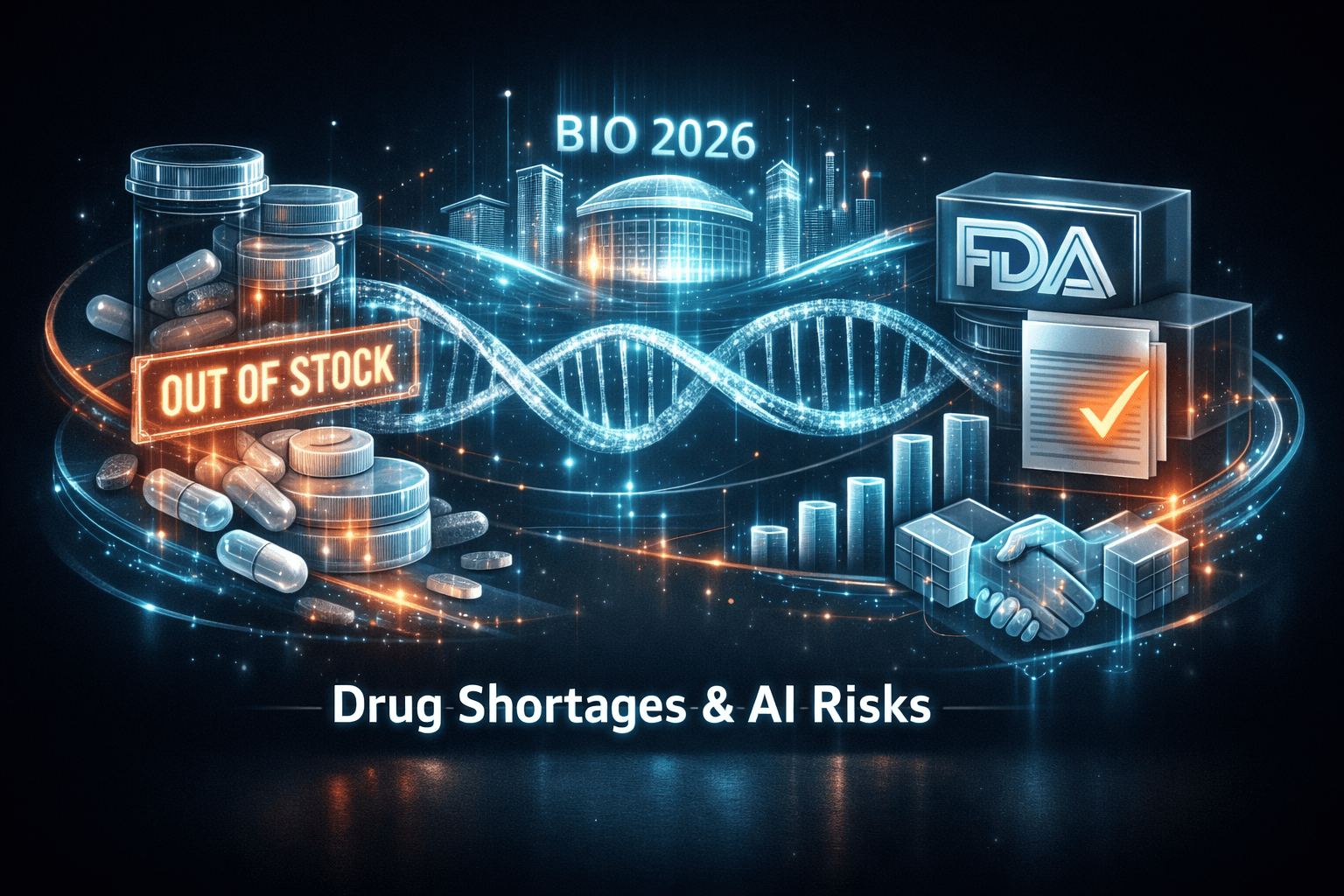
The biggest near-term concern for the healthcare sector is a worsening shortage of generic chemotherapy drugs, a development that could force clinicians into rationing decisions and push federal policy onto the front burner. That story stands alongside a mix of regulatory shifts, industry deals and public health research that together create mixed signals for investors as you head into the long weekend.
Why does this matter to you as an investor? Drug supply disruptions can hit hospital revenues, increase volatility for specialty drugmakers, and prompt policy responses that change market structure. At the same time, FDA acceptance of new filings and large-scale corporate purchases show continued vote-of-confidence in life sciences investment and service platforms.
Market Highlights
Markets were closed on Saturday, Jun 27, so price moves below refer to the last trading day, as of Friday, Jun 26.
- Cancer drug shortage: Reports say clinicians are running short of essential generic chemotherapy agents, raising concerns about rationing and federal intervention.
- FDA filing and M&A: The FDA accepted a filing from Replimune, $REPL, signaling regulatory progress, while Merck KGaA moved about $11 billion to expand life sciences services, underlining continued strategic dealmaking in the sector. The Merck KGaA acquisition was valued at roughly $11 billion.
- Conference takeaways: BIO 2026 buzz focused on AI, federal policy impacts and cross-border deal risks, with investors watching potential restrictions on China-related biotech deals. Companies spoken about at the conference include $SNY, $BIIB, $LLY and $PFE among others in the STAT coverage.
Key Developments
Generic chemotherapy shortages spark calls for federal action
The New York Times and other outlets reported that shortages of essential generic cancer drugs have intensified, prompting renewed pleas for federal solutions. Clinicians warn that the squeeze could force treatment rationing, which would affect hospital purchasing, oncology practices and the broader supply chain.
For you, that means watching for policy moves and emergency procurement measures. Will regulators or Congress step in with funding or manufacturing incentives? Any federal intervention could reshape supplier economics and create opportunities for contract manufacturers.
FDA posture and notable filings
The FDA accepted Replimune's application, $REPL, a sign that the agency continues to process innovative oncology and immunotherapy submissions. Reporters also followed the agency on topical issues like sunscreen ingredient filters, showing the FDA's broad regulatory agenda beyond drugs.
Regulatory wins like an accepted filing can reduce binary risk for a company, though approval is not assured. You should track upcoming FDA timelines and advisory committee schedules for filings that might move sentiment.
Industry conference, China deal concerns, and AI momentum
BIO 2026 coverage painted a complex picture. Attendees discussed AI adoption, federal policy uncertainty and friction over China-related deal regulation. Industry leaders warned that blanket restrictions could curb cross-border partnerships and capital flows, a potential headwind for growth-focused biotechs.
Meanwhile HHS move toward coordinating AI strategy in healthcare signals potential federal support for implementation standards. That could help you evaluate which companies might benefit from early, compliant deployments of AI tools in clinical operations and regulatory submissions.
What to Watch
Focus on a few concrete catalysts and risk areas in the days ahead. First, watch for statements or emergency actions from HHS or FDA regarding the chemotherapy shortages, and any legislative moves that could fund domestic manufacturing or create stockpiling programs. Those could materially shift supplier revenue outlooks.
Next, track FDA milestone dates for high-profile filings like the one accepted for $REPL and equity-market responses once trading resumes on Monday, Jun 29. Which companies could gain from outsourcing or service demand if production pressures increase?
Finally, keep an eye on BIO follow-ups, particularly any regulatory guidance on China-related deals and the HHS AI coordination plan. How will reassurances or tougher rules affect deal pipelines and valuations in biotech and life sciences services?
Bottom Line
- Drug shortages are the dominant near-term risk, with potential knock-on effects for hospital operations and drugmakers.
- Regulatory activity remains active, as seen in FDA filings and topical rulemaking, so stay alert to calendar risks tied to approvals and guidance.
- Dealmaking remains robust, illustrated by a roughly $11 billion life sciences services purchase, which underscores strategic consolidation in the sector.
- AI is moving from concept to coordination, and federal engagement could favor firms that help implement or validate clinical AI tools.
- Policy tension over China deals adds uncertainty for cross-border investment and could affect early-stage biotech valuations.
FAQ
Q: What should I watch for regarding the cancer drug shortages? A: Monitor HHS and FDA announcements, congressional activity on manufacturing incentives, and supplier earnings comments for indications of remediation or prolonged disruption.
Q: Does FDA acceptance of a filing mean a drug will be approved? A: No, acceptance starts the review clock and reduces some uncertainty, but approval depends on the full review, data strength, and any advisory committee outcomes.
Q: How might the HHS AI request for information affect healthcare companies? A: The HHS response could lead to coordinated standards and implementation support, which may benefit vendors offering validated AI tools and firms that can demonstrate governance and evaluation capabilities.