The Big Picture
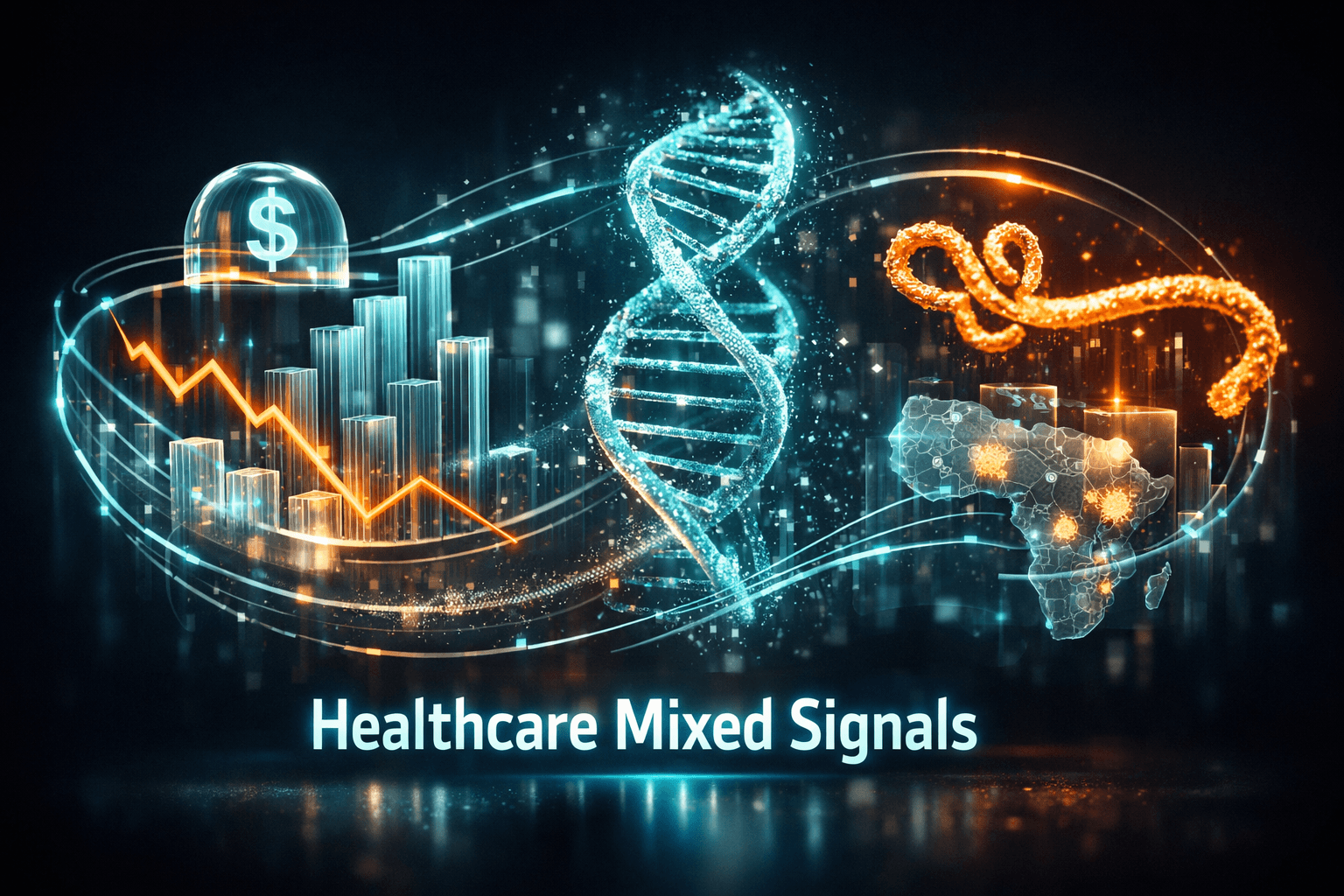
Indiana's move to cap hospital prices charged to employers is the top development this morning, and it has clear implications for provider revenue models and payer negotiations. At the same time, researchers published a major genetics study identifying more than 600 schizophrenia-associated genes, showing powerful scientific momentum that could shape long-term drug discovery.
These stories sit alongside public health and funding pressures, including a worsening Ebola outbreak in the Democratic Republic of Congo and a White House proposal that health equity researchers say could limit federal funding. For investors, that means you're seeing growth and innovation on one side and regulatory and public-health headwinds on the other.
Market Highlights
Quick facts and what moved in healthcare headlines overnight and into the morning session.
- Indiana price-cap move: State plans to cap hospital prices charged to employers, a policy aimed at curbing high commercial rates. Analysts note state action increases policy risk for major hospital operators.
- Research breakthrough: Network analysis identifies more than 600 schizophrenia-associated genes, expanding targets for neuroscience R&D and highlighting long lead times for drug development.
- Global health alert: Ebola outbreak in eastern Congo now at 1,003 confirmed cases and 254 deaths, underscoring ongoing outbreak risk and potential demand for vaccines and therapeutics.
- Industry operations and AI: Sponsored coverage emphasizes integrated pharmacy benefits, procurement best practices, and AI-driven payer contract management as cost and margin levers for plans and hospitals.
Key Developments
State Policy Targets Hospital Pricing
Indiana's GOP governor framed the intervention as necessary because healthcare is being run like an unregulated utility. The plan to cap prices that hospitals can charge employers could pressure commercial reimbursement for large health systems and independent hospitals alike.
What does this mean for margins and M&A? You'll want to watch state-level actions in other conservative-leaning states, because a trend could force national payers and hospital operators to revise contract structures and modeling assumptions.
Major Genetics Advance Informs Long-Term R&D
Scientists used advanced gene network models to link distant genetic variants and uncovered more than 600 genes associated with schizophrenia. That expands the biological map researchers can mine for therapeutic targets.
This is a scientific positive, but the path to approved therapies is long. If you're tracking neuroscience R&D, the study increases opportunity sets for biotech pipelines and for companies partnering with academic labs.
Public Health, Funding and Operational Pressures
Confirmed Ebola cases in eastern Congo topped 1,000 with 254 deaths, and tracing remains a challenge. Public health agencies and NGOs will continue to be active, and therapeutics and vaccine makers may face renewed demand signals.
Separately, health equity researchers warned a White House proposal could disqualify some disparity-focused work from federal grants. That introduces funding uncertainty for academic and non-profit research programs, and it could reshuffle grant priorities across NIH and other agencies.
What to Watch
Focus your attention on the near-term catalysts and risks that will shape stocks and strategy today and in coming weeks.
- Policy timeline, state by state, for hospital price controls. If Indiana is a test case, other states may follow, so you should track legislative calendars and governor statements.
- Regulatory and funding updates from the White House and NIH on the proposed research funding rule. Analysts note timing and scope will determine research center budgets and grant flows.
- Public health briefings on the Congo Ebola outbreak. CDC and WHO updates can affect sentiment for vaccine and therapeutic developers, and they can alter risk assessments for travel and supply chains.
- Earnings and guidance from major hospital operators and health plans. You should watch commentary about commercial revenue, contract renewals, and margin guidance for clues on how pricing pressure is being absorbed.
- Adoption signals for integrated pharmacy benefits, AI-driven payer contract tools, and procurement improvements. These operational changes could drive longer term efficiency gains for plans and health systems.
How should you reconcile science and policy in your watchlist? Be selective, and follow near-term cash flow implications for public companies while monitoring long-cycle R&D catalysts.
Bottom Line
- State-level price caps raise policy risk for hospital operators and could pressure commercial reimbursement frameworks, analysts note.
- Scientific advances such as the 600-plus schizophrenia genes broaden long-term R&D opportunity sets, but commercialization timelines remain long.
- The Ebola outbreak adds a near-term public-health risk that may bolster demand for vaccines and therapeutics while also hurting sentiment in affected regions.
- Operational trends like integrated pharmacy benefits and AI for payer contracts continue to offer efficiency levers for plans and health systems.
- Watch for policy updates, grant-funding guidance, and operator earnings commentary for the clearest signals that could move healthcare equities this week.
FAQ Section
Q: How could state price caps affect hospital margins? A: Caps can reduce negotiated commercial rates and create pressure on hospital revenue per case, prompting cost controls and renegotiation of payer contracts.
Q: Should I expect immediate market moves from the schizophrenia gene study? A: Scientific breakthroughs often influence long-term R&D prospects more than immediate earnings, so short-term market moves are typically limited.
Q: What are the near-term implications of the Congo Ebola outbreak for biotech names? A: Outbreaks can increase demand for vaccines and therapeutics and lead to renewed government and NGO procurement activity, but the impact varies by company exposure and product pipeline.