The Big Picture
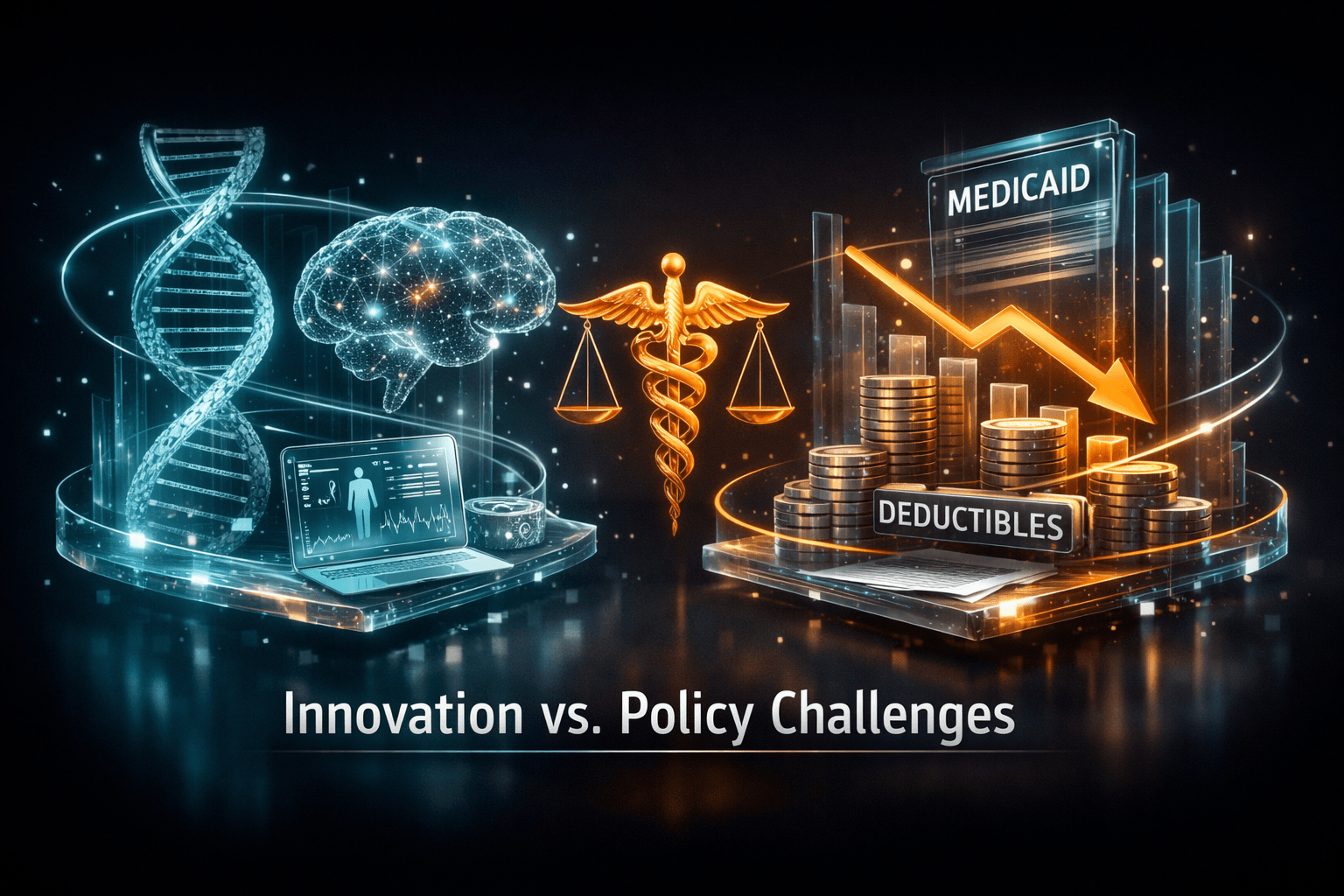
Innovation and policy are tugging the healthcare sector in different directions today, and that matters for your portfolio exposure to insurers, hospitals, and medtech. New diagnostics and digital tools promise better prevention and revenue capture, while coverage changes and cost pressures could compress utilization and shift risk across payers and providers.
Investors should pay attention to technical advances like a multi-organ biological age blood test and ingestible core temperature sensors, but you also need to watch how the Affordable Care Act rule changes and state Medicaid actions alter demand and reimbursement. Which force will dominate, growth or headwinds?
Market Highlights
Quick facts and figures from overnight and morning reporting to help you orient for the trading day.
- New diagnostics: A blood test now estimates biological ages across 11 organ systems to predict disease risk years ahead, offering a potential prevention play for diagnostics makers and insurers.
- Regulatory impact: The finalized ACA rule allows plans with as much as 30% higher out-of-pocket costs for some options, a change that could shift consumer plan choices and utilization.
- Access trends: Expanded ACA subsidies expired at the end of last year, contributing to rising uninsured rates as some families dropped coverage due to cost.
- Clinical innovation: Researchers introduced a blueberry-size ingestible capsule for continuous core temperature monitoring, improving accuracy over oral and forehead measures.
- Safety signal: Synthetic cooling additives in e-cigarettes produced arrhythmias in mice and tests on lab-grown human heart cells, raising public health questions for regulators and consumer-facing companies.
- Sector players to watch include major insurers such as $UNH, $ELV, $CVS and $CI as policy and enrollment shifts affect premiums, plan design, and claims.
Key Developments
Multi-organ biological age test could reshape prevention
Researchers published a blood test that estimates biological ages for 11 organ systems, offering risk signals years before disease appears. For you that could mean earlier interventions and for providers it could mean new diagnostic revenue streams tied to longitudinal care.
Medtech companies and diagnostic labs may find commercial opportunities, while payers could evaluate such tools for risk stratification and targeted prevention programs. Who pays for earlier screening will be a key question.
Coverage changes bring higher deductibles and more uninsured
The federal rule finalized today permits new plan types and allows some plans to carry roughly 30 percent higher out-of-pocket costs, while states continue to grapple with the fallout from subsidy expirations. KFF reports many households chose to cancel ACA coverage last year because premiums and out-of-pocket costs became too burdensome.
These shifts could reduce utilization and elective care volumes in the near term, pressuring hospital admissions and certain outpatient services. At the same time, insurers will reprice risk and adjust networks, so you should track plan filings and next enrollment season changes.
Clinical and digital innovation advances, with mixed risk signals
A swallowable core temperature capsule and a surge in healthcare AI adoption promise both clinical improvement and tighter ties between outcomes and revenue. Healthcare Dive reports organizations are moving from pilots to broader AI deployments aimed at closing revenue gaps.
Meanwhile, lab and preclinical work shows potential therapy innovation in areas like celiac disease and sterile injectable development. But public health concerns rose as a study linked cooling additives in e-cigarettes to irregular heartbeats in animal and cell models. Innovation is progressing, however emergent safety and regulatory issues could slow adoption.
What to Watch
Focus on near-term catalysts and risk points that could move stocks and sectors today and over coming quarters.
- Regulatory reaction and plan design: Watch insurer filings and CMS guidance on the ACA rule and on how states implement networkless plans and higher cost-sharing options.
- Enrollment and utilization trends: Keep an eye on monthly enrollment data and any state reports showing rising uninsured rates. How will reduced coverage affect hospital revenues and outpatient volumes?
- Corporate responses: Track announcements from major payers such as $UNH, $ELV, $CVS and $CI about product offerings and network strategies. Will they pivot to narrow networks or supplemental products?
- Clinical readouts and regulatory alerts: Monitor FDA communications on ingestible devices and safety advisories related to e-cigarette additives. Will regulators press for product changes?
- AI and analytics deployments: Earnings calls and vendor contracts can show how quickly hospitals and payers convert pilots into recurring revenue. Are you seeing AI tie to margin improvement in provider results?
Bottom Line
- Innovation is strong, with diagnostics and digital tools offering new prevention and revenue avenues for medtech and providers.
- Policy moves represent a counterweight, with higher deductibles and loss of subsidies likely to reduce coverage and utilization pressure for some care segments.
- Payers will be a bellwether; watch how $UNH, $ELV, $CVS and $CI adjust plan designs and pricing as rules take effect.
- Safety and regulation matter: product risks such as e-cigarette additives and new device approvals can create headline risk and regulatory activity.
- Be selective and stay informed, you should follow enrollment, regulatory filings, and vendor contract announcements to understand where growth or strain will appear.
FAQ Section
Q: How could the new ACA rule affect healthcare companies? A: The rule allows higher out-of-pocket limits and alternative plan designs, which may lower utilization and change insurer pricing strategies that affect revenue for hospitals and outpatient providers.
Q: Are the new diagnostics likely to be reimbursed? A: Reimbursement will depend on demonstrated clinical utility and cost effectiveness, so payers and providers will evaluate pilots and real-world outcomes before broader coverage decisions follow.
Q: Should I expect immediate stock moves from these stories? A: Market reaction varies, you should watch issuer guidance and enrollment data for clearer signals, while regulatory or safety alerts can prompt sharper near-term moves.