The Big Picture
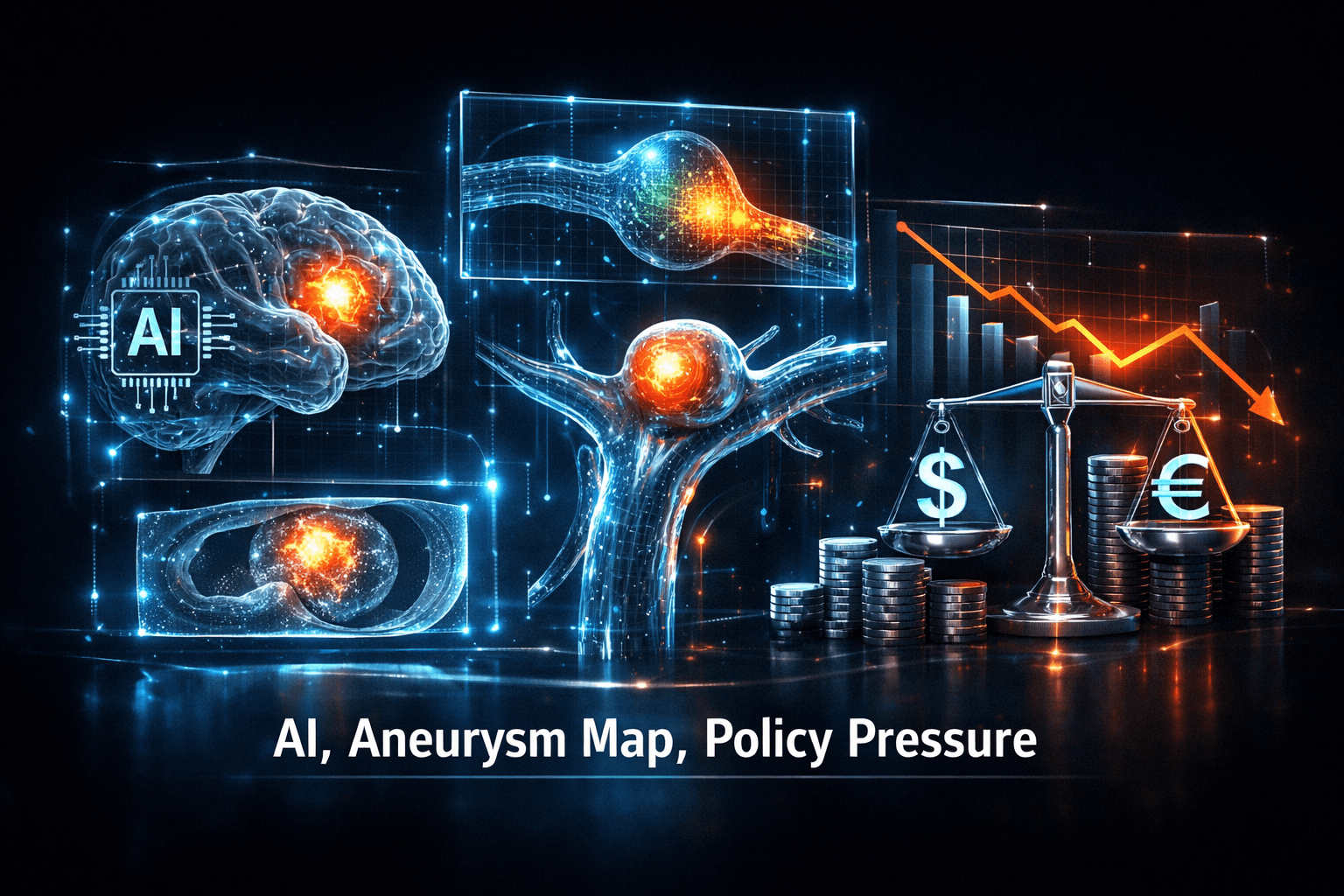
AI and new imaging tools are speeding diagnosis and shifting how care gets delivered, while policy fights and pricing pressure are forcing the industry to square innovation with cost constraints. You’ll see breakthroughs that could move the needle on outcomes, and political developments that could reshuffle margins.
For investors, that means watching both science and policy. Will faster diagnostics translate into faster revenue adoption, and how will payors and regulators respond? Those are the questions you should be asking this morning.
Market Highlights
Quick facts and developments to track as trading opens.
- AI tumor diagnosis: Heidelberg researchers developed an AI that classifies brain tumors from standard stained slides, identifying more than 100 molecular subtypes and delivering results in minutes, a step that could accelerate pathology workflows.
- Aneurysm biology: A UC San Francisco study mapped cell types linked to rupture risk, offering a potential predictive tool for stroke prevention research and drug targets.
- Imaging innovation: MIT’s augmented reality ultrasound system converts 2D scans into precise 3D visualizations for headset viewing, which could simplify exams and training.
- Policy and public health: California ballot initiatives tied to Medicaid funding and executive pay face industry pushback, while a protracted measles outbreak in Utah is stressing local hospitals and public-health systems.
- Biopharma movers: Merck $MRK and Gilead $GILD reported mixed clinical results that carry program-specific implications. A stealth startup, Treeline, is pursuing a reverse merger with an established public vehicle, signaling more consolidation in oncology R&D.
Key Developments
AI Speeds Tumor Diagnosis, Pathology Workflows
Researchers in Heidelberg unveiled an AI that classifies central nervous system tumors from routinely stained slides, reporting the ability to identify over 100 molecular subtypes within minutes. For you that means pathology bottlenecks could ease, potentially shortening time to treatment decisions and reducing lab costs.
If validated at scale, hospitals and diagnostics companies could adopt this as a workflow enhancer, which may benefit vendors of digital pathology and imaging infrastructure. How fast payors adapt will determine commercial upside.
Biology and Imaging: New Tools for Risk and Visualization
UC San Francisco’s cellular map of aneurysms isolates cell types associated with weakening and rupture, giving researchers candidate targets for prediction and prevention. That’s basic science now, but it sets the stage for diagnostics and therapeutic programs down the road.
At MIT, an augmented reality ultrasound system turns conventional 2D data into a 3D headset view, simplifying interpretation. Together these advances could improve procedural efficiency and training, and they highlight areas where medtech firms and hospital systems could invest to reduce exam variability.
Policy Pressure, Public-Health Strains, and Pricing Debates
In California, union-backed initiatives aimed at regulating community clinics and capping executive pay have drawn fierce industry opposition, with the specter of Medicaid funding cuts adding urgency. You should watch how these measures evolve, since state-level rules often ripple across provider economics.
Meanwhile a year-long measles outbreak in Utah is underlining epidemiological vulnerabilities and raising short-term operational stress on hospitals. On the pricing front, European governments are stepping up pressure on drug costs, a trend that could influence pricing strategies and negotiations for multinational pharma producers.
What to Watch
Here are the catalysts and risks that could shape sector moves in the coming days and weeks.
- Clinical readouts and regulatory milestones, including further updates from Merck $MRK and Gilead $GILD programs, will be market-moving for specific names. Analysts note that trial nuances matter for program valuation.
- Policy timelines in California, and any federal Medicaid funding signals, could affect provider margins and labor costs. Will measures make it to a ballot or be settled in the legislature?
- Commercialization timelines for new diagnostics and imaging tech, such as the AI tumor classifier and MIT’s AR ultrasound, are key. Look for pilot program announcements and hospital rollouts that indicate reimbursement progress.
- M&A and financing in oncology R&D. Treeline’s reverse merger plan spotlights a path to public markets for small drug developers, and you should monitor similar deals for potential spillover effects on sector valuations.
- European drug-pricing moves and any new pricing frameworks will affect multinational revenue forecasts, especially for high-cost specialty medicines. That risk could temper near-term sentiment even against promising trial data.
Bottom Line
- Scientific and digital advances, particularly in AI diagnostics and imaging, are delivering tangible workflow improvements that could boost efficiency for providers and vendors.
- Regulatory and political pressure, from California initiatives to European pricing debates, is an offsetting force that could compress provider and pharma margins.
- Clinical trial outcomes remain name-specific, so read the program details carefully before drawing conclusions about wider portfolio impacts.
- M&A and alternative public listing strategies are active again in oncology, so expect more reverse mergers and SPAC-like transactions to surface.
- Data suggests a selective approach is warranted, you should weigh technological adoption timelines against near-term policy risks and reimbursement uncertainty.
FAQ
Q: How soon could AI diagnosis change hospital workflows? A: Some diagnostic AI tools are already in pilot use and can deliver results in minutes, but broad clinical adoption depends on validation studies and reimbursement policies over the next 12 to 36 months.
Q: Will California ballot measures directly affect national healthcare stocks? A: State measures can set precedents, and large provider groups operating nationally could face increased compliance costs, so data suggests potential spillover effects for some names.
Q: What should you watch in clinical updates from Merck and Gilead? A: Look at endpoint definitions, subgroup results, and safety signals, because program-level nuances determine commercial implications more than headline efficacy statements.
Note: This briefing is for informational purposes only. Analysts note the developments above without offering personalized investment advice.