The Big Picture
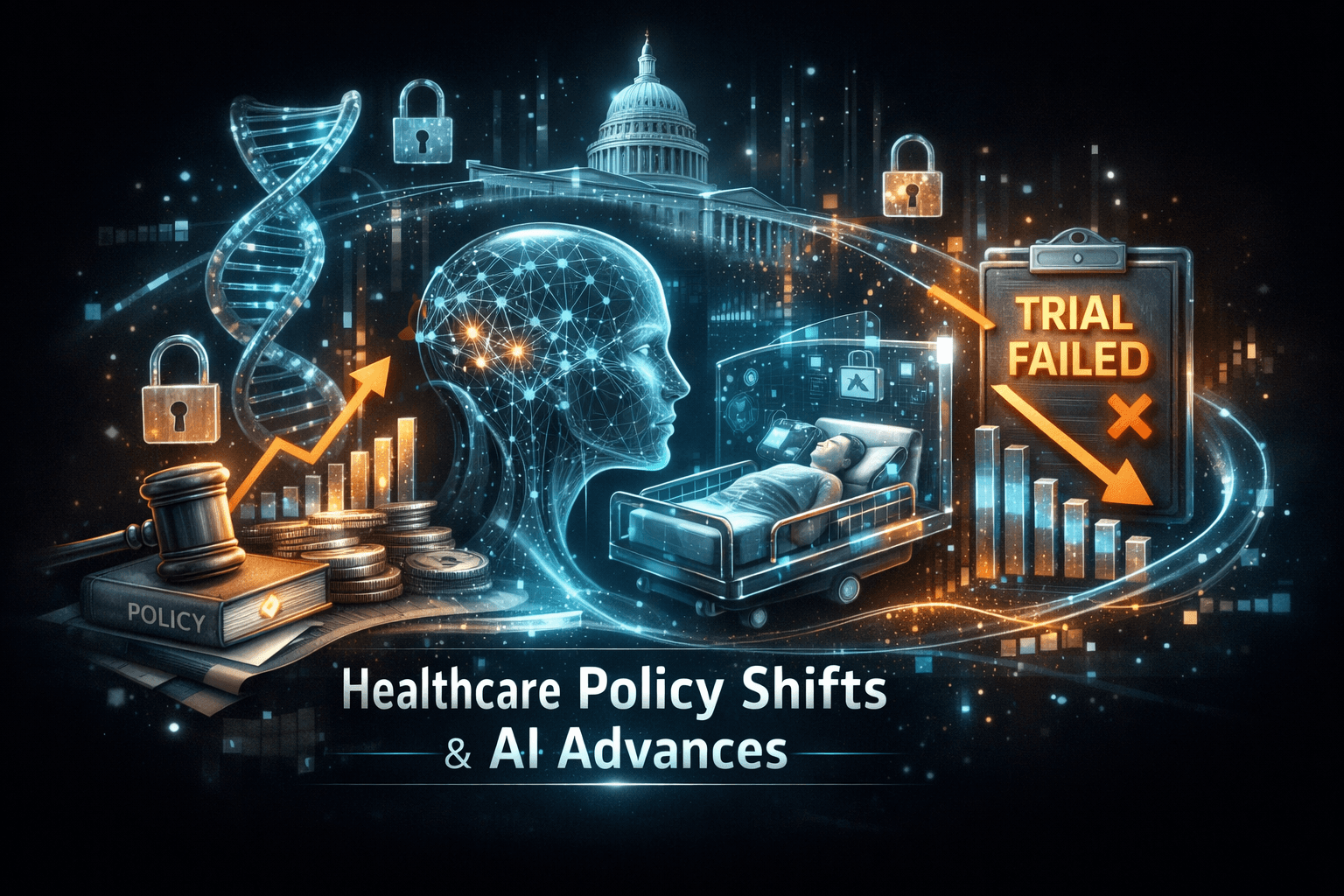
Healthcare headlines opened Jun 4 with a mix of innovation and policy friction that you should not ignore. Breakthroughs in spinal cord stimulation and fresh biotech funding sit alongside state-level Medicaid chilling effects, federal data access controversy, and a high-profile negative trial result.
That combination matters because it creates selective opportunities for clinical and AI plays while raising regulatory and reimbursement risks for providers and payers. What does this mean for health care investors and watchers? Expect heightened dispersion across companies depending on exposure to policy, privacy, and clinical readouts.
Market Highlights
Key moves and concrete numbers to note this morning.
- Global public health alert: WHO warns unsafe food kills about 1.5 million people per year, a reminder of persistent public health demand drivers.
- Biotech financing: Barcelona-based Ona Therapeutics raised $87 million to advance differentiated antibody-drug conjugates aimed at breast and colorectal cancers.
- Pharma research links: A headache risk study involved Teva Pharmaceuticals, among academic partners, highlighting cross-industry research collaborations, see $TEVA for market reference.
- Policy and privacy: Louisiana’s reporting law is reducing immigrant Medicaid applications, while U.S. Health Secretary RFK Jr. seeks broad access to medical records for research on autism and vaccine links, a development with major privacy and regulatory implications.
- Clinical readouts: A pioneering spinal cord stimulation pilot published in Nature Medicine reported improvements in arm and hand mobility for chronic stroke patients, suggesting long-term rehab upside.
Key Developments
Innovation: Spinal Cord Stimulation Shows Functional Gains
Researchers at the University of Pittsburgh published final outcomes from a pilot trial in Nature Medicine showing electrical spinal cord stimulation can improve arm and hand function in chronic stroke patients. The results are early but encouraging for device makers and clinical-stage neuromodulation developers, and they may attract investment into rehab-focused technologies you should track.
Biotech Funding and Trial News
Ona Therapeutics closed an $87 million raise to advance next-generation antibody-drug conjugates targeting advanced breast and colorectal cancers. That kind of Series/late-stage financing signals investor appetite for differentiated oncology platforms, even as the multi-cancer early detection space faces headwinds after a negative randomized trial result discussed in STAT.
Grail’s randomized multi-cancer early detection trial read as negative, yet oncologists argue there are lessons beyond headline outcomes. Clinical nuance may keep investor interest alive in next-generation diagnostics, but you’ll want to watch follow-up analyses and regulatory implications closely.
Policy, Privacy, and Access: Medicaid, Medical Records, and Patient Data
At the state level, Louisiana’s new reporting law is chilling Medicaid applications among immigrants and their children, potentially reducing insured patient volumes for safety-net providers. At the federal level, Health Secretary RFK Jr. seeks wide access to medical records through state health information exchanges to study autism and vaccine injuries, a move raising serious privacy, legal, and operational questions for health systems and tech vendors.
Separately, a STAT opinion piece warns that CMS guidance may leave certain cancer patients vulnerable to new Medicaid work or eligibility rules. Taken together, these developments create policy and compliance risks that can affect utilization, reimbursement, and EHR vendors you follow.
What to Watch
Look ahead to the catalysts and risk points likely to move stocks and sector narratives this week and beyond.
- Regulatory signals: Monitor CMS statements and any litigation over state reporting requirements and federal data-sharing pushes. Will regulators or courts limit broad access to patient records?
- Clinical readouts and analyses: Expect deeper dives into the Grail trial data and further publications from the spinal cord stimulation work. Secondary analyses can swing sentiment.
- Funding and partnership deals: Watch for M&A interest or strategic partnerships following Ona’s $87M raise, particularly from larger oncology players or CDMOs.
- AI adoption: STAT’s report on patient-facing ambient AI scribes hints at a new product category. Will payers and providers reimburse or adopt these tools, and how quickly will clinical workflows change?
- Public health events: WHO’s 1.5 million annual death estimate from unsafe food may spur policy and public health initiatives that affect diagnostics, vaccines, and supply chain plays.
Bottom Line
- Innovation momentum coexists with policy and privacy headwinds, producing a mixed landscape across the healthcare sector.
- Clinical and device advances, like the spinal cord stimulation results, could drive targeted investment interest, but timing and commercialization remain uncertain.
- Policy changes in Medicaid and federal data-access efforts raise utilization and compliance risks for providers and EHR vendors, factors that can affect revenues and costs.
- AI for patients represents an emerging opportunity, but adoption depends on reimbursement, regulation, and demonstrated clinical value.
- Stay selective, watch upcoming data releases and regulatory updates, and monitor how companies respond to privacy concerns and policy shifts.
FAQ Section
Q: How significant is the WHO finding on unsafe food? A: The WHO estimate that unsafe food causes about 1.5 million deaths annually highlights ongoing public health demand for diagnostics and food-safety interventions, which can influence related healthcare spending and policy action.
Q: Should you expect immediate market moves from the Grail trial news? A: Negative trial headlines can trigger short-term volatility, but analysts and clinicians often await subgroup and secondary analyses before changing long-term views.
Q: What should you watch regarding RFK Jr.'s medical records initiative? A: Track state partnerships, data governance plans, and privacy reviews, because legal or regulatory pushback could reshape the project and affect tech vendors and health systems involved.