The Big Picture
Tonight and this morning brought a string of headlines that should make you sit up if you follow healthcare stocks. Regulatory and safety issues are dominating the tape, while promising scientific updates offer limited offset.
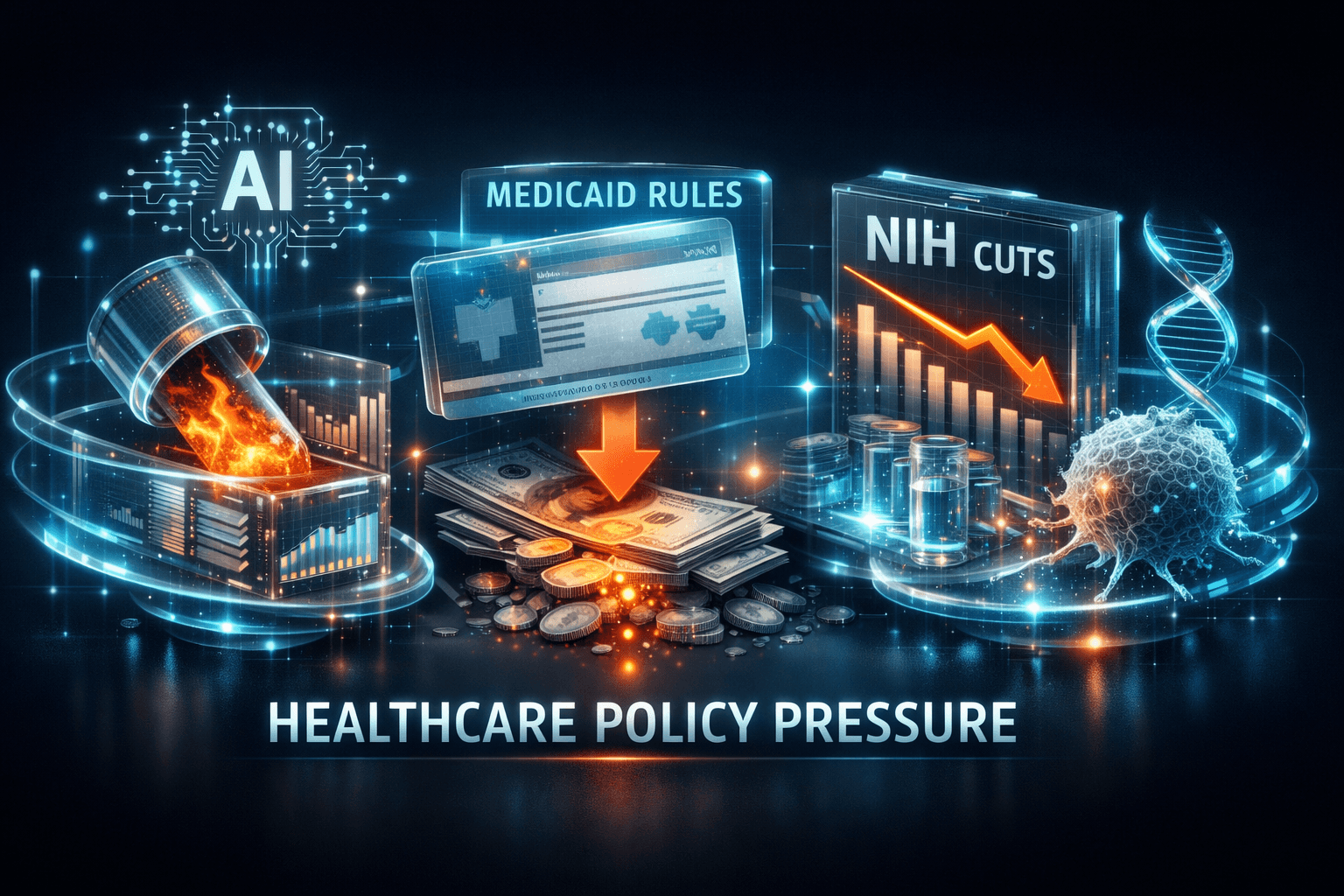
AI tools failing to detect months of fentanyl thefts and new federal and state policy moves on Medicaid and vaccines create headwinds for providers, hospitals, and certain life sciences names. At the same time, researchers presented encouraging cancer science and new single cell tools that could matter long term.
Market Highlights
Here are the quick facts and moves to note as U.S. markets trade today.
- Drug diversion software controversy: State records show AI-powered Sentri7 did not flag months of fentanyl thefts at a Tennessee hospital, raising questions about monitoring systems used at hundreds of U.S. hospitals.
- Policy pressure: New Medicaid work requirement rules and worries about coverage losses are prompting concern among healthcare advocates and analysts.
- Clinical disappointment: An ASCO-highlighted trial of gedatolisib for PIK3CA-mutated breast cancer underwhelmed investors, prompting downside sentiment for related biotech names.
- Scientific progress: A new single-cell platform tracked antibody delivery into solid tumors and cancer researchers reported several promising advances, offering longer term upside for oncology R&D.
Key Developments
AI and Drug Diversion: A Wake-up Call for Hospitals
State documents reveal that an AI-powered drug diversion system, Sentri7, failed to detect a months-long series of fentanyl thefts at a Tennessee hospital. The software is used at hundreds of hospitals, so the revelation raises broad questions about reliance on automated monitoring.
What does this mean for you as an investor? Expect increased scrutiny of clinical IT vendors and hospitals that lean heavily on AI for compliance. Regulators and clients may demand audits, supplemental controls, or manual checks.
Policy Shifts: Medicaid, Vaccines, and Funding Cuts
Newly proposed Medicaid work requirements under the current administration look set to remove coverage for some people, according to reporting. Separately, Michigan's attempt to reduce school vaccine waivers backfired and created tensions in public health outreach.
NIH funding cuts also weakened networks that respond to outbreaks, which analysts say could impair preparedness and long term research partnerships. These policy moves combine to increase regulatory and political risk for payers, providers, and public health contractors.
Clinical Results and Lab Security Concerns
At ASCO, gedatolisib for PIK3CA-mutated breast cancer failed to meet lofty investor expectations, even though investigators had called it potentially practice changing. The news prompted negative reaction in biotech sentiment and reminded markets that high expectations can magnify downside risk.
On a separate front, two scientists were charged with bringing deactivated mpox virus vials into the U.S. and lying to authorities. That case highlights operational and reputational risks for government and private labs, and could prompt tighter oversight.
What to Watch
You'll want to track several catalysts and risk points today and over the coming weeks.
- Earnings and guidance from hospital systems and clinical IT vendors, which may face questions on AI monitoring performance and compliance controls.
- Regulatory action or guidance on Medicaid work requirements and vaccine policy, which could affect reimbursements and patient volumes for providers and community clinics.
- Follow-up data from ASCO and other oncology presentations, plus peer commentary on gedatolisib, to see whether the initial disappointment holds or is reinterpreted.
- Any investigations or vendor statements related to the Sentri7 findings, and broader vendor assessments by hospital boards and auditors.
- NIH budget developments and statements from research centers about capacity to respond to outbreaks, since funding shifts can affect grant pipelines and contract revenues.
How will regulators respond to AI failures in hospitals? And can labs and vendors restore trust quickly? Those are questions that will drive headlines and likely share price volatility in the near term.
Bottom Line
- Headwinds dominate today, with safety, policy, and funding stories creating near-term downside risk for providers and some biotechs, analysts note.
- Scientific advances in single-cell tracking and oncology remain meaningful, but they are longer term drivers rather than immediate sentiment fixes.
- If you hold healthcare names, monitor vendor disclosures and regulatory developments closely, since those can trigger rapid revaluations.
- Expect continued volatility for small clinical-stage biotechs after ASCO results that fell short of investor hopes.
- Data suggests the market will favor companies with clear compliance controls, stable reimbursement exposure, and diversified revenue streams until policy and oversight clarity improves.
FAQ Section
Q: How serious is the AI drug diversion failure for hospitals and vendors? A: The case is serious enough to prompt internal reviews and external scrutiny because the software is used at hundreds of hospitals, and missed detections of controlled substance theft can lead to legal and reputational consequences.
Q: Will Medicaid work requirements immediately reduce provider revenue? A: Changes could reduce patient coverage over time, which may lower reimbursements for safety net providers and community clinics, but the timing and scale will depend on state implementation and legal challenges.
Q: Are the new oncology tools and single-cell findings investable catalysts now? A: They represent important scientific progress, but they are longer term plays since translating new platforms and early trial results into revenue can take years and requires additional validation.