The Big Picture
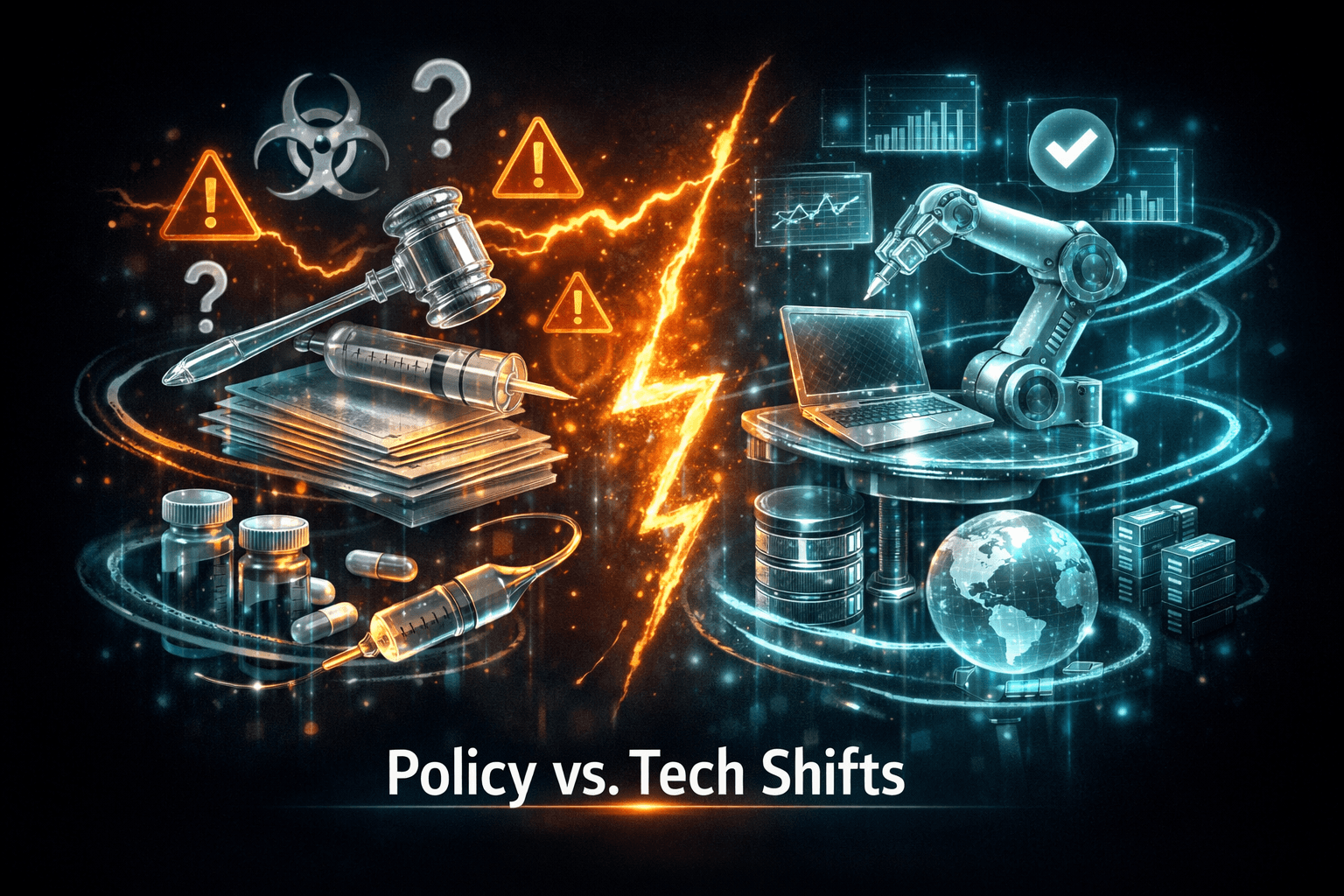
The healthcare sector opened today under mixed pressure, with policy and ethics stories raising regulatory uncertainty even as IT automation and outsourcing point to efficiency gains. You should be watching both the headlines on governance and the operational shifts in health systems because they affect different parts of the sector in different ways.
Political and advisory-board scrutiny of vaccines, plus an ethics disclosure drawing attention to $LLY, are competing with developments in automation, data workflows, and cost-focused outsourcing. Which trend wins out will matter for you if you track drugmakers, hospital operators, or health IT vendors.
Market Highlights
Here are the top developments driving headlines this morning. These items combine policy, public health, and industry operations that could influence sentiment across subsectors.
- Policy and governance: Opinion pieces and reporting are pressing for reforms to the CDC vaccine advisory process, and KFF reporting highlights controversial research amplified by new U.S. health policy leaders.
- Ethics and market focus: Disclosures show the U.S. president bought stock in Eli Lilly, $LLY, and in a maker of injectable devices while federal policies on obesity drugs moved forward.
- Global health: WHO member states began their annual assembly amid active outbreaks of hantavirus and Ebola, though WHO has kept a "low risk" evaluation for the hantavirus situation linked to a cruise ship.
- Operational shifts: InterSystems announced automation to enable bi-directional data exchange between Epic payer systems and health plan workflows, and sponsored coverage highlights gains from practice automation and strategic outsourcing in mature drug portfolios.
- Revenue pressure: Emergency medicine groups face diagnosis-based downcoding, a trend that threatens revenue for frontline providers and could pressure some hospital margins.
Key Developments
Policy and advisory credibility under scrutiny
STAT News published a detailed opinion calling for five changes to restore credibility to the CDC’s vaccine advisory committee. At the same time, KFF highlighted how work by two Danish researchers has gained new attention inside U.S. policy circles under recent leadership shifts. Analysts note that calls for reform and the rise of controversial voices can create short-term uncertainty around vaccine policy and guidance.
What does this mean for the market? You should expect heightened media scrutiny and possible shifts in advisory processes that could affect vaccine-centric companies, public health contractors, and trust in immunization programs.
Ethics disclosures put drugmakers in the spotlight
KFF reporting shows the president purchased stock in Eli Lilly, $LLY, and a firm tied to injectable devices, while federal agencies backed obesity drug policies. This raises questions about potential conflicts and will likely prompt investor attention to governance and policy risk for companies exposed to obesity and GLP-1 markets.
Market watchers are likely to track trading volumes and any regulatory follow-up. You can expect reputational and oversight risk to be part of the conversation for companies most tied to recent policy actions.
Public health events and WHO annual assembly
The WHO convened member states in Geneva amid active hantavirus and Ebola outbreaks. Medical Xpress reported that WHO maintains a "low risk" assessment for the cruise-ship linked hantavirus case as it approached the Netherlands, but the assembly comes at a tense time for global health governance, especially with noted withdrawals by the U.S. and Argentina.
Global outbreak news tends to drive short-term demand for diagnostics, certain therapeutics, and public health supplies. However, WHO’s assessments and containment progress will largely determine the market response.
Automation, data flow, and operational efficiency
Healthcare IT developments are a bright spot. InterSystems announced automation to support bi-directional data exchange between Epic’s payer platform and health plan workflows. Sponsored coverage in Healthcare Dive and BioPharma Dive highlights smoother patient experiences from practice automation and value extraction from mature drug products via strategic outsourcing.
Those operational shifts suggest a steady stream of contracts and upgrading for health IT vendors, and they may help hospitals manage costs as revenue pressures rise in other areas like emergency medicine downcoding.
What to Watch
Keep an eye on several short-term catalysts and risk factors that could move the healthcare patch this week.
- WHO assembly outcomes, statements, and funding decisions that may shape global public health spending or procurement timelines.
- Any official response or investigation related to the ethics disclosures involving $LLY and device manufacturers, which could raise governance scrutiny.
- CDC and ACIP news, including whether proposed reforms gain traction, because advisory changes alter vaccine recommendation timing.
- Quarterly commentary from hospital systems and emergency medicine groups on reimbursement, especially around algorithmic downcoding and revenue impacts.
- Contract announcements from major EHR and payer platforms, including InterSystems integrations, since execution could lift certain health IT suppliers.
Which of these will be decisive for you? It depends on whether you track policy-sensitive drugmakers, hospital operators, or health IT vendors. Analysts note that sector differentiation matters more than a broad bet right now.
Bottom Line
- Policy and governance stories are creating headline risk for vaccine-related companies and firms tied to obesity drugs, while WHO activity adds global health uncertainty.
- Operational news, including InterSystems’ data automation and broader practice automation trends, point to steady demand for health IT and outsourcing services.
- Emergency medicine revenue pressure from diagnosis-based downcoding is a near-term margin risk for providers and contract groups.
- Expect investor attention to split between regulatory/ethics headlines and execution on efficiency initiatives, so sector performance may remain mixed.
- Analysts note that selectivity will be key, as different subsectors react to very different catalysts this week.
FAQ
Q: How could WHO’s assembly affect healthcare companies? A: The assembly can influence funding priorities, procurement timelines, and global guidance, which in turn affects demand for diagnostics, therapeutics, and public health contracts.
Q: Does the ethics disclosure about $LLY mean regulatory action is coming? A: Not necessarily, but it raises governance and reputational risk that may prompt investigations or increased disclosure, and analysts will monitor any formal responses.
Q: Will automation and data exchange reduce hospital costs quickly? A: Efficiency gains often take time to materialize, but improved data flows and outsourcing can shave operating costs and improve throughput, helping offset pressures like downcoding over quarters.