The Big Picture
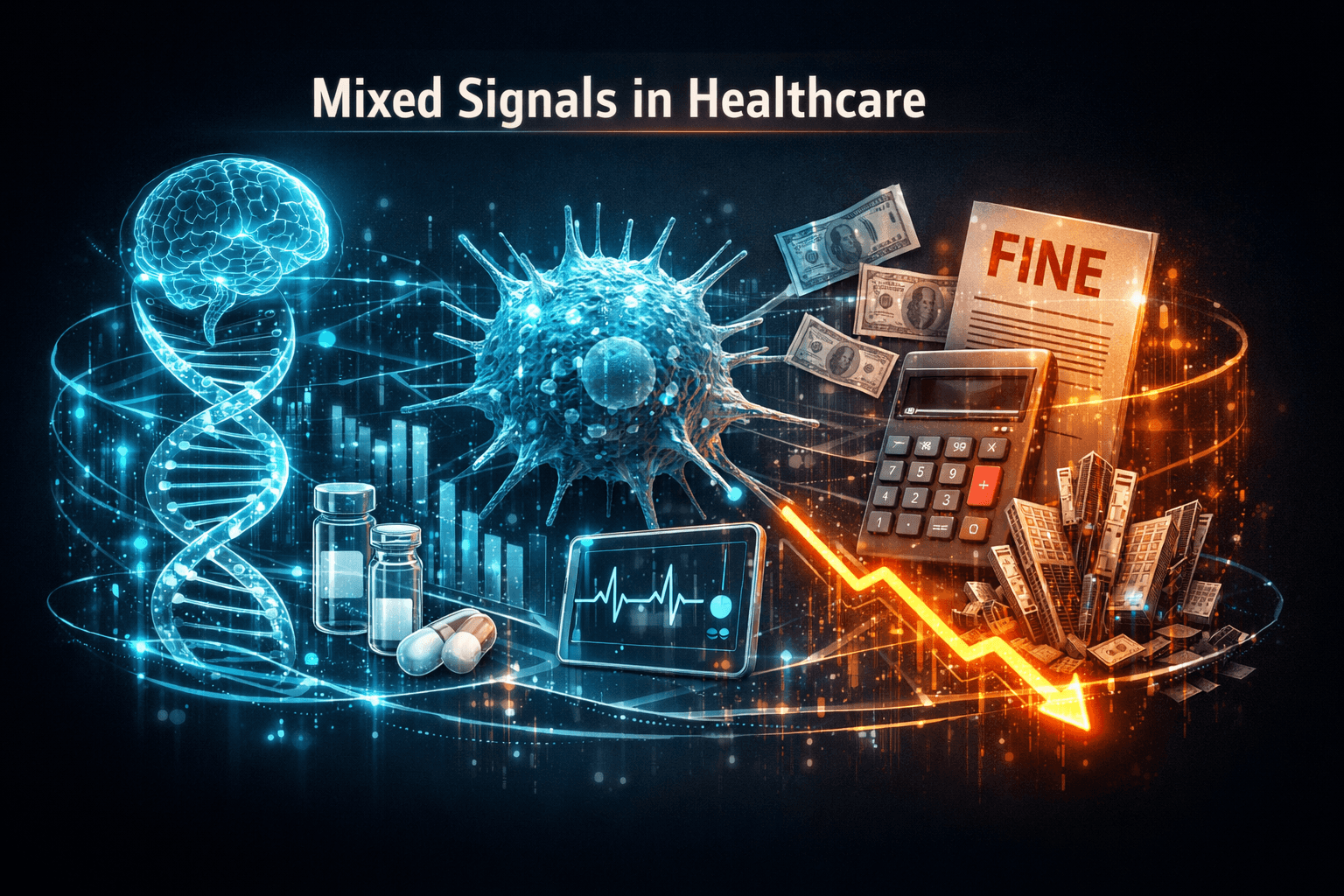
The healthcare sector closed the day with mixed signals that should leave you alert but not alarmed. Advances in interoperability and encouraging clinical data were offset by regulatory friction and signs of financial strain among providers.
Why this matters to your portfolio is simple, and you need to pay attention: technology and R&D breakthroughs can lift long-term growth, while fines, legal rulings, and rising bankruptcies can hit near-term sentiment and funding. What will likely matter tomorrow is how investors price regulatory risk against innovation momentum.
Market Highlights
Key facts and numbers that shaped headlines today.
- Healthcare IT momentum: Multiple industry pieces highlighted moves toward platform-based interoperability and automated payer workflows, underscoring IT-led efficiency gains for payers and providers.
- Bankruptcy uptick: The sector recorded 12 bankruptcy filings in Q1, a 33% rise from Q4 2025 according to Gibbins Advisors, signaling financial pressure in parts of the care delivery chain.
- Regulatory pressure on pharma marketing: France fined Novo Nordisk and Eli Lilly over weight-loss advertising, raising compliance scrutiny for obesity drugs and their promoters, with reputational risk for $NVO and $LLY.
- Scientific progress: New preclinical and translational results boosted prospects for myelin repair strategies in MS and strengthened data supporting a breast cancer therapy from Celcuity ahead of ASCO presentations.
- Care access gap: A University of Mississippi study found about 80% of Mississippi counties lack adult day service centers, highlighting persistent service shortfalls for dementia care.
Key Developments
Interoperability and payer modernization take center stage
Healthcare IT outlets ran a series of stories highlighting moves from patchwork systems to platform-based approaches and automated data exchange between payer platforms and health plan workflows. InterSystems' work to automate bi-directional exchange with Epic Payer Platform illustrates tangible progress toward faster claims and care coordination.
For you that means potential margin tailwinds for tech vendors and lower administrative friction for payers. IT modernization is a multi-year theme that could help certain software and services providers grow revenue while lowering operating costs for customers.
Clinical science: MS repair strategies and cancer trial momentum
Researchers reported two drug strategies that boost myelin repair in MS models and reduce neuroinflammation. Meanwhile Celcuity released data that strengthens the case for a breast cancer therapy to be highlighted at ASCO, which could support a broader regulatory filing down the line.
These findings keep R&D momentum alive. You should watch trial readouts and regulatory timelines closely, because positive clinical readthroughs tend to be binary catalysts that can move biotech valuations sharply.
Regulatory and legal headwinds weigh on sentiment
France's decision to fine Novo Nordisk and Eli Lilly for weight-loss ad campaigns highlights growing global scrutiny of obesity drug marketing. Separately, opinion coverage warned that recent court rulings around mifepristone increase uncertainty for drug development and access.
Regulatory enforcement and litigation risk can ripple through the sector. Investors will likely demand clearer compliance plans and may penalize perceived marketing excesses until guidance or settlements reduce uncertainty.
What to Watch
Looking ahead, several catalysts could shift sentiment quickly, so you should track them closely.
- Upcoming conferences and readouts, notably ASCO, where Celcuity will spotlight data that could influence a regulatory strategy and partner interest.
- Policy and legal developments related to drug advertising and court rulings on reproductive health products, which may alter regulatory expectations across the industry.
- Quarterly filings and balance sheet updates from health systems and providers, given the reported 33% quarterly rise in bankruptcy filings in Q1 that signals funding stress for some operators.
- Adoption metrics for interoperability platforms, including deals and deployment milestones from payer and hospital customers, because operational savings can show up in vendor revenue visibility.
- Funding flows into neuro-repair and immuno-oncology programs; are investors rotating toward innovation or moving to defensive healthcare names?
Which of these will matter most to you may depend on your exposure to payers, biotech, or provider credits. What do you want to see next, clearer regulation or stronger clinical proofs?
Bottom Line
- Neutral day for healthcare, with IT and R&D wins balanced by regulatory fines and financial stress among providers.
- Interoperability advances point to long-term efficiency gains for payers and vendors, offering a steady growth theme to monitor.
- Clinical progress in MS and cancer keeps biotech catalysts in play, but trial and approval timing will drive near-term moves.
- Regulatory enforcement and court rulings are active downside risks, especially for firms in high-profile therapy areas and marketing programs.
- Rising bankruptcies highlight the need to assess balance-sheet strength for provider and services exposure in your portfolio.
FAQ
Q: How should I think about regulatory fines for big pharma? A: Fines raise compliance and reputational risk and may pressure short-term sentiment. Analysts note these events often prompt stronger oversight and higher marketing scrutiny.
Q: Will healthcare IT modernization benefit specific stocks? A: Data suggests platform wins help vendors scale and stabilize revenue. You should track contract announcements and deployment milestones to gauge which companies are gaining share.
Q: Do rising provider bankruptcies signal a broader crisis? A: The 12 Q1 filings and 33% increase point to stress in certain regions and segments. This is a warning sign to monitor balance sheets and payer reimbursement trends rather than a systemic indictment of the entire sector.