The Big Picture
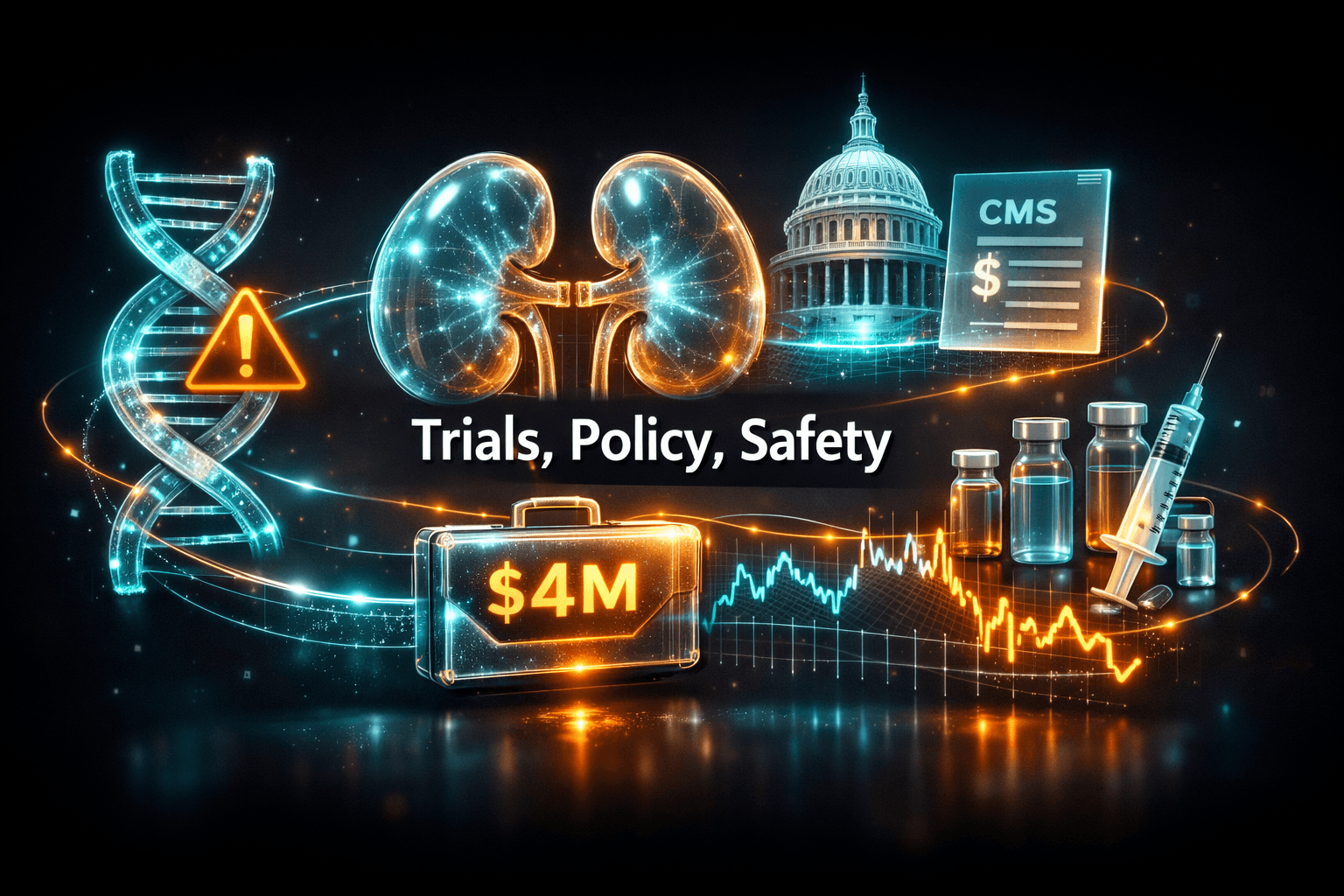
The healthcare sector finished the day showing mixed signals, as clinical optimism and federal support were offset by safety studies and policy proposals that could squeeze margins for device makers. You saw clinical excitement around a potential pancreatic cancer breakthrough, and you also saw regulators and researchers putting pressure on areas that have driven sector growth, like GLP-1 weight-loss medicines and accelerated device reimbursement.
Why should you care? These stories affect clinical adoption, regulatory risk, and reimbursement, which in turn influence revenue trajectories for biotech, medtech and large drugmakers. Expect headlines to keep moving share prices as new data and policy details emerge.
Market Highlights
Trading reflected the mixed news flow, with selective strength in oncology names and pressure on some device and obesity-related drug stocks. Preliminary intraday moves were modest and varied across subsectors.
- Revolution Medicines $RVMD saw notable gains in early trading after expert commentary called a recent pancreatic cancer readout potentially paradigm shifting, with preliminary moves roughly up 5 to 7 percent.
- Large drugmakers tied to incretin medicines, including $NVO and $LLY, traded lower on headlines about muscle loss associated with semaglutide and tirzepatide, down in the low single digits.
- Medtech names such as $MDT registered weakness after the CMS proposal to repeal the add-on payment path for breakthrough devices, with intraday declines in the 2 to 4 percent range.
- Health IT and public health plays responded to HHS and KidneyX funding news, while hospital operations stories drew local interest after UMC El Paso highlighted a 50 percent cut in ED boarding times via dashboards.
Key Developments
Revolution Medicines and a possible new era in pancreatic cancer
STAT reported that experts view Revolution Medicines' daraxonrasib data as potentially transformative, with NYU Langone's Paul Oberstein quoted calling it a revolution. You might see increased investor attention on $RVMD as analysts reassess the commercial and regulatory path for targeted KRAS inhibitors.
The implication is clear, clinical readouts can rapidly change sentiment in oncology. Expect continued focus on confirmatory data, broader trial enrollment, and potential partnership or commercial planning next steps.
CMS proposes repeal of add-on payments for breakthrough devices, creating reimbursement risk
CMS unveiled a proposal to repeal the alternative add-on payment path for breakthrough devices, citing concerns about the evaluation process. That is material for medtech firms pursuing expedited routes to market because the add-on payment has been a financial incentive tied to adoption.
If finalized, device makers may face longer timelines to recoup R&D investments through hospital reimbursements. You should watch near-term guidance from companies with products on the pathway and commentary from industry groups during the public comment period.
Safety and public-health studies shift the narrative on popular interventions
Two separate studies drew attention. A UNC study linked incretin-based obesity and diabetes drugs to notable muscle loss relative to weight lost, raising questions about long-term functional outcomes for patients on semaglutide and tirzepatide. At the same time, a Nordic register study showed that early, high-dose folic acid before pregnancy cut major congenital anomalies by about 45 percent in women using antiseizure medications.
These findings push providers and payers to weigh benefits against harms more carefully. What does this mean for adoption and labeling? Expect clinicians to demand clearer risk mitigation guidance and for regulators to watch post-marketing data more closely.
What to Watch
Near term, focus is likely to concentrate on three areas that will shape market moves and company outlooks.
- Clinical follow-ups and regulatory filings, especially additional data from Revolution Medicines and other KRAS-targeted programs, which could update market expectations for oncology revenue streams.
- CMS rulemaking and the public comment period on the breakthrough device add-on payment. Device companies and trade groups will likely lobby hard, and you should watch for interim guidance that could affect reimbursement forecasts.
- Safety signals for GLP-1s and incretin drugs. Expect more observational data and possible label updates. How will payers respond if muscle loss becomes a recognized risk? Supply and demand dynamics for obesity treatments could shift.
Also watch the HHS KidneyX challenge. It's a $4 million program aimed at transplant innovations and data interoperability. Could that accelerate tech adoption in nephrology and create new partners for health IT companies? Time will tell.
Bottom Line
- Sector sentiment is mixed, reflecting both clinical upside and policy or safety headwinds.
- Clinical readouts, especially in oncology, remain powerful near-term catalysts that can lift single names quickly.
- Regulatory and reimbursement moves, notably the CMS proposal, pose concrete risk for medtech revenue timing and valuation multiples.
- Emerging safety data on popular weight-loss drugs could reshape prescribing patterns and payer coverage over the medium term.
- Federal initiatives like KidneyX and operational improvements in hospitals show pockets of constructive momentum for health IT and care delivery innovation.
FAQ Section
Q: How might the CMS proposal affect medtech companies? A: If finalized, repealing the add-on payment path could slow hospital adoption of breakthrough devices by reducing near-term reimbursement incentives, which may depress short-term revenue for affected companies.
Q: Should safety studies on GLP-1s change how the drugs are used? A: Safety data suggests clinicians will need to monitor muscle mass and functional outcomes more closely, and guideline panels may update recommendations as more evidence emerges.
Q: What signals should you watch from clinical readouts? A: Look for confirmatory efficacy across broader populations, durability of response, safety profiles, and regulatory filings because these determine commercial potential and valuation revisions.