The Big Picture
Regulatory policy took center stage today as the Centers for Medicare and Medicaid Services proposed rolling back a payment pathway for breakthrough medical devices, a move that could reshape medtech reimbursement and investor expectations. At the same time, private capital and health IT momentum surfaced, with a $300 million biotech debut and multiyear partnerships bringing peer reviewed evidence into clinical decision support.
Why this matters to you as a healthcare investor is simple: policy shifts can change revenue models for device makers, while technology and early-stage biotech financing influence longer term innovation and M&A dynamics. Reading between the lines, the market is getting a mix of short term caution and longer term growth signals.
Market Highlights
Here are the quick facts and company-specific items that moved or could move market sentiment today. Not every organization in these stories is publicly traded, so direct equity reactions were limited in some cases.
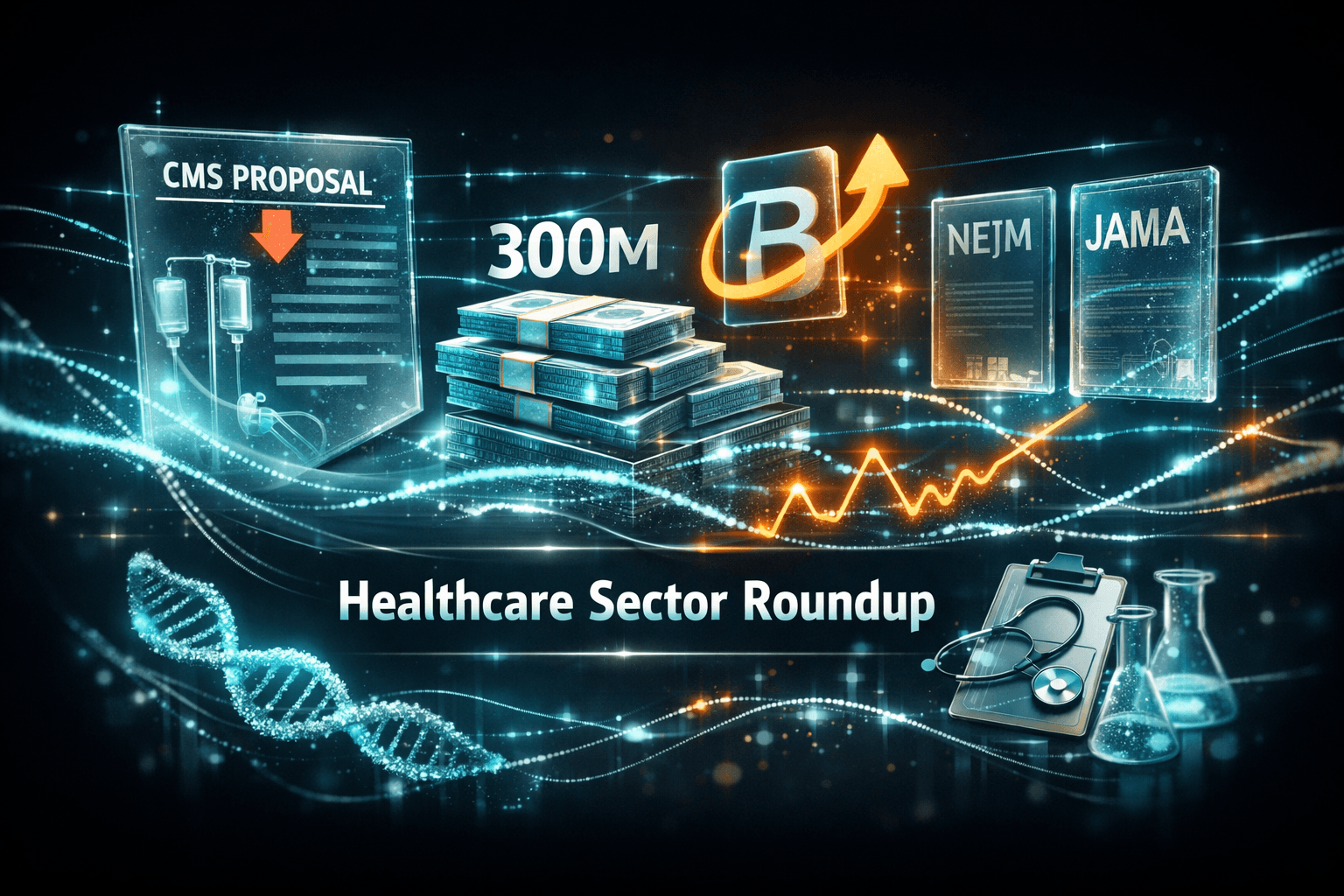
- CMS proposal: STAT reports CMS would repeal a supplementary payment pathway for breakthrough devices, a regulatory development that could pressure medtech reimbursement models and margins.
- Beeline debut: Bain-backed Beeline launched with $300 million in financing and immune drug assets originating from Bristol Myers Squibb, signaling fresh private capital flowing into autoimmune drug programs.
- Abridge partnerships: Abridge announced multiyear collaborations with the New England Journal of Medicine and the JAMA Network to incorporate peer reviewed evidence into its AI clinical decision support tools, boosting health IT credibility.
- Clinical research: A Neurology study linked air pollution plus heat and humidity to increased migraine activity, and separate research identified ATP signaling mechanisms that help start the colon's giant migrating contractions.
- Operational and policy items: HIMSS moved from benchmarking to digital maturity advisory services, ChristianaCare named a successor after a 12+ year CEO tenure, and a study found more insurance claim denials are being overturned on appeal.
Key Developments
CMS proposes rollback of breakthrough device payment flexibilities
STAT reported that CMS is proposing to eliminate a pathway that allowed supplementary payments for breakthrough devices. That pathway gave some novel technologies a clearer reimbursement route during early commercialization.
Implications for investors are immediate and sector wide, because reimbursement uncertainty can slow adoption and reduce revenue forecasts for device makers. If you're tracking medtech names, watch for analyst commentary and any company guidance updates later this week.
Beeline launches with $300 million, brings Bristol Myers immune assets
Private equity and biopharma continues to reshape the drug development landscape. Beeline, backed by Bain and capitalized with $300 million, debuted with an oral lupus candidate and other autoimmune programs that originated at Bristol Myers Squibb.
This kind of spinout sends two signals: big pharma continues to farm out mid‑stage assets to focused startups, and private capital remains willing to fund immunology bets. For you, that means watch partnering and licensing activity closely, since big exits often follow successful proof of concept.
Health IT momentum: Abridge, HIMSS, and security focus
Abridge announced multiyear collaborations with the New England Journal of Medicine and the JAMA Network to surface peer reviewed evidence inside its AI decision support platform. HIMSS said it's shifting from benchmarking to digital maturity advisory, and a CIO highlighted the need to pair AI adoption with strong cybersecurity.
These items collectively show health systems and vendors are moving from pilot to production considerations, and that quality of clinical evidence and security posture will be key procurement criteria. If you're following health IT equities, expect more vendor consolidation and differentiated partnerships to grab attention.
What to Watch
Several near-term catalysts could change the picture again, so keep your watchlist ready and your time horizon clear.
- Regulatory follow through: Track CMS rulemaking timelines and industry comment letters, because final language on breakthrough device payments will determine practical impact and could trigger equity repricing for medtech firms.
- Clinical readouts and trial design scrutiny: The psychedelics trial reliability piece underscores methodological risks in emerging psychiatric therapies. Look for trial design updates and placebo controls that address blinding challenges.
- Health IT deal flow: Watch for additional partnerships and commercial rollouts from Abridge and competitors, and monitor vendor customer wins among regional health systems where you may see early revenue lift.
- Insurance and reimbursement trends: The study showing more overturned claim denials raises policy and margin questions for payers and providers alike. You should follow state and federal responses that could reshape claims processes.
- Corporate moves: Leadership transitions, like ChristianaCare’s planned CEO change in September after more than 12 years under Dr. Janice Nevin, can affect strategy and local market partnerships.
Bottom Line
- Regulatory risk is front and center for medtech as CMS proposes removing a payment flexibility, driving near‑term caution in device reimbursement outlooks.
- Private capital and asset spinouts remain robust, shown by Beeline’s $300 million debut and licensed Bristol Myers assets, indicating continued funding for specialty biotech.
- Health IT is moving toward integrated evidence and production deployments, with Abridge’s deals and HIMSS shifting advisory focus boosting sector fundamentals.
- Clinical research findings and trial design critiques create both scientific clarity and program risk, especially in fields like psychedelics and population health impacts from pollution.
- In short, the sector shows mixed signals today, so a selective, research driven approach is warranted as you assess exposure and near term catalysts.
FAQ Section
Q: How could the CMS proposal affect medtech company revenues? A: Repealing supplementary payments may slow early reimbursement for some breakthrough devices, which could delay adoption and tighten near term revenue projections.
Q: Should I expect immediate market moves from Beeline’s launch? A: Beeline is privately funded, so public market moves will depend on downstream licensing or M&A, not the private financing itself.
Q: What does the psychedelic trial reliability story mean for drug development? A: It flags methodological limitations that can overstate efficacy, so you should watch for improved blinding strategies and independent replication before drawing conclusions.