The Big Picture
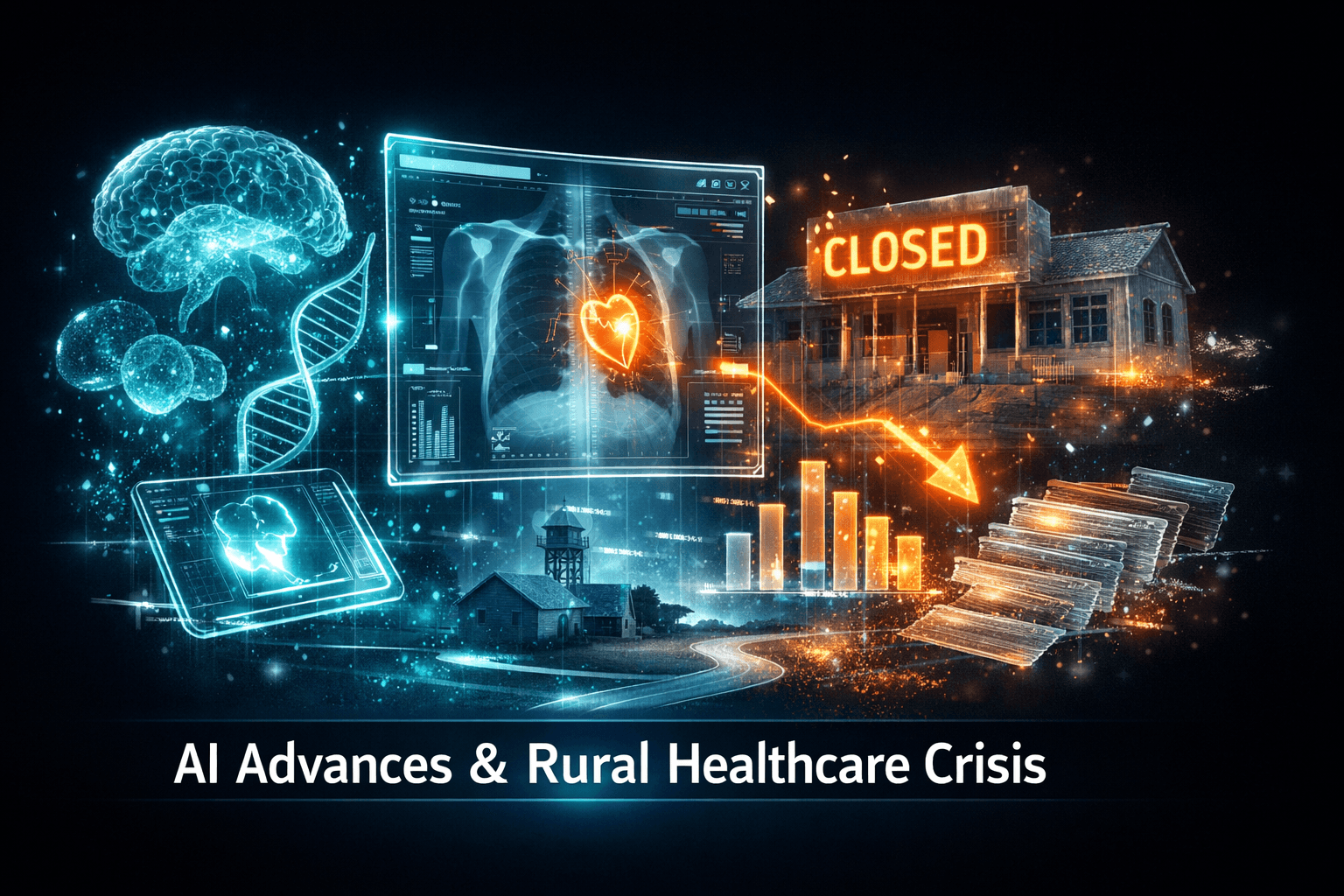
Today’s healthcare headlines show a sector advancing scientifically while grappling with access and payment challenges. Breakthroughs in predictive diagnostics and opportunistic AI screening are matched by clinic closures, enrollment losses, and questions about who pays for new tools.
That mix matters for you because clinical promise alone rarely moves markets unless payers, regulators, and providers align. Data suggests innovation may drive long term value, but near term execution and reimbursement will likely determine winners and losers.
Market Highlights
- New diagnostic: Researchers at the University of Pennsylvania published a blood test in Nature Medicine that predicts kidney failure risk in people of African ancestry carrying APOL1 variants, years before symptoms appear.
- AI screening debate: STAT reports AI could screen millions of existing CT scans for heart risk, but financing and outcome benefit remain unresolved.
- Rural strain: A Nebraska dialysis unit closed despite the state receiving $219 million in federal rural health funds this year.
- Coverage drop: KFF finds Medi-Cal lost about 100,000 undocumented immigrants in H2 2025, with researchers pointing to fear of federal immigration policy changes as a key driver.
- Clinical research notes: Studies link loneliness to higher degenerative valve disease risk, and ISB researchers captured early drug-tolerance behavior in cancer cells that could affect targeted therapy durability.
Key Developments
Genetics-based kidney test could change screening
A team from the Perelman School of Medicine unveiled a blood test that stratifies kidney failure risk among people of African ancestry who carry APOL1 risk variants. Published in Nature Medicine, the test aims to identify high-risk individuals years before clinical disease appears.
For healthcare companies and diagnostics firms this is potentially material because earlier prediction can shift care pathways and testing volumes. But you should note validation, regulatory review, and payer acceptance will be required before commercial impact becomes clear.
AI could mine CT archives, but reimbursement is the sticking point
STAT’s reporting highlights tools that can opportunistically read existing CT scans for coronary artery calcium and other heart-risk markers. The upside is scale, because millions of scans are already in health system archives.
Who pays for retrospective screening remains an open question. Payers may only reimburse if outcome improvements are shown. That means companies building these tools will need clinical-validation studies and clear business models before broader adoption moves revenue lines.
Access and policy pressures weigh on care delivery
Meanwhile, KFF and local reporting underline real world access issues. A rural Nebraska dialysis unit closed even as the state received $219 million in rural health funding, underlining that money alone does not guarantee clinic viability.
Medi-Cal’s loss of nearly 100,000 undocumented enrollees in late 2025 adds another layer of uncertainty, with researchers citing immigration policy fear as a likely cause. Those coverage shifts affect payer mixes, outpatient volumes, and hospital margins in some markets.
What to Watch
Watch reimbursement signals closely. Will Medicare, state Medicaid programs, or commercial plans offer codes or pathways for opportunistic AI reads and new predictive diagnostics? If not, clinical uptake could stall even for validated tools.
Regulatory and validation milestones matter. You should track Nature Medicine follow-ups, FDA communications, and peer replication for the APOL1 test and for AI screening studies. Clinical outcomes data will be a gatekeeper for payer support.
Provider economics and rural funding use will be important. How are states deploying federal rural health dollars, and will hospital systems consolidate or divest loss-making units like small dialysis clinics? Those moves affect regional care networks and vendor contract economics.
Finally, keep an eye on scientific reproducibility and publishing transparency after STAT’s coverage about a Paxil study. Will journals change how they flag concerns? Trust in clinical evidence is a hidden but vital market input.
Bottom Line
- Scientific advances are real, but commercial impact depends on validation and payer alignment.
- AI imaging and opportunistic screening could scale rapidly if reimbursement is solved, otherwise adoption may be limited to pilot programs.
- Access pressures, including clinic closures and enrollment drops, create near-term headwinds for providers in some regions.
- Policy and publishing transparency are risk factors to watch, they influence patient flows and scientific trust.
- This briefing is informational only, not investment advice. Analysts note that execution, not just science, will drive market outcomes.
FAQ Section
Q: How soon could the APOL1-based kidney test affect patient care? A: If further validation and regulatory review go smoothly, pilot clinical use could appear within months to a few years, but payer coverage will determine scale.
Q: Will AI screening of CT scans save money for health systems? A: The tools could identify untreated risk cheaply, but evidence that screening changes outcomes and lowers long term costs is still needed before payers routinely fund it.
Q: What should you monitor to gauge sector momentum? A: Track regulatory actions, payer coding decisions, peer-reviewed replication studies, and local provider financials, because these factors influence adoption and revenue potential.
Have you got skin in the game and want to stay informed? Follow reimbursement updates and clinical validation results, they often set the pace for market moves.