The Big Picture
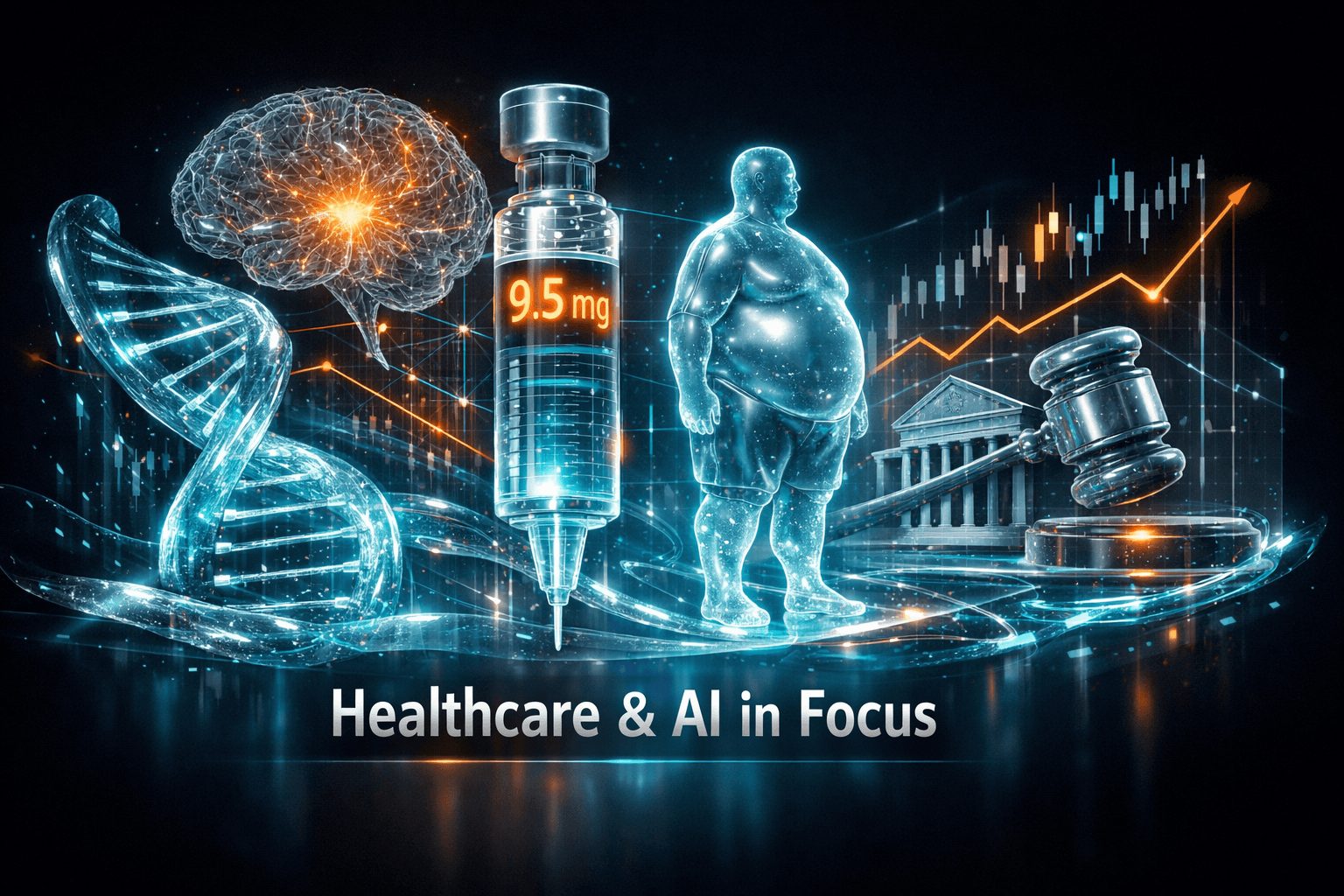
Today delivered a mix of scientific advances, commercial product news and growing scrutiny over AI and policy that should matter to investors and health-care watchers alike. You saw research that increases genetic diversity in datasets, promising preclinical work on regenerating joints, and $NVO moving the obesity market with a high-dose Wegovy launch.
At the same time, regulators and payers are tightening the frame around AI use and drug policy proposals are reappearing in Washington, creating questions for companies and health systems. How these threads come together will shape valuations and operational priorities in the days ahead, and you should be watching both the science and the policy signals.
Market Highlights
Here are the quick market facts and notable moves from today.
- Terns, a leukemia drug developer, accepted a lower offer before selling to $MRK, regulatory filings show the ultimate deal was about 15% below a prior proposal.
- $NVO announced a high-dose Wegovy launch, extending the obesity drug franchise that has driven strong sales growth for the company.
- Health IT adoption stories moved the tape for some smaller vendors after reports that medication inventory tech helped a four-hospital system avoid more than 500 stockouts.
Technology and AI product releases were highlighted in several briefings, while policy pieces on drug manufacturing and state chatbot rules added a regulatory flavor to trading-day commentary.
Key Developments
Novo Nordisk ups the ante in obesity
$NVO launched a high-dose Wegovy formulation, a strategic product extension that could sustain uptake among prescribers and patients. Analysts and insurers are watching how dosing changes affect coverage, utilization and Medicare Advantage plans; this is likely to shape revenue trajectories and competitive responses from rivals.
For you as a reader, this means the obesity drug race remains a key earnings and pricing story to follow, with potential flow-on effects for adjacent biotech players and specialty pharmacies.
AI in clinical workflows, and the tug of regulation
Multiple vendors unveiled new AI tools aimed at nursing, coding and revenue cycle management, illustrating a shift toward domain-specific automation that promises efficiency and safety gains. One product roundup highlighted how tighter native integration and reasoning capabilities are the next step for AI in health systems.
At the same time, states are moving to regulate clinical chatbot use and patients are asking doctors whether they can opt out of AI note-taking. Those developments create operational and legal risk for rapid AI adopters. Where might regulation bite next, and how fast will payers respond? Those are questions health IT leaders and you should be asking.
Research, operational wins and M&A dynamics
Researchers mapped nearly 29,000 genetic switches unique to East Asian populations, a dataset that helps close diversity gaps and could broaden target discovery across many drug programs. Separately, scientists reported progress on methods to regrow joints damaged by arthritis, a research area with large market potential if translated successfully.
Operationally, a Georgia health system credited inventory tech with avoiding more than 500 medication stockouts, a clear example of cost and care resilience gains. Meanwhile, Terns' sale to $MRK after rebuffing a higher bid shows active M&A interest in oncology but also signals that competitive tension doesn't always push prices higher.
What to Watch
Look to the following near-term catalysts and risks as you track the sector into tomorrow and beyond.
- Regulatory moves: State-level chatbot rules and federal signals on AI oversight could affect product rollouts and contracting. Monitor announcements and guidance from state health departments and CMS.
- Coverage decisions for Wegovy dosing: Payer guidance on the high-dose Wegovy could alter utilization trends, so watch insurer policies and Medicare Advantage communications.
- Clinical research milestones: Any clinical-readout timelines for joint-regeneration work or translational efforts using the East Asian genetic dataset could re-rate relevant biotech names.
- M&A and deal terms: The Terns outcome shows pricing can vary; track future disclosure around bidding dynamics and near-term buyout chatter in oncology.
- Operational metrics at health systems: Inventory tech adopters may report fewer stockouts and smoother supply chains, which could show up in public health system operational updates or vendor earnings.
Bottom Line
- Today's news is mixed, with research and product launches offering upside while regulatory and policy developments add caution.
- Science and AI remain growth vectors, but regulation and payer response will determine adoption speed and commercial returns.
- M&A interest continues in specialty therapeutics, yet deal pricing can be unpredictable as the Terns sale shows.
- Operational technology that reduces stockouts delivers measurable value to health systems and may factor into procurement decisions you should track.
- Keep a selective approach, following specific catalysts like payer coverage for Wegovy dosing and any regulatory guidance on clinical AI.
FAQ Section
Q: How will the high-dose Wegovy launch affect payer costs? A: Insurers will review clinical and utilization data before broad coverage changes; early impact will depend on Medicare Advantage and commercial policy updates.
Q: Should you expect strict limits on AI in clinical settings soon? A: States are actively proposing rules and some health systems are setting policies, so expect phased restrictions and consent requirements rather than an immediate nationwide ban.
Q: Do the new East Asian genetic markers change drug development timelines? A: They expand research inputs and may accelerate target validation for populations previously underrepresented, but translation into approved therapies will still take years.