The Big Picture
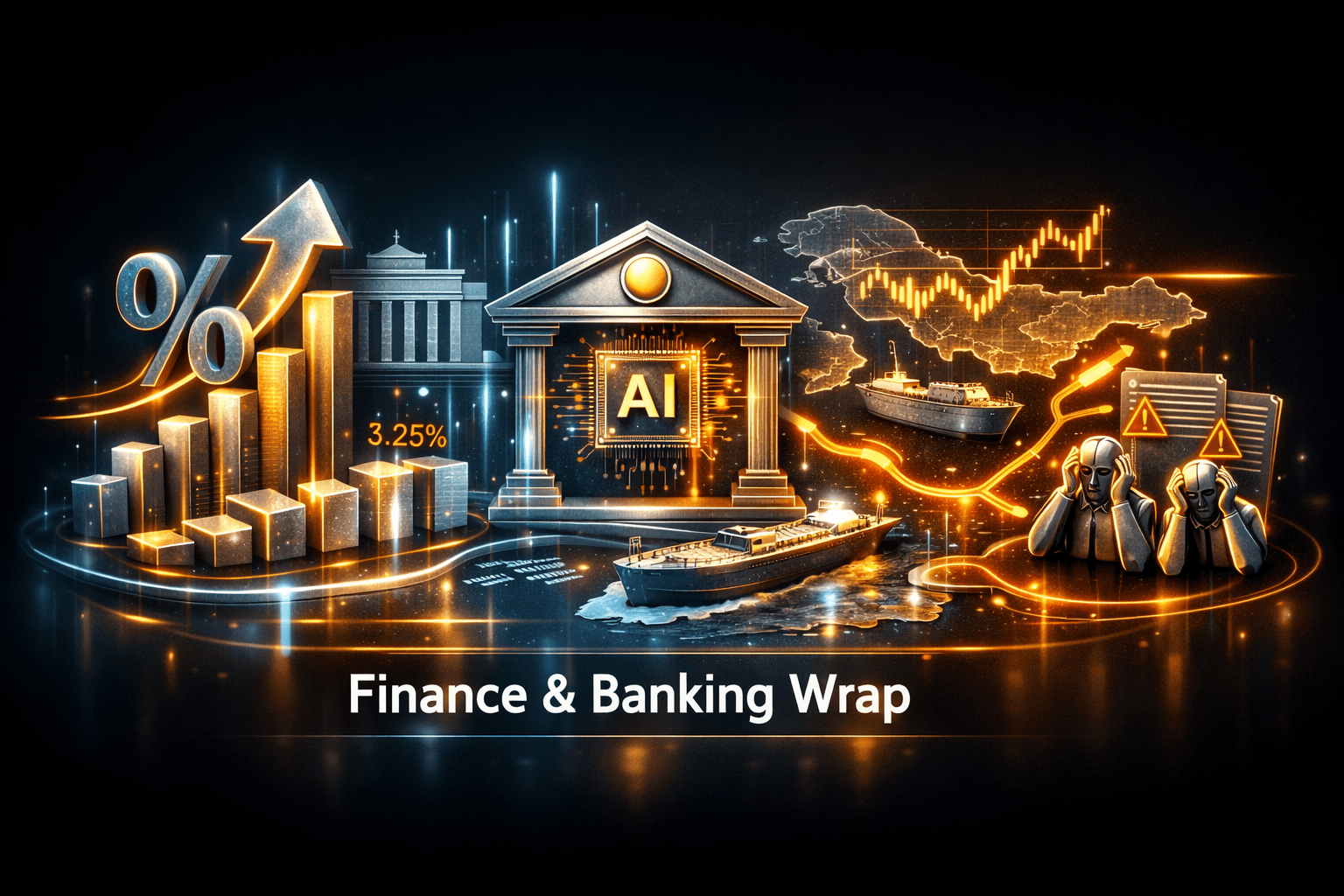
Today brought a mix of policy, geopolitics, and sector-specific news that left the Finance & Banking complex in a holding pattern. The Federal Reserve opted for a rate hike, while state regulators released a proposed AI framework for bank examiners and Saudi Arabia shifted more oil exports through the Strait of Hormuz.
Those developments matter because they touch three investor priorities: interest-rate trajectories, regulatory risk for lenders and fintechs, and energy-driven inflation and earnings for financials with commodity exposure. You should be tracking how each thread affects your portfolio exposures to banks, fintech, and energy credits.
Market Highlights
Quick facts and movers to scan before tomorrow's open.
- Federal Reserve: The Fed chose a rate hike today, overriding calls for a 1% target from political quarters, a move that narrows macro uncertainty on the near-term policy path.
- AI guidance for banks: The Conference of State Bank Supervisors proposed eight exam questions and a three-tier risk model for bank AI use, a framework banks will need to map to their compliance plans.
- Energy flows: Saudi Arabia is routing more crude through the Strait of Hormuz after its East-West pipeline was shut, a development that could pressure shipping risks and lift oil-linked names.
- $ZS (Zscaler): Highlighted by an analyst as the lone cybersecurity stock with big gain potential after lagging the sector rally this year.
- $LECO (Lincoln Electric): Presented at Morgan Stanley's Laguna conference today, keeping industrial and equipment investors engaged in company messaging.
- Crypto headlines: Toncoin is forecast by one note to hit $26.17 by 2030, and Myro is projected to reach $0.050 by 2030 in separate Benzinga pieces, reflecting ongoing retail interest in digital assets.
Key Developments
Fed hikes rates, market implications
The Fed's decision to raise rates was the top macro story today and it's shaping market sentiment. Higher policy rates typically boost net interest margins for banks in the near term, but they also raise borrowing costs and can slow loan demand.
What should you watch? Keep an eye on short-term Treasury yields and bank earnings commentary on loan growth and credit quality, because those signals will tell you how durable any rate-related benefits will be.
State regulators roll out AI exam framework
The Conference of State Bank Supervisors released discretionary guidance that frames eight examiner questions and three tiers of AI risk for banks. This is not federal law, but it will influence supervisory dialogue and exam focus across states.
For banks and vendors, the guidance raises compliance workstreams and documentation needs. If you're exposed to fintech providers or banks using large language models, expect more questions and potentially higher operational costs to meet state expectations.
Energy moves, geopolitics and spillovers to financials
Saudi Arabia is routing more crude through the Strait of Hormuz after its East-West pipeline was taken offline. That shifts tanker traffic and geopolitical risk onto a narrow chokepoint, which could lift volatility in oil prices and influence inflation expectations.
Higher oil-related volatility tends to ripple into bank loan portfolios in energy-heavy regions and into insurance and shipping finance. You might see traders reposition in energy-linked financials and commodity-sensitive credit instruments as a result.
What to Watch
Tomorrow and the coming days will be about follow-through, not just headlines. You should monitor a few clear catalysts.
- Bank earnings commentary, especially from large lenders such as $JPM and $BAC, for updates on deposit behavior, NII trends, and credit costs after the Fed move.
- State-level adoption or pushback on the CSBS AI framework, plus any clarifying guidance on exam timing and scope that could affect compliance budgets.
- Oil price movement and tanker traffic updates through the Strait of Hormuz, since sustained higher prices would feed into inflation and rate expectations.
- Fintech restitution timing, specifically CFPB direction on Synapse-related reimbursements and whether additional funds or timelines are announced.
- Analyst notes on names like $ZS, $LECO, and $OMV that may trigger sector rotations; will the cybersecurity lagger catch up, or will defense names lead next?
How should you set up your watchlist? Focus on liquidity, earnings dates, and high-impact regulatory disclosures so you can act quickly when clearer trends emerge.
Bottom Line
- Fed rate action creates a mixed backdrop: potential near-term relief for bank margins, coupled with higher funding and credit risk over time.
- State AI guidance increases compliance workload for banks and may change examiner interactions, so model governance and vendor oversight deserve attention.
- Shifts in Saudi export routes concentrate geopolitical risk in the Strait of Hormuz, feeding commodity volatility that can influence financial-sector earnings.
- Fintech disruptions like Synapse keep consumer trust and reimbursement timelines front and center, a sector-level risk you should monitor.
- Analyst calls and price targets in niche areas, such as cybersecurity and certain cryptos, create selective opportunities, but clarity on catalysts is still needed.
FAQ Section
Q: Will the Fed hike immediately help bank profits? A: Analysts note a higher policy rate can boost net interest income, but benefits depend on deposit repricing, loan growth, and credit costs over coming quarters.
Q: How urgent is the CSBS AI framework for my bank or fintech partner? A: The guidance is discretionary but influential; firms should assess AI risk tiers and be ready to answer the eight examiner questions in documentation and controls.
Q: What does more oil through the Strait of Hormuz mean for financial markets? A: It raises shipping and geopolitical risk which can lift oil volatility and affect inflation, sector earnings, and risk premiums in energy-exposed finance stocks.