The Big Picture
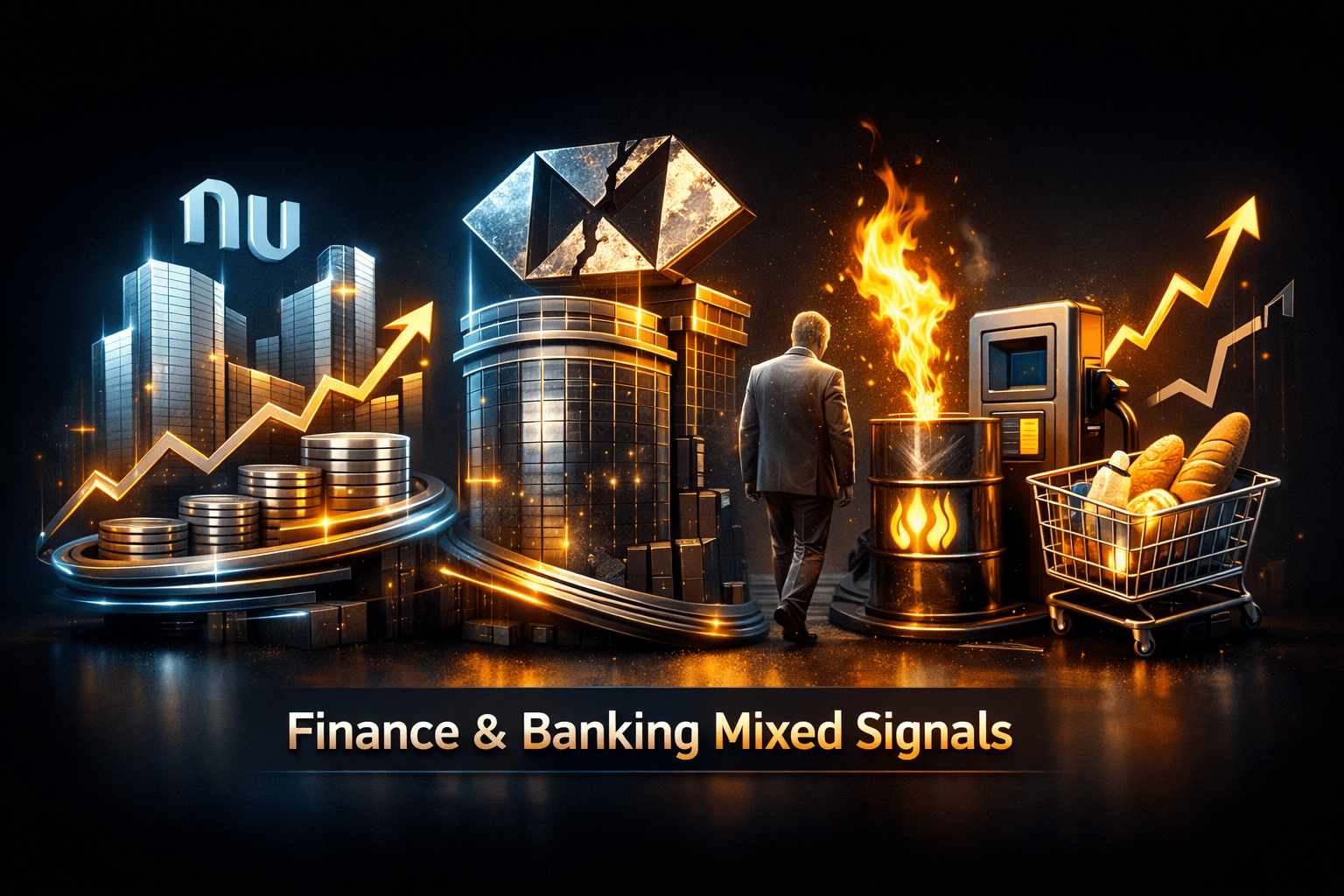
Today brought a mix of strategic moves and geopolitical worries that left the finance and banking sector sending mixed signals to investors. A major fintech pivot and a bullish valuation call on a Latin American bank sit alongside executive turnover at a global bank and renewed supply shocks for fuel and food.
Why this matters to you is simple: the winners in this environment will be firms that control their own operations and can navigate rising costs, while banks with governance uncertainty or exposure to higher inflation may face pressure. Which names will benefit and which will need to shore up defenses? That question will shape trading into next week.
Market Highlights
Quick facts and notable moves from today.
- $NU, Nu Holdings, drew attention after research coverage described the stock as undervalued with attractive upside, putting the Latin American neobank back on investors' watch lists.
- $LRCX, Lam Research presented at the Goldman Sachs Communacopia + Technology Conference, providing corporate commentary that traders often parse for semiconductor cycle signals that indirectly affect bank exposures to capex lending.
- $HSBC, the bank announced that CFO Pam Kaur will step down and will not stand for re-election to the board, prompting questions about near-term leadership and strategic continuity.
- Chime, the large US fintech, said it outgrew the bank-partner model and is acquiring Stride Bank to take full operational control, a strategic shift that could re-shape its product launch cadence and regulatory posture.
- Macro risk surged as MarketWatch reported that ongoing Middle East conflict and outages in Russia are creating new price shocks for diesel and food, a development that could feed through to inflation and bank loan stress.
Key Developments
Chime’s push for control: acquiring a bank partner
Chime’s CEO said the company has outgrown the bank-partner model and will acquire Stride Bank to gain full control of deposits and product rollout. For you that matters because owning the banking charter or a bank partner outright can speed product development and reduce dependency on third-party approvals.
Operational control also changes the regulatory and funding equation. Chime will be in the driver’s seat on deposit pricing and product risk, but it will also face direct supervision and capital, compliance, and liquidity responsibilities.
HSBC CFO departure raises governance questions
HSBC confirmed that Pam Kaur, the first woman to serve as its finance chief, will step down and will not stand for re-election to the board ahead of next year’s annual meeting. That creates near-term headline risk for $HSBC and may prompt investors to scrutinize the bank’s strategy and cost plans more closely.
Analysts and stakeholders will watch board commentary and the succession process. For you, governance changes at a major bank are a reminder to monitor voting outcomes and clarity on strategic priorities.
Commodities and inflation: fresh supply shocks
MarketWatch highlighted that the Middle East conflict and outages in Russian production are creating additional price pressure for diesel and food. That’s a macro headwind that can lift operating costs across many firms and squeeze consumer spending power.
Higher energy and food prices could push inflation metrics higher in coming reads, which in turn affects interest-rate expectations and bank margin dynamics. Will central banks react with policy shifts? That will be a critical next question for markets.
What to Watch
Look ahead to the catalysts likely to move markets and your portfolio positioning in the coming days.
- Chime-Strive integration: Monitor transaction terms and regulatory filings for timing on the Stride Bank deal and any capital or compliance commitments the fintech discloses.
- HSBC succession updates: Watch for announcements on the finance chief replacement and any board-level commentary on strategy or capital allocation.
- Energy and food-price flows: Track diesel and grain supply developments and macro economic releases for inflation signals that could influence bank net interest margins.
- Earnings and guidance: Q3 results season will start to deliver clarity on consumer loan performance and corporate demand for credit, so keep an eye on bank and fintech earnings calls for signs of deposit trends and credit costs.
- Retail sentiment and crypto chatter: The AAII survey showed optimism and pessimism canceling out, while crypto price forecasts for tokens like $TON and $MYRO keep retail interest alive, underscoring a bifurcated retail appetite between traditional finance and digital assets.
Bottom Line
- Fintechs gaining operational control, as with Chime and Stride Bank, are reshaping the competitive landscape, but they also accept heavier regulatory and capital responsibilities.
- Governance shifts at major banks such as $HSBC create headline risk and warrant monitoring of succession plans and strategic clarity.
- Commodity-driven price shocks are a macro wildcard that could feed into inflation, rate expectations, and credit performance for banks with consumer and corporate loan exposure.
- Research calls like the one on $NU suggest selective undervaluation opportunities are being identified, but the market is sending mixed signals overall, so selectivity matters.
- Keep your focus on deposit flows, regulatory filings, and inflation data as the immediate indicators that will influence sector momentum into next week.
FAQ Section
Q: How will Chime’s acquisition of Stride Bank affect other fintechs? A: It raises the bar for vertically integrated fintechs by showing the benefits of owning banking operations, which could accelerate similar moves among competitors and affect partner bank relationships.
Q: Does the HSBC CFO departure mean trouble for the bank? A: Not necessarily, but it introduces transitional risk. You should watch the succession plan and any commentary on financial outlook or strategy for clarity.
Q: Should you be worried about the commodity price shocks? A: It’s a headwind that can influence inflation and margins, so monitor energy and food-price trends and upcoming inflation readings to assess the potential impact on banks and consumer credit.