The Big Picture
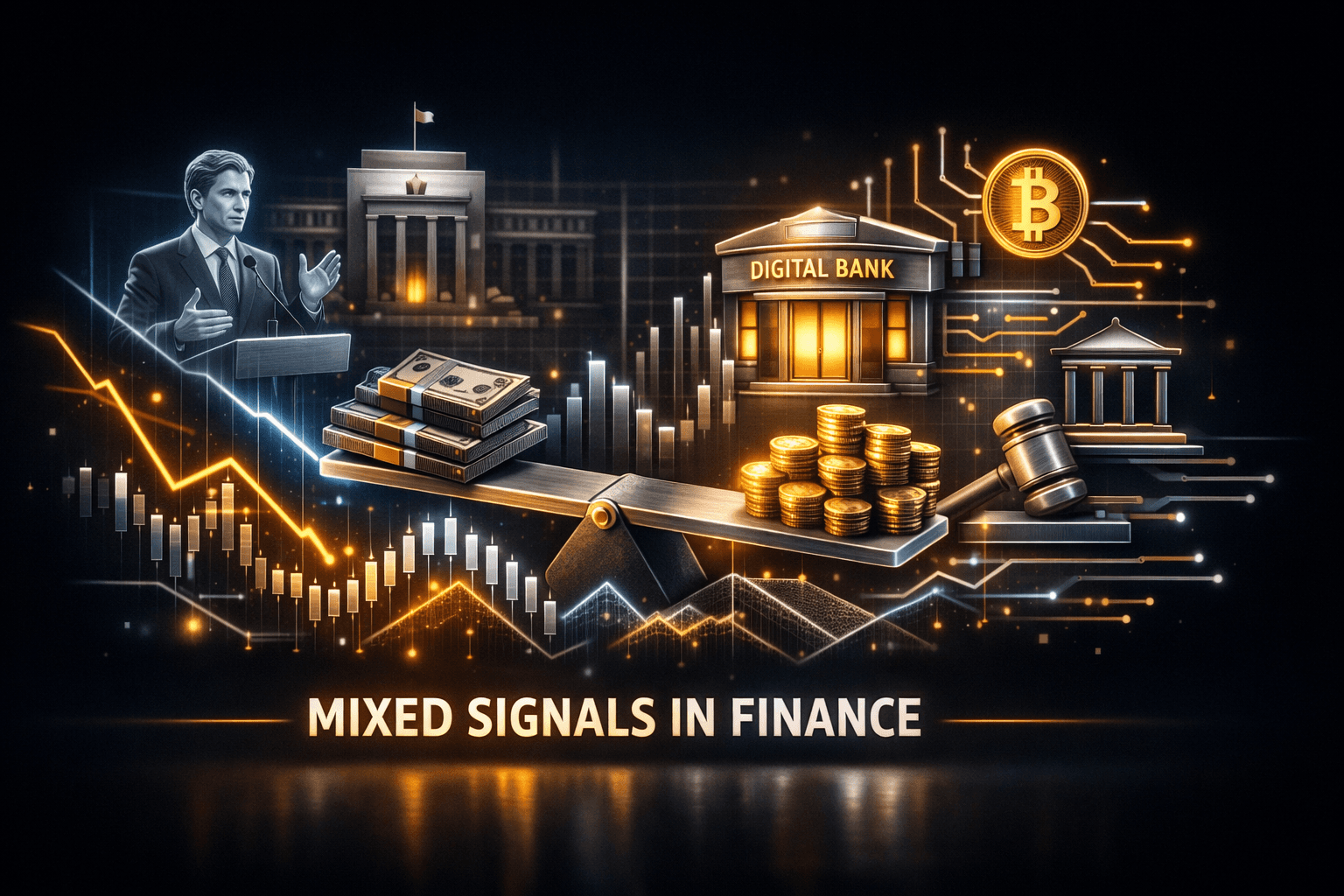
Kevin Warsh's first major policy signals as Fed chair set the tone for the day, as markets reacted to his push for a "quieter Fed" and reduced forward guidance. That message, combined with a flurry of regulatory moves and a new FDIC approval for a digital bank, left the finance and banking sector with mixed but stable momentum.
Why should you care? Clearer Fed communication can calm volatility and influence yields, while agency guidance and new entrants shape competitive dynamics for banks and fintech firms. These are practical drivers of lending, deposits, and valuations you may be tracking.
Market Highlights
Quick takeaways from the day's top stories and market reactions.
- Fed messaging: Chairman Kevin Warsh signaled continued work on inflation while seeking less forward guidance, and the bond market quickly responded to his remarks, suggesting improved credibility for the new chair.
- New bank approval: Digital challenger VALT Bank received FDIC deposit insurance clearance and plans to open in Q4, marking a tangible push by fintechs into retail banking markets.
- Regulatory update: The OCC and FDIC revised language on supervising "material financial risks," a move agencies say brings clarity while critics warn it could weaken oversight for certain banks.
- Corporate and fintech notes: Seeking Alpha pieces pushed bullish cases on firms like Encompass Health and CrowdStrike, while Venu Holding posted Q2 materials. Analysts note valuation and execution remain watch points for these names, shown as $EHC, $CRWD, and $VENU in coverage.
- Consumer signals: MarketWatch ran features on "Generation Renter" and on the limits of free adviser services at banks, both highlighting potential implications for mortgage demand and retail financial advice usage.
Key Developments
Warsh pushes for a quieter Fed, markets take notice
In speeches covered by MarketWatch and Banking Dive, Chair Warsh doubled down on a commitment to 2 percent inflation and signaled a move away from heavy forward guidance. The bond market "took him at his word" according to reporting, suggesting yields and market expectations adjusted without large shocks.
For you, the takeaway is clearer communication from the Fed can reduce headline volatility, but Warsh also reminded markets inflation work remains. Will that keep rate uncertainty low even as inflation risks persist?
FDIC nod for VALT Bank, fintech competition steps up
VALT Bank's conditional OCC charter plus FDIC deposit insurance gives a concrete launch timeline for a new digital business bank, aiming for a Q4 opening. The move underscores continued momentum for digital-first banking models seeking to capture business and SME deposits.
That matters if you follow deposit flows and margin pressures at traditional banks, since new entrants can accelerate pricing competition and product innovation.
Regulatory revisions draw praise and criticism
The OCC and FDIC issued revisions intended to clarify treatment of "material financial risks." Regulators argue the changes improve certainty for institutions, while critics contend the edits could ease supervisory rigor in certain areas.
Analysts note this adds an element of regulatory uncertainty rather than removing it, because implementation details and enforcement will determine whether the net effect tightens or loosens oversight.
What to Watch
Look ahead to catalysts and risks that could move the finance and banking sector next week and beyond.
- Fed communication and data: You should monitor Fed speeches and incoming inflation data. Warsh's quieter approach lowers the odds of surprise guidance, but inflation releases will still move markets.
- Regulatory follow-through: Watch how the OCC and FDIC implement their revised guidance. Will exam priorities shift and how will banks adapt compliance spending and capital planning?
- Competition from digital banks: VALT's planned Q4 opening is a live test of customer acquisition economics for digital business banking. Can new entrants scale without pressuring margins industrywide?
- Consumer trends and lending demand: The "Generation Renter" narrative raises structural questions for mortgage origination volumes over the long run. Could declining owner-occupancy expectations change portfolio mix and product design?
- Corporate earnings and valuation checks: Keep an eye on earnings presentations such as Venu Holding's Q2 release. Also watch coverage around companies like $CRWD and $EHC where sentiment and valuation interact.
Bottom Line
- Fed messaging appears to be calming markets, but inflation remains the central risk you should monitor for rate-sensitive sectors.
- Regulatory changes offer clarity in language but raise questions about enforcement and supervisory intensity.
- New digital banks like VALT increase competition, which could pressure deposit margins while improving services for business customers.
- Consumer behavior, notably among younger Americans, could dampen long-term mortgage demand and shift banks toward fee and commercial income streams.
- Analysts note select opportunities exist, but you should weigh valuation and execution risks. Take commentary with a grain of salt and follow primary filings and regulatory notices for confirmation.
FAQ Section
Q: How will Fed chair Kevin Warsh's "quieter Fed" approach affect interest rates? A: It should reduce surprise policy signals and help anchor market expectations, but actual rate paths will still depend on incoming inflation and jobs data.
Q: Does VALT Bank's FDIC approval change the competitive landscape for big banks? A: It signals continued fintech entry into deposit markets, which could increase competition over time, especially in niche business banking segments.
Q: Should I change allocation because regulators updated guidance on material financial risks? A: Regulatory language shifts matter, but the practical impact depends on how agencies implement and enforce the rules, so monitor follow-up guidance and bank disclosures.