The Big Picture
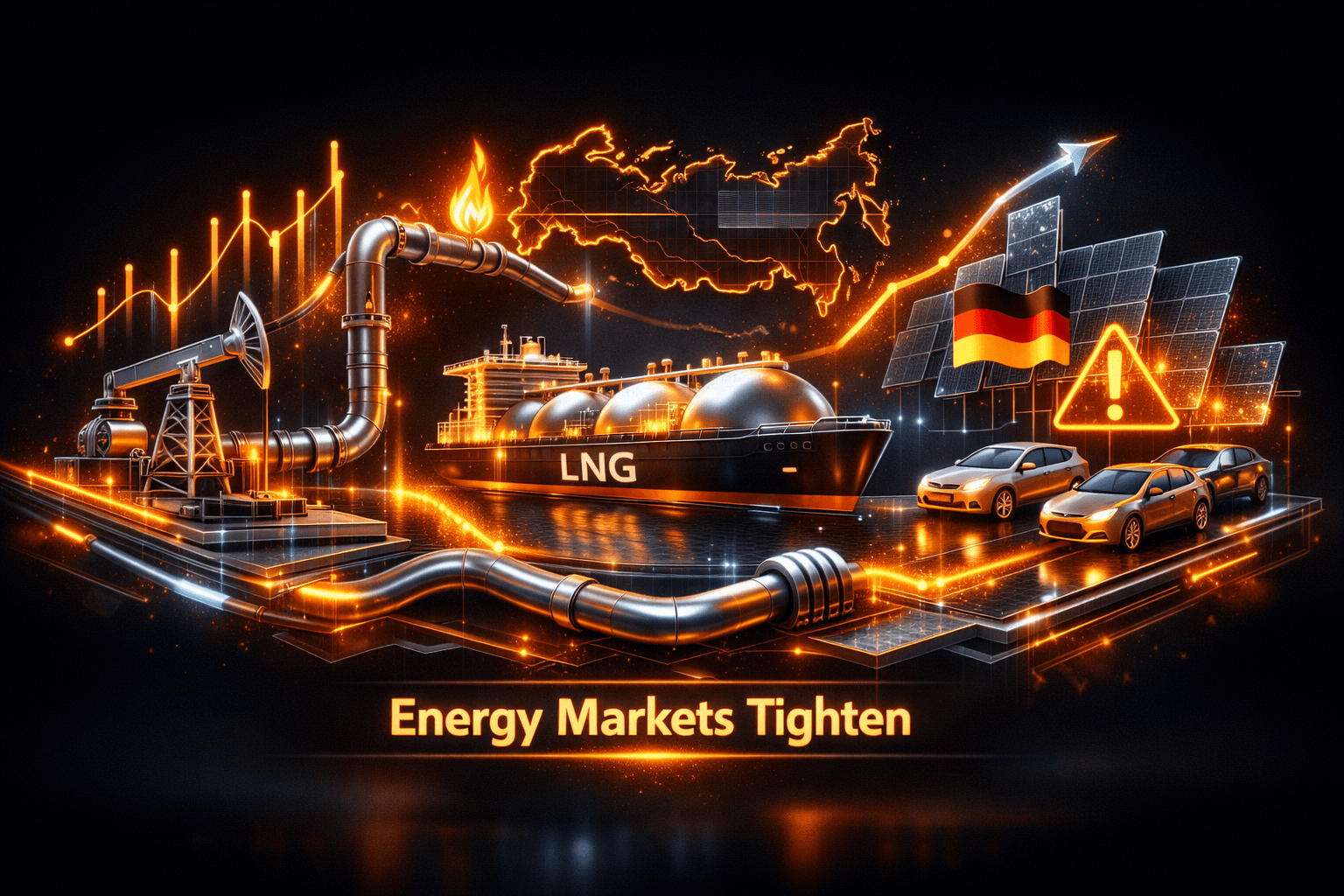
Today the energy complex looked like a study in contrasts: structural demand and new long-term contracts are supporting oil and gas momentum, even as policy uncertainty and regional supply shifts create headaches for Europe and parts of the clean-energy chain.
That matters because you may be seeing higher price volatility and policy-driven risk across energy equities and projects. You should be watching both short-term supply moves and longer-term regulatory signals to understand how your exposure could be affected.
Market Highlights
Here are the quick facts and market-moving numbers you need from today.
- Saudi Aramco told European term buyers they will receive no crude allocations for October after rerouting barrels through the Gulf following East-West pipeline damage, a move that tightens European supplies.
- Kazakhstan agreed to buy about 11 billion cubic meters of Russian gas this year under a supplementary deal with Gazprom, up from roughly 4 billion cubic meters in 2025, increasing regional gas flows tied to Russia.
- Baker Hughes reported the US active rig count rose to 595, up 53 year over year; oil rigs reached 452 and gas rigs 134, each up 2 from the prior week, data that suggests continued upstream activity as prices remain favorable.
- Sempra Infrastructure’s Port Arthur LNG phase 2 signed a 20-year deal to supply roughly 0.8 million metric tons per annum to Petrobras ($PBR), adding longer-term demand for US LNG capacity.
- On the clean side, Drive Electric Month events are running across the US, while EV product headlines include a Tesla ($TSLA) Roadster reveal date, BYD ($BYDDY) releases, and Volkswagen ($VWAGY) electrified models making news.
Key Developments
Oil flows and market access
Saudi Aramco’s zero allocations to European term buyers for October, combined with Gulf rerouting of crude due to East-West pipeline damage, leaves Europe exposed to tighter prompt supplies. Will Europe be able to secure alternative barrels fast enough to avoid refinery strain? Traders and refiners will be watching cargoes and prompt price action closely.
At the same time, the US House passed a bill granting the president powers to impose tariffs on countries that buy Russian petroleum products, a policy lever that adds another layer of geopolitical uncertainty for global crude flows and could influence trade patterns if enacted.
Gas and LNG moves
Kazakhstan’s jump to about 11 billion cubic meters of Russian gas under a Gazprom deal signals stronger regional dependence on Russian pipeline gas this year. That follows other stories where national buyers are locking in supplies amid tight markets and sanctions risk.
Meanwhile, the Port Arthur LNG to Petrobras 20-year supply agreement underscores demand durability for US LNG projects. That long-term offtake, while modest at about 0.8 Mtpa, gives developers and lenders a visible revenue stream amid financing concerns elsewhere in the sector.
EVs, solar and policy headwinds
EV momentum is visible in consumer engagement, with Drive Electric Month events and multiple OEM product headlines pushing adoption narratives. You’re seeing more attention on lower-cost Chinese EVs, with Hyundai executives warning that cheaper imports from China could reshape competitive dynamics in the US market.
On the solar side, Germany’s PV sector is flagged for regulatory uncertainty and tighter finance conditions that could trigger a sharp slowdown in 2027 without transitional measures. That creates selective risk for solar installers, module makers and project lenders there.
What to Watch
Focus on a few near-term catalysts and risks that could move markets tomorrow and beyond.
- Oil and product prompt spreads, and European cargo allocations, will be key. Monitor shipment notices and refinery intake announcements to see if supply shortfalls emerge.
- Follow any implementation steps or executive actions linked to the new US tariff authority on Russian oil buyers, because trade restrictions could shift flows and pricing across regions.
- Watch US rig data updates and EIA weekly reports, because the rise in active rigs suggests continued upstream activity that could pressure prices if it accelerates.
- Track German regulatory decisions and financing cost indicators for PV, since policy moves there can materially slow project pipelines in 2027 and affect European equipment makers.
- Keep an eye on EV pricing and product announcements from $TSLA, $BYDDY, $VWAGY and others; competition from low-cost Chinese models could alter margins and sales mixes for global automakers.
Bottom Line
- Global supply routing and policy shifts are elevating short-term volatility across oil and gas markets, while long-term LNG contracts continue to underpin project economics.
- US upstream activity is steady, with rig counts rising year over year, which suggests oil and gas companies remain active as prices support drilling.
- Renewables and EVs show mixed signals, with consumer interest and product launches on one side and regulatory and financing pressures on the other.
- Geopolitical and trade policy moves, including tariffs on Russian oil buyers and changes in crude allocations, are key tail risks you should monitor closely.
- Analysts note these developments create a selective opportunity set, but also add execution and policy risk that could reshape returns across the sector.
FAQ Section
Q: How will Saudi Aramco’s decision to cut Europe affect fuel supplies there? A: It tightens prompt crude availability for some European refiners and could push buyers to seek alternative grades, increasing short-term price volatility.
Q: Does Kazakhstan’s deal with Gazprom change global gas markets? A: It raises regional reliance on Russian pipeline gas this year and reinforces the role of long-term contracts in meeting near-term demand.
Q: Should I view the German PV warning as a global renewables setback? A: The risk is concentrated in Germany due to local policy and financing conditions; it’s a cautionary sign for European developers but does not halt global solar growth.