The Big Picture
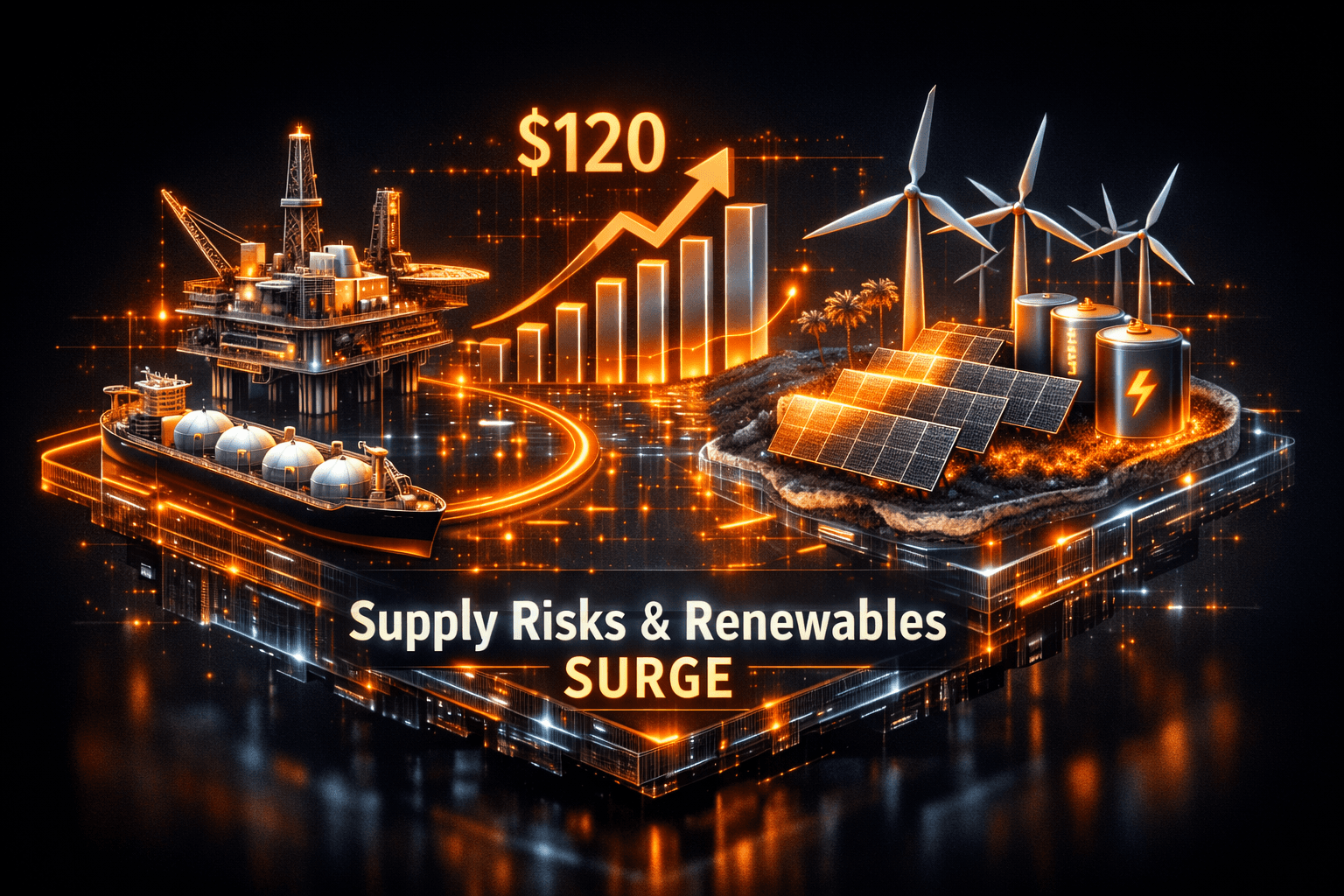
Overnight headlines mixed a renewed supply-risk story for oil with a string of renewable and storage project wins around the world. Goldman Sachs told Bloomberg that escalating attacks on shipping could push oil toward $120 a barrel, a development that immediately put energy security back in the spotlight.
At the same time there were clear signs the energy transition is accelerating, with utility scale storage and solar-plus-storage coming online or planned from Texas to Fiji and new local electricity communities forming in Europe. You should weigh both the price upside from supply shocks and the longer term demand shift toward renewables when thinking about the sector heading into the next trading day.
Market Highlights
U.S. markets were closed for Labor Day, so price moves cited here are from recent sessions and early Asia trade. Last trading day was Friday, September 4, and markets reopen Tuesday, September 8.
- Goldman Sachs, Goldman Sachs Group (GS), said oil could rise to as much as $120 per barrel if shipping disruptions in the Middle East intensify, elevating upside risk for crude prices.
- Qatar appears to be repositioning LNG vessels, with six empty carriers moving toward the Gulf, a possible sign of a restart in loadings that could affect global LNG flows.
- Equinor, $EQNR, brought the 100 MW, 200 MWh Citrus Flatts battery energy storage facility online in Texas, adding grid-flexibility capacity in a major U.S. power market.
- Clean energy deployment continues: Switzerland now has about 1,860 active local electricity communities, and projects were announced or inaugurated in Comoros and Fiji including a 142 MW solar, 240 MWh battery plan for Fiji.
- Commercial electrification gains traction with SANY delivering 200 electric haul trucks and more than 600 electric wheel loaders in a single month, underlining equipment electrification demand globally.
Key Developments
Shipping Risks Lift Oil Price Outlook
Goldman Sachs flagged that attacks on shipping could broaden and intensify, a scenario it says could send oil toward $120 per barrel. The warning is significant because supply disruptions around chokepoints can quickly tighten physical markets and fuel volatility. What does this mean for you? Higher near-term oil prices can boost cash flow for producers and refiners, while increasing input costs for fuel-intensive sectors.
Qatar LNG Movements Signal Possible Restart
Ship-tracking data showed half a dozen empty LNG carriers heading toward Qatar, which Bloomberg interpreted as a potential restart of loadings. A resumption would help global LNG balances but the timing and scale remain uncertain, so momentum indicates a conditional relief rather than an immediate flood of supply.
Renewables and Storage: Projects on the Ground
Deployments are tangible. Equinor brought a 100 MW, 200 MWh battery online in Texas, strengthening grid reliability in a major market. Fiji's planned 142 MW solar project with 240 MWh storage and solar-plus-storage in Comoros show developers are advancing projects that cut diesel dependence. Switzerland's rapid uptake of 1,860 local electricity communities points to grassroots adoption of distributed energy models.
What to Watch
There are several near-term catalysts that could move parts of the energy sector when U.S. markets reopen. Keep an eye on the following so you can judge potential impacts on companies you follow.
- Shipping and geopolitical headlines, especially in the Gulf and Strait of Hormuz, which could keep oil and shipping insurance costs volatile. Will shipping risks persist over the coming weeks?
- LNG logistics and vessel tracking for signs Qatar loadings actually resume. A routinized restart would ease some near-term LNG tightness, but timing matters.
- Power project milestones and offtake announcements, including progress updates on the Fiji solar-plus-storage project and similar deals in emerging markets. These determine revenue visibility for developers.
- Battery project performance and interconnection outcomes in Texas and other U.S. markets. Grid services revenue is a growing value stream for storage assets, so you should watch dispatch and revenue reports.
- Policy and permitting news in Europe and local community rollout metrics, since Switzerland's quick adoption could be a bellwether for distributed energy policy rollouts elsewhere.
Bottom Line
- Supply-side risk in oil is back on the front page, and Goldman Sachs' $120 scenario highlights the potential for renewed volatility heading into the next trading week.
- At the same time the energy transition is building momentum, with multiple storage and solar projects announced or starting operations across continents.
- Investors should watch shipping lanes and LNG logistics for near-term price drivers and monitor project execution metrics for longer term structural change.
- Energy names tied to commodity moves may rally on tightening fundamentals, while developers and grid-scale storage operators benefit from accelerating deployments.
- Data suggests both cyclical upside and secular growth are in play, so a selective approach is warranted as markets reopen Tuesday.
FAQ Section
Q: How could shipping attacks push oil to $120 a barrel? A: Disruptions at key chokepoints raise physical delivery risk and shorten available seaborne capacity, which can tighten crude and product markets and push spot prices higher.
Q: Will a restart of Qatari LNG immediately lower global prices? A: Not necessarily. A restart can ease supply pressure but volumes, destination flexibility and transit constraints determine how much and how fast global prices adjust.
Q: Are battery and solar projects likely to provide steady returns? A: Project returns depend on contracts, grid access and market revenues for energy and capacity. Commissioning and offtake clarity are key indicators to watch before drawing conclusions.