The Big Picture
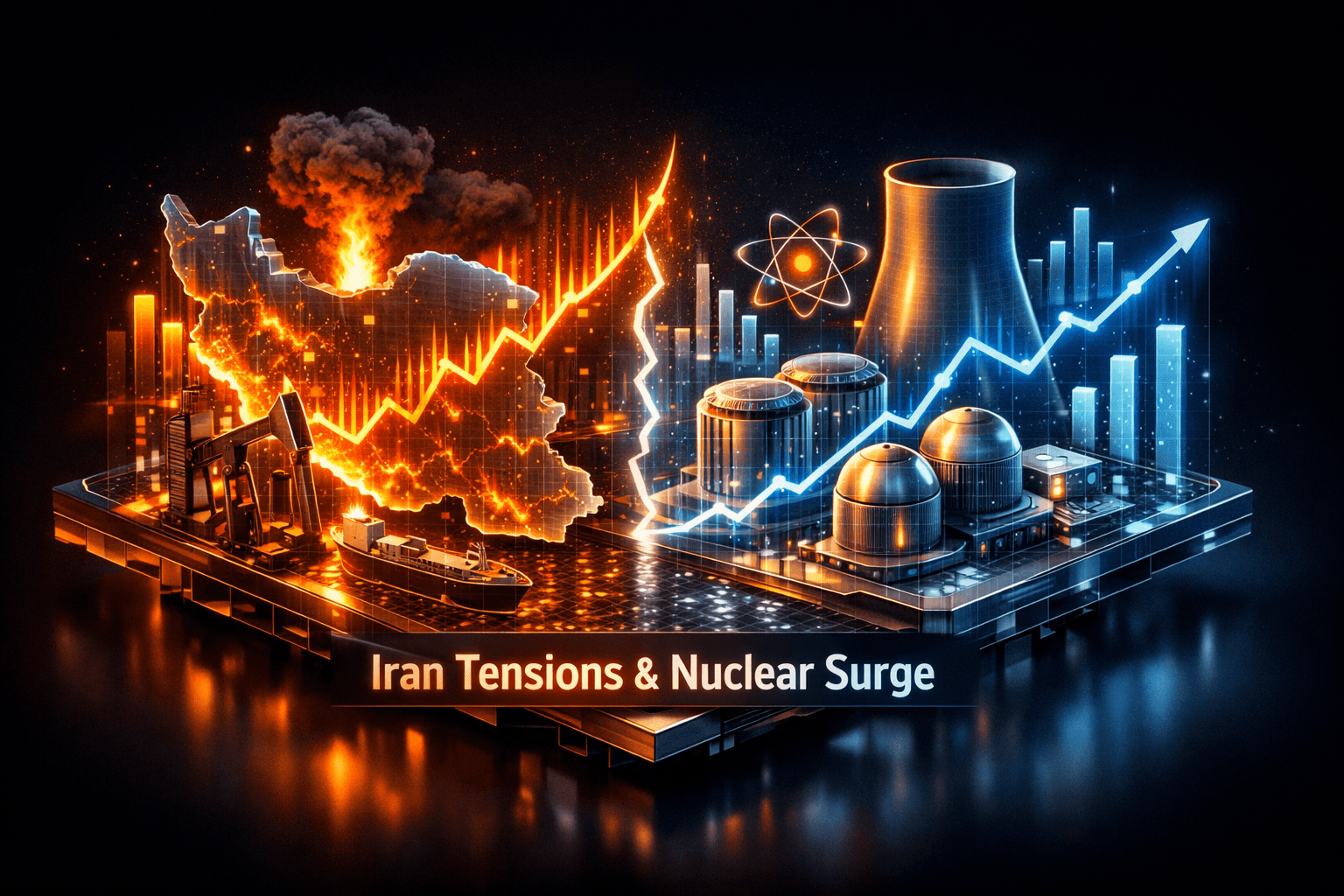
Overnight headlines show the Energy sector split between an immediate supply shock and longer term structural shifts. As of Friday, September 4, oil closed the week sharply higher, driven by renewed U.S.-Iran fighting and elevated supply-route risk through the Strait of Hormuz.
At the same time, governments are accelerating nuclear plans and investing in small modular reactors, while practical frictions around EV charging and household energy systems signal growing pains for the clean-energy transition. Markets were closed on Sunday, Sep 6, so price references are presented as of Friday, September 4 and heading into the long weekend.
Market Highlights
Quick facts and figures to scan before the open.
- Crude oil, as reported, finished a volatile week up about 9.7% as of Friday, September 4, reflecting heightened supply concerns after renewed fighting in and around Iran.
- The Strait of Hormuz previously handled roughly 20 million barrels per day of crude and liquefied gas before strikes, a reminder of the scale of potential disruption.
- U.S. retail diesel reached a record high as of September 4, a direct pass-through of tighter product markets to consumers and trucking costs.
- Russia's oil revenue slid to a six month low in August, highlighting the uneven revenue picture across producers amid volatile flows.
- Policy and technology: Japan, South Korea and the U.S. are coordinating on nuclear expansion, while the U.S. Army has backed SMR development. SMRs are defined with capacity up to about 300 MWe per unit.
- Consumer and infrastructure notes: reports surfaced of Hyundai dealers charging more than $400 for EV charging sessions, and new home solar Q&A content highlights the complexity of backup and grid-interactive systems.
Key Developments
Iran conflict forces a rewrite of trade routes
News outlets report that the ongoing war in and around Iran has forced exporters and importers to diversify routes and suppliers, with the Strait of Hormuz at the center of concern. Analysts say disruptions or insurance and rerouting costs could be structural, not temporary.
What this means for investors is simple, if uncomfortable: tighter supply pathways have pushed oil prices higher, and that energy inflation is already filtering into diesel prices for consumers and businesses. Are these trends going to stick, or will markets find alternative equilibrium? Monitor shipping, insurance, and export data closely.
New nuclear alliances and SMR momentum
Japan, South Korea and the U.S. are deepening cooperation on nuclear energy, and the U.S. is accelerating small modular reactor work with military and private funding. SMRs, at about 300 MWe max per unit, are seen as a faster, modular route to baseload low carbon power.
For you as an investor, that suggests a shift in which parts of the energy chain may attract capital going forward, from developers and reactor vendors to grid upgrade and component suppliers. Analysts note that policy alignment in Northeast Asia and U.S. procurement support could speed deployment timelines.
Consumer pain points and infrastructure gaps
Electrek coverage highlights practical problems at the consumer level, from sky-high bills at some dealer chargers to guidance on pairing home solar with backup batteries and generators. Meanwhile, new products like the BLUETTI Pioneer 5000 E-Generator aim to serve job sites and outage scenarios with quieter battery-backed power.
These items show you why the clean-energy transition is not just macro policy. It’s also about user experience, pricing models, and distribution. If charging remains unreliable or opaque, adoption and sentiment could slow, even as long-term demand drivers remain intact.
What to Watch
Key catalysts and risk factors to track into the next trading sessions.
- Geopolitical headlines and shipping flows, especially any reports on the Strait of Hormuz, export pipeline reroutes, and insurance rates. Continued escalation tends to keep crude and refined fuel prices elevated.
- Energy-market metrics and reports, such as weekly inventory updates and refined product balances. Those figures will tell you whether tightness is persistent.
- Nuclear project milestones and procurement notices, especially SMR contract awards and government financing decisions. Policy moves in Japan, South Korea and the U.S. could accelerate capital deployment.
- Consumer infrastructure signals, including EV charging rollouts, pricing transparency issues, and local regulations. Outlier charges at stations are an operational risk that could dampen demand growth if not fixed.
- Grid buildouts tied to data-center requirements, like Ireland’s LEAP rule that asks 10 MW-plus data centers to source 80% of demand from onsite new renewables and storage. That’s worth watching for potential procurement and storage demand.
Keep an eye on large integrated energy names for sensitivity to higher oil prices and refining margins. Names to watch for sector movement include major producers and refiners such as Exxon Mobil (XOM) and Chevron (CVX), while utilities and equipment suppliers could be positioned for nuclear and grid investments.
Bottom Line
- Geopolitical supply risk has pushed oil sharply higher and lifted diesel to record levels, creating near-term price pressure for consumers and transport-intensive sectors.
- At the same time, accelerated nuclear cooperation and SMR funding point to a structural, policy-driven shift toward low carbon baseload capacity over the medium term.
- Consumer- and site-level frictions, like opaque EV charging costs and backup power needs, show the transition needs better execution at the edges of the system.
- Watch shipping data, inventory reports, SMR contract announcements, and local infrastructure fixes for charging and storage. Those will help you separate transitory shocks from durable trends.
- Analysts note that this is a mixed picture, so selectivity and monitoring of both geopolitical risk and policy milestones remain important for energy sector exposure.
FAQ
Q: How are oil prices reacting to the conflict near Iran? A: As of Friday, September 4, oil finished the week about 9.7% higher, driven by supply-route concerns and the risk premium tied to the Strait of Hormuz.
Q: What are small modular reactors and why do they matter? A: SMRs are compact nuclear units roughly up to 300 MWe each, and recent U.S. and allied commitments aim to speed deployment as a scalable baseload, low carbon option.
Q: Should I expect EV charging issues to slow adoption? A: Operational problems and extreme pricing at some public chargers create friction, but broader adoption depends on improving reliability, pricing transparency, and network access.