The Big Picture
Renewables and storage led overnight headlines and set a constructive tone for energy markets this morning. New research showing TOPCon solar cells suffer negligible LeTID degradation and record U.S. battery storage additions point to improving reliability and faster grid integration, facts that matter to project developers, equipment suppliers, and you as an investor watching long-term demand trends.
At the same time, geopolitical and crude-trade shifts are reshaping supply routes, with Russia expanding a sanctioned LNG dark fleet and U.S.-backed oil deals altering operators in Venezuela. Those items inject risk, but the dominant narrative early today is accelerating clean-energy buildout and stronger technology performance.
Market Highlights
Quick facts and figures to scan this morning.
- Solar tech: U.S. research finds negligible LeTID for n-type TOPCon cells, and optimized production steps further limit degradation, keeping efficiency losses within typical warranty tolerances.
- Wind growth: Europe added 8.8 GW of new wind capacity in H1 2026, up about 30% year over year, with Germany supplying roughly 3.4 GW or 39% of the total.
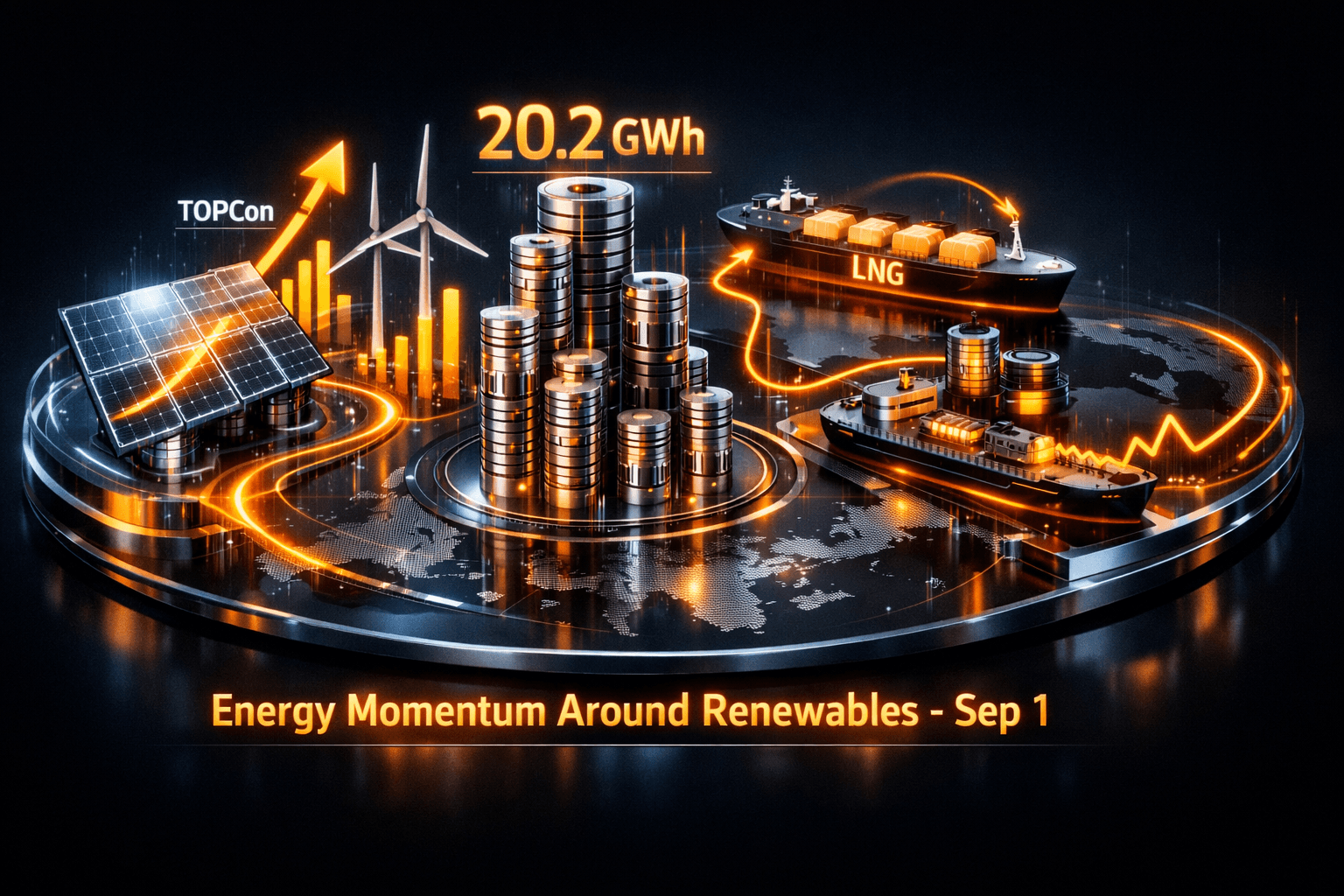
- Battery storage: The U.S. installed a record 20.2 GWh of battery storage in Q2 2026, the largest quarter on record for the market.
- Mexico plan: State utility CFE outlines MXN 651 billion, about $32.9 billion, of investment through 2030 and identifies 5.48 GW of solar projects among 18.6 GW of planned new capacity.
- Geopolitics and trade: Russia has almost doubled the fleet moving LNG from a sanctioned Arctic project, and a U.S.-backed firm won rights to Venezuelan oil deals that displace Chinese and Russian operators, signaling shifting strategic footprints.
Key Developments
Solar: TOPCon durability eases long-term risk
Researchers report that n-type TOPCon cells show negligible LeTID compared with legacy p-type PERC technology. Optimized firing and laser-enhanced contact steps further suppress degradation, and industrial TOPCon cells demonstrated efficiency losses within warranty limits.
What that means for you is clearer module reliability and potentially lower balance-of-system risk for projects that adopt TOPCon at scale, which could help manufacturers like module and equipment suppliers capture more of the market if cost trajectories hold.
Storage and wind scale quickly
The U.S. market recorded a record 20.2 GWh of battery storage additions in Q2, reflecting robust procurement for grid services and renewables integration. In Europe, a 30% year-on-year rise in H1 wind capacity shows both onshore and offshore projects accelerating, with Germany contributing a large share.
These trends support stronger demand for inverters, battery cells, project developers, and grid services. You might see related earnings and procurement announcements in coming weeks as companies digest the deployment wave.
Oil and LNG shifts add complexity
India's ONGC says import choices are being driven by cargo pricing rather than geopolitics, highlighting a pragmatic buyer stance in global crude markets. Separately, Russia has expanded a sanctioned LNG dark fleet, increasing concerns about sanction circumvention and shipping risk.
Meanwhile, a U.S.-backed oil operator won rights to Venezuelan fields, moving Chinese and Russian operators out of several concessions. That deal could affect future production flows, while shipping and sanction stories add a layer of geopolitical risk you should monitor.
What to Watch
Here are the catalysts and risks that could move names and sentiment today and in the weeks ahead.
- Technology adoption: Watch module makers and equipment suppliers for commentary on TOPCon uptake and capital expenditures. How quickly will projects switch to n-type TOPCon from p-type?
- Project pipelines and permitting: Mexico's CFE plan includes 5.48 GW of identified solar. Track procurement rounds, offtake terms, and any storage pairing announcements that could change tender economics.
- Storage demand signals: Expect corporate and utility RFPs tied to the record 20.2 GWh quarter. Keep an eye on companies that provide battery cells, PCS, and software for grid services.
- Shipping and sanction risk: Monitor reports on Russia's LNG dark-fleet movements and any related sanctions enforcement. How much operational risk does this add to global LNG flows?
- Oil flows and pricing: India’s cargo-by-cargo buying based on price will affect crude trade lanes. Watch benchmark spreads and term crude pricing for signals about changing demand patterns.
Bottom Line
- Renewables and storage are the dominant positive themes today, supported by improved TOPCon durability data, Europe wind growth up about 30%, and a record 20.2 GWh of U.S. battery storage added in one quarter.
- Policy and planning, such as Mexico CFE's MXN 651 billion investment plan and the Philippines' PV land-exemption work, keep project pipelines meaningful for developers and suppliers.
- Geopolitical moves, including Russia's expanded LNG dark fleet and U.S. deals in Venezuela, raise supply-chain and sanction risks that could affect markets intermittently.
- Analysts note these trends point to growing demand for modules, inverters, storage stacks, and project finance. You should watch earnings calls and procurement updates for clearer signals.
- This update is informational and not personalized investment advice. Data suggests momentum, but risk management remains important as the clean-energy transition meets geopolitical realities.
FAQ Section
Q: How material is the TOPCon LeTID finding for solar investors? A: The research indicates negligible LeTID in n-type TOPCon cells, which reduces a specific degradation risk. That supports the tech case for manufacturers and project owners considering long-term yield assumptions.
Q: Will the record battery storage quarter accelerate utility procurement? A: The 20.2 GWh quarterly addition shows strong demand for grid-scale storage. Utilities and corporates are likely to keep issuing RFPs, but project timelines and permitting will determine when capacity hits the grid.
Q: Should you worry about the LNG dark fleet and sanction risks? A: Expanded sanctioned shipping activity raises geopolitical and legal risk; it can affect shipping costs, insurance, and supply visibility. Keep a close watch on enforcement actions and vessel tracking reports for updates.