The Big Picture
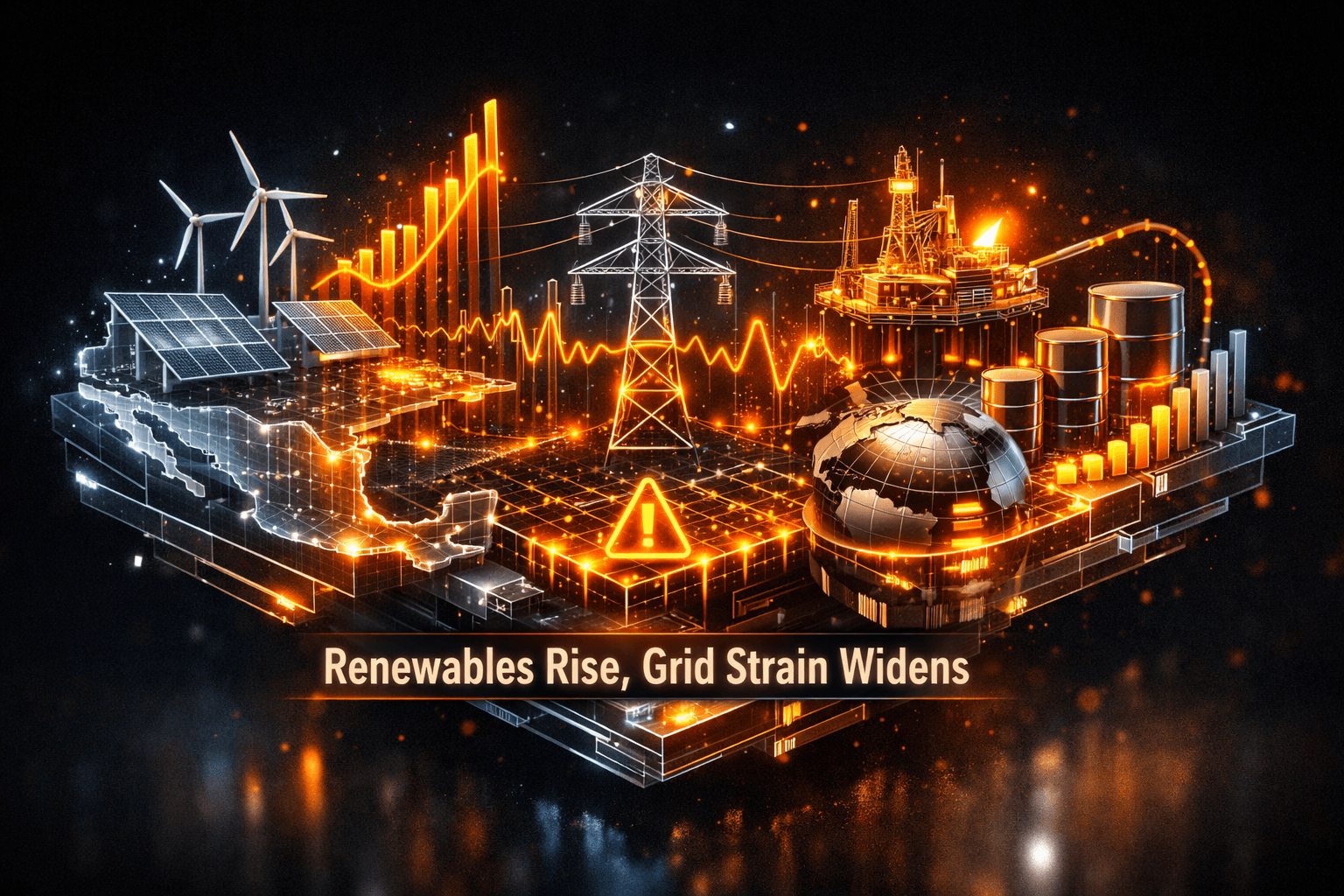
Renewables and electrification are gaining visible momentum around the world, but capacity constraints and geopolitical maneuvers are keeping the energy outlook mixed for investors heading into the long weekend. You should note that U.S. markets were closed on Saturday, Aug 29, with the last trading session on Friday, Aug 28, and the next session on Monday, Aug 31.
Major policy moves in Mexico and continued buildouts in Chile underline accelerating clean-energy deployment, while strains on U.S. transmission networks and unsettled crude fundamentals mean the sector is a mixed bag for risk. What does that mean for your positioning as we approach September?
Market Highlights
Here are the quick facts and market-moving numbers to keep top of mind as you plan for next week.
- Mexico launched a sweeping energy reform under President Claudia Sheinbaum that opens the sector to greater private investment and prioritizes solar and wind approvals.
- Chile is on track to exceed 6 GW of battery energy storage system capacity by the end of 2026, supporting large-scale solar hybrids.
- MacGregor reports electric cranes now account for more than 80% of its new orders in 2026, signaling strong demand for electrified heavy equipment.
- U.S. crude inventories, excluding the Strategic Petroleum Reserve, stood at 428.9 million barrels as of Aug 21, per the latest EIA weekly data.
- $NIO launched a 666-unit limited edition Firefly hatchback priced roughly 13% above standard models, showing consumer appetite for premium EV variants.
- Brazilian state oil company Petrobras, listed as $PBR on U.S. markets, is exploring LNG export options from its offshore gas fields.
Key Developments
Mexico’s Reform Accelerates Renewables
President Claudia Sheinbaum’s administration has pushed an energy reform that intentionally opens Mexico to private capital and fast-tracks solar and wind projects. The government has already approved several projects, which signals policy support is real and not just rhetorical.
For you, that means new project pipelines and potential offtake agreements could create longer-term demand for equipment suppliers and developers serving North America. It also raises the prospect of increased cross-border investment flows into Latin American renewables.
U.S. Grid Under Pressure from Electrification and AI
An official assessment highlighted that rapid electrification and the buildout of energy-intensive AI data centers are straining transmission and distribution networks across the United States. Utilities and grid operators are struggling to keep pace with the pace of demand growth.
That constraint raises two questions, one for you and one for the sector: how quickly will regulators approve transmission upgrades, and who pays? If upgrades lag, reliability risk and congestion costs could persist, creating opportunities for storage and flexible generation but also raising downside risks for electrification timelines.
Geopolitics and Oil: Prize Law and OPEC Uncertainty
The U.S. is reportedly examining 18th-century prize law to manage Iranian oil and seized vessels while Venezuela is weighing an exit from OPEC. Those developments add geopolitical uncertainty to oil markets even as inventories tick higher.
Raising old legal tools and the potential fracturing of OPEC’s membership are reminders that supply-side risks can come from unexpected directions. In the near term, slightly higher U.S. crude stocks make the price reaction less certain.
What to Watch
Look to these catalysts and risk factors as you prepare for next week.
- Policy and permitting updates from Mexico, including timelines and announced private partnerships. Investors will want clarity on procurement rules and grid interconnection terms.
- U.S. regulatory moves on transmission approvals and potential funding for grid reinforcement. Any federal guidance or funding could change project economics rapidly.
- Crytpo and hyperscaler announcements that affect data center builds. AI-related demand is a wildcard for electricity consumption and close monitoring is warranted.
- Statements from Venezuela and OPEC ahead of upcoming meetings, and any U.S. legal actions related to prize law that could affect Iranian cargoes or shipping risk premiums.
- Operational updates from $PBR on LNG project plans and any FID timelines, which could change Brazil’s role in global gas markets.
- Near-term earnings and order updates from industrial suppliers, especially firms exposed to electrified maritime and heavy-lift equipment where demand appears to be shifting quickly.
Are you tracking these items on your watchlist? If not, consider adding the grid and permitting milestones first.
Bottom Line
- Renewables momentum is real, with Mexico policy and Chile battery buildouts driving project pipelines. This points to continued demand for solar, storage, and related services.
- Grid constraints in the U.S. and the surge in data-center demand are a significant risk to timelines and costs for electrification projects. Investors should monitor permitting and transmission announcements.
- Geopolitical moves, including U.S. prize-law scrutiny and Venezuela’s OPEC deliberations, add supply-side uncertainty even as U.S. crude stocks remain elevated at 428.9 million barrels as of Aug 21.
- Electrification demand is showing up in industrial orders, with MacGregor’s electric cranes making up over 80% of new orders and niche EV variants like $NIO’s 666-unit run selling at a premium.
- This is informational content only. Analysts note varied signals across policy, infrastructure, and geopolitics, and data suggests selectivity will matter going forward.
FAQ
Q: How will Mexico’s reform affect renewable project developers? A: Greater private access and project approvals should accelerate pipelines and increase opportunities for developers and equipment suppliers seeking Latin American exposure.
Q: Should I expect immediate relief for U.S. grid constraints? A: Short-term relief is unlikely. Transmission upgrades and permitting take time, so watch for federal funding or regulatory changes that speed projects.
Q: Do higher U.S. crude stocks mean oil prices will fall? A: Not necessarily. Stocks are one input. Geopolitical moves and OPEC dynamics can offset inventory signals, so prices may remain volatile.