The Big Picture
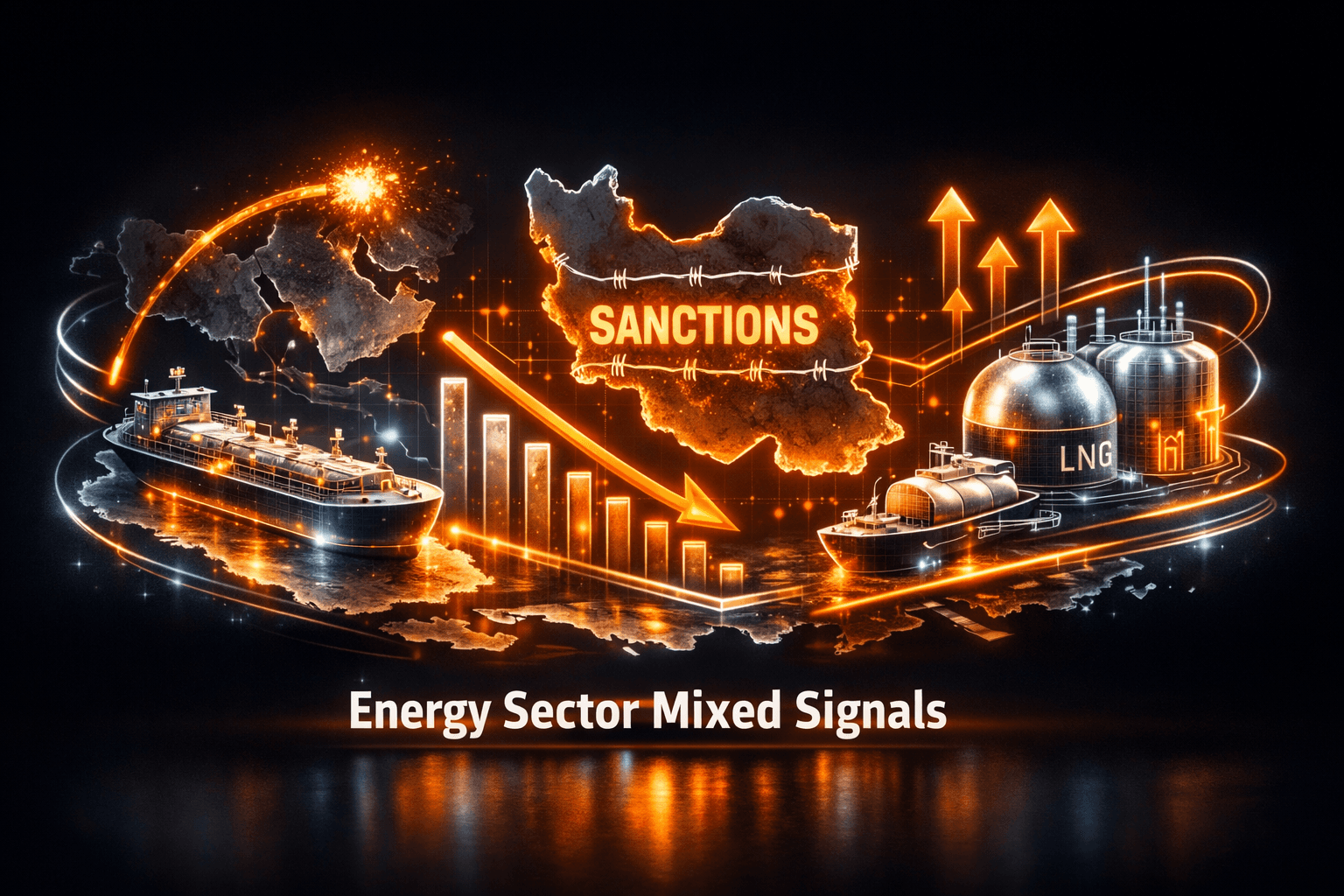
Geopolitical risk and long-term supply concerns dominated the energy headlines on Aug 24, while selective project and infrastructure wins tempered market reaction. A Houthi missile and drone attack on a Saudi tanker in the Red Sea and an expanded U.S. sanctions package on Iran raised near-term supply and shipping risk, while Norway signaled potential production drops after 2030 that could tighten markets further down the road.
At the same time you saw pragmatic industry moves, with Santos converting contracted gas supply into equity production for GLNG and major grid and storage projects progressing. That mix left the sector with mixed signals, and it means volatility could persist into tomorrow's trading session.
Market Highlights
Quick facts and price-action cues investors tracked today.
- Red Sea attack: Houthi forces said they struck the Saudi tanker Amzan with a ballistic missile and drones, and Saudi authorities confirmed a hostile incident in regional waters.
- U.S. sanctions: Treasury launched an expanded Iran sanctions round targeting nearly 60 individuals, entities and vessels under a campaign called Operation Economic Outcast.
- Norway outlook: The Norwegian Offshore Directorate warned oil and gas output could collapse after 2030, even as petroleum investment for 2026 is estimated at roughly $25 billion.
- LNG move: $STO Santos and partners agreed to acquire the Greater Meridian CSG project to convert contracted supply into GLNG equity production.
- Auto and EV signals: More than 1.1 million General Motors (GM) vehicles are now under an NHTSA probe after reports of lost brake assist, a development that includes several EV models.
- Infrastructure and storage: The Grain to Tilbury Thames electricity tunnel passed the halfway point on its 2.2 kilometer route, and a Japan survey showed battery storage is increasingly viewed as a cost saver rather than only disaster prep.
- Consumer tech: The Can-Am Pulse review covered a 570 kilometer test program that highlighted use-case limits and the role of lower pricing in adoption.
Key Developments
Red Sea Attack and Expanded Iran Sanctions
The Houthi attack on the Amzan tanker, using ballistic missiles and drones, added fresh shipping-security risk in a key transit corridor. Saudi confirmation and the vessel owner Bahri noting a hostile incident mean insurers, shippers and trading houses are likely to reassess routing and risk premia.
At the same time the U.S. Treasury rolled out tough secondary sanctions aimed at Iran, naming nearly 60 targets. Taken together, these items raise short-term disruption risk to regional flows and increase geopolitical risk premiums in oil and shipping markets. How big could the price impact be, and will insurers widen premiums on Red Sea transit routes?
Supply Picture: Norway Warning and Santos Backfill
Norway's offshore regulator warned that current discovery and development rates are insufficient to sustain production beyond this decade, even though 2026 investment is pegged near $25 billion and output was the strongest since 2009 last year. That flags a structural supply risk for European markets and global balances further out.
On the other hand $STO Santos moved to acquire the Greater Meridian CSG project to convert contracted supply into GLNG equity production, a tactical step to backfill GLNG volumes. That kind of deal shows producers are taking concrete steps to stabilize liquefied natural gas availability, which may blunt some supply-side worry in the nearer term.
EVs, Solar and Grid Infrastructure Trends
Automakers felt pressure after regulators expanded an NHTSA probe that now includes over 1.1 million GM vehicles, including EVs. That could weigh on EV sentiment and repair costs for automakers you follow. Meanwhile, consumer-facing energy tech offered mixed signals, with Fuyao Glass listing roof glass that generates power but clear limits on real-world solar car performance.
Positive counterweights included the Thames electricity tunnel reaching its midway point and survey data from Japan showing battery storage is increasingly bought for cost savings rather than only disaster preparedness. Those moves improve grid resilience and the business case for behind-the-meter storage adoption.
What to Watch
Expect volatility and selective moves. You should watch shipping lanes, sanctions implementation, and domestic project headlines closely through tomorrow's session.
- Shipping and insurance: Monitor updates on Red Sea incidents and any rerouting or insurance premium changes from P&I clubs and underwriters.
- Sanctions timing: Follow Treasury guidance on the timeline for Operation Economic Outcast, and watch for secondary effects if major counterparties revise exposure to Iran.
- Norway exploration updates: Look for government or operator responses to the offshore directorate's warning and any planned incentives for exploration spend.
- LNG project news: Track follow-on details from Santos on financing, timing and the expected production profile after the Greater Meridian acquisition.
- Automotive recalls and investigations: Keep an eye on $GM filings and supplier responses, because repair costs and production pauses could ripple through EV supply chains.
Are you positioned for higher near-term volatility in energy? If you have exposure to shipping, LNG or producer equities, make sure you monitor news flow closely tomorrow.
Bottom Line
- Geopolitics raised short-term risk with the Red Sea tanker attack and expanded Iran sanctions, adding to price volatility concerns.
- Longer-term supply risk was underscored by Norway's warning, but targeted projects like Santos' acquisition aim to shore up LNG supplies.
- Infrastructure and storage progress in Europe and Japan provide constructive offset, improving resilience and demand for batteries.
- Automotive safety probes and tempered solar-car expectations add near-term headwinds to some electrification narratives.
- Expect selective opportunities and elevated volatility, so stay focused on news flow and near-term catalysts rather than headline noise.
FAQ Section
Q: How could the Red Sea attack affect oil prices? A: The attack raises shipping and insurance costs and can push short-term oil risk premia higher, especially if incidents multiply or routing changes increase transit times.
Q: Will Norway's warning mean immediate supply shortages? A: Not immediately, because 2026 investment remains high, but the warning signals potential production declines after 2030 unless exploration and approvals accelerate.
Q: Should sanctions on Iran change LNG or oil flows right away? A: The new sanctions expand tools against Iran and name nearly 60 targets, but the near-term impact will depend on enforcement, how counterparties react and whether major banks or shippers change behavior.