The Big Picture
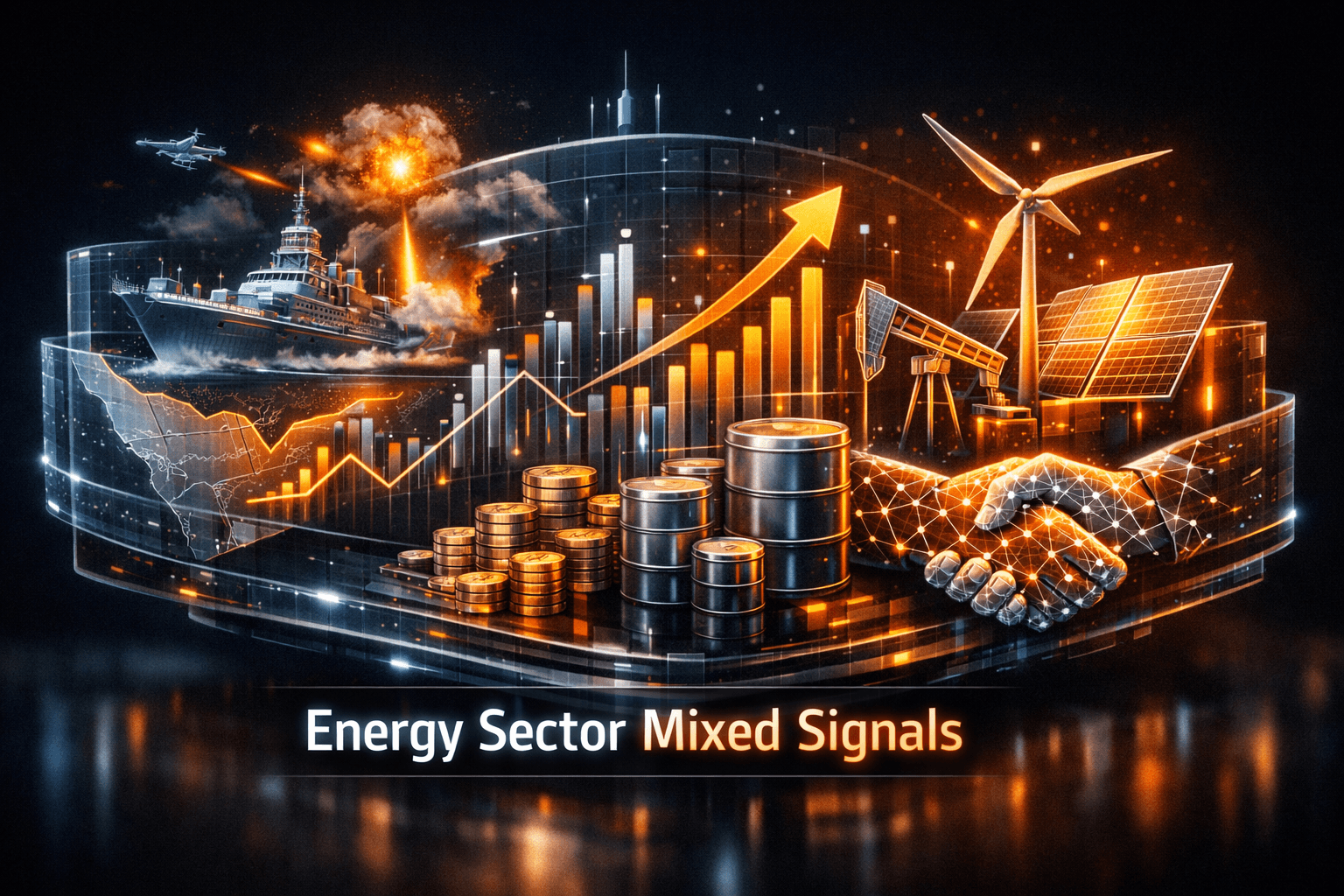
Today brought a classic tug of war for the energy sector, with renewed geopolitical risk on one side and clear commercial and technology-driven strength on the other. Violent reopenings in Yemen and attacks in the Black Sea heightened near-term supply and shipping concerns, while companies from TotalEnergies to SLB reported strong commercial activity or launched growth initiatives that point to longer term resilience.
If you follow energy markets, you had to balance headlines about physical disruption against evidence that traders, service providers, and renewable installers are finding new profit pools. That mix keeps the sector on a razor's edge between volatility and selective opportunity.
Market Highlights
Quick facts and moves that mattered today.
- Geopolitics: Yemen's Houthi rebels reignited conflict, threatening regional shipping and raising global oil transport risk. Less than half of Yemen's population currently has access to electricity, underscoring fragile domestic energy systems.
- Oil trading strength: TotalEnergies reported another quarter of robust oil trading after market dislocations tied to the Iran war, signaling continued trading-derived profits for majors and traders, $TOT cited in reporting.
- Military incidents: Ukrainian naval drones struck two large Russia-linked oil tankers in the Black Sea, increasing short-term risk to seaborne flows from the region.
- Capital allocation: Eni CEO Claudio Descalzi said big oil is shifting investment toward Southeast Asia and Latin America because Middle East shipping disruptions look set to be a persistent risk, $E referenced in the statement.
- Energy technology and services: SLB agreed to form a data center alliance with Liberty to speed up new capacity deployments, and Xpanner launched the X1 excavator-mounted automation tool to accelerate utility-scale solar installation.
- EV and green demand signals: Kia launched an EV2 long-range variant with 281 miles of range, and Xpeng priced the new L03 at €34,990, undercutting the Tesla Model Y by about €3,400 in Germany and roughly $10,000 in Norway, putting EV competition squarely in focus.
Key Developments
Yemen conflict returns, shipping routes at risk
Reports that the Houthis have reignited fighting in Yemen and are threatening to target maritime routes add tangible risk to oil transport through nearby chokepoints. With less than half the country connected to reliable electricity, domestic energy weakness complicates any immediate stabilization. What does this mean for you and the market? Expect heightened volatility in oil-linked names and potential premiums for shipping and trading desks that hedge route disruptions.
Big Oil reallocates capital, traders reap gains
Eni's CEO told lawmakers that majors are redirecting capital toward Southeast Asia and Latin America because Middle East geopolitics will remain a structural risk. That strategic pivot echoes through the sector as traders and integrated majors like TotalEnergies showed strong trading results, suggesting profitable opportunities even as upstream supply remains contested. Analysts note this could benefit regional exploration players while weighting down long lead-time Middle East projects.
Services, data centers and solar automation signal growth outside crude
SLB and Liberty's data center alliance highlights a repeatable playbook: oilfield service firms are monetizing infrastructure and electrification demand beyond hydrocarbons, $SLB fronting the move. Meanwhile, Xpanner's excavator-mounted X1 aims to cut labor bottlenecks in utility-scale solar installations, which should speed buildouts and reduce costs per MW. If you're tracking transition exposure, these are concrete examples of how traditional energy companies and tech vendors are capturing new demand.
What to Watch
Here are the catalysts and risks that could drive sector moves tomorrow and beyond.
- Geopolitical updates: Monitor developments in Yemen and the Black Sea. Any escalation that threatens shipping lanes could widen crude price swings and pressure refining and shipping stocks.
- Earnings and trading updates: Watch for further quarterly comments from majors and trading houses. TotalEnergies' strong trading is a reminder that volatile markets can boost merchant P&L, so traders will be listening for similar remarks from peers.
- Capital allocation signals: Keep an eye on announcements about new projects in Southeast Asia and Latin America. These will signal whether the industry shift Eni described becomes concrete and where capital and hiring will flow.
- Renewables execution: Track deployment rates for utility-scale solar and vendor metrics from firms using automation tools. Faster installs and lower BOS costs could compress timelines for green capacity add-ons.
- Technology and EV competition: EV pricing moves by Xpeng and expanded ranges like Kia's EV2 long-range could affect electricity demand profiles and charging infrastructure planning. Are grid and storage players ready for more mid-range adoption?
Bottom Line
- Geopolitics is the current volatility driver, but commercial activity and tech advances are anchoring longer term demand trends.
- Traders and integrated majors are capitalizing on dislocations, as TotalEnergies' trading strength shows; this may cushion some upstream shortfalls.
- Investments are shifting toward Southeast Asia and Latin America, which could reroute future supply growth and service-industry demand.
- Renewables execution improvements and service firm diversification, including data center deals, are creating non-oil growth paths within the sector.
- Stay selective and watch near-term shipping and strike risks, while monitoring execution metrics for project and technology rollouts tomorrow and next quarter.
FAQ Section
Q: How will renewed conflict in Yemen affect global oil prices? A: Renewed fighting raises shipping and supply risk, which can push prices higher if insurers and shippers reroute or avoid chokepoints, but the magnitude will depend on the conflict's scope and duration.
Q: Should I focus on oil majors or renewable tech names after today's news? A: The sector shows a mixed picture, with majors benefiting from trading and renewables gaining from tech and automation. Your choice should hinge on which risks and timelines you prefer, not on headlines alone.
Q: Do strikes on tankers and trading gains change long term energy demand trends? A: Short-term disruptions can create price volatility and trading profits, but long-term demand is still shaped by electrification, EV adoption, and renewables deployment, which continue to advance.