The Big Picture
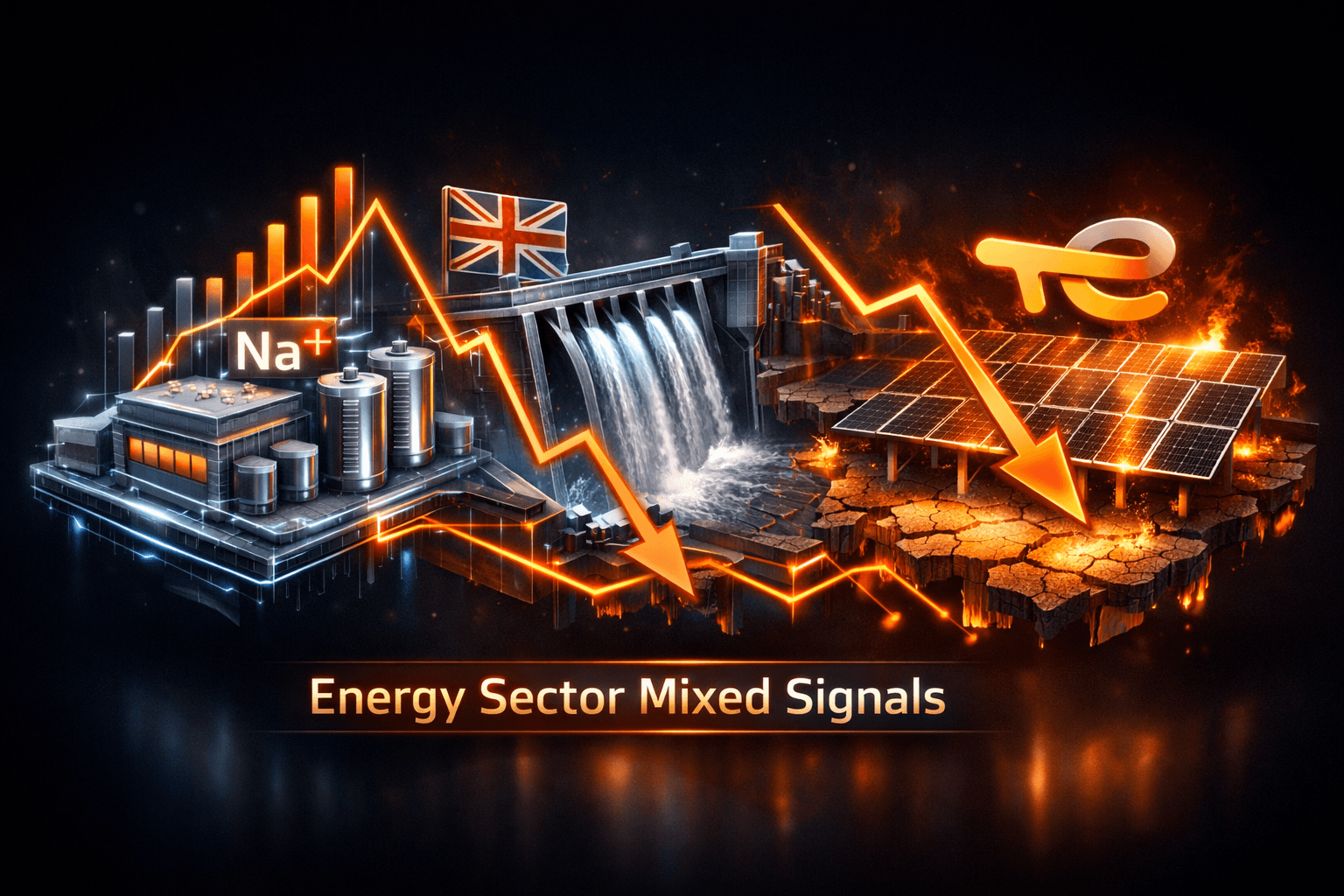
A wave of capacity and policy moves over the weekend underscores how the energy transition is advancing while structural risks remain. The standout development was a large sodium-ion battery plant in California and fresh U.K. support for hydropower projects, both of which point to more storage and resilient renewables capacity coming online.
Those positives are tempered by supply-chain and technical warnings. A U.S. think tank flagged the risk that China could produce more battery cells than global demand by 2030, and a new study shows Iberian heatwaves can cut PV output sharply during peak hours. Markets were closed Sunday, Jul 12, so you should expect reactions when U.S. trading reopens Monday, Jul 13.
Market Highlights
Over the weekend, major headlines landed while U.S. markets were closed. Here are the quick facts you need heading into the long weekend and into Monday's session.
- Sodium-ion plant: a 183,000 square foot Sacramento factory will target 4 gigawatt-hours of annual sodium-ion battery output, roughly equivalent to powering almost four million households worth of storage deployments in calendar terms.
- Hydropower push: the U.K. announced plans to back three large-scale hydro-storage projects as part of a broader energy security strategy.
- TotalEnergies rework: $TTE confirmed sales of small-scale solar assets in Europe as it refocuses on large utility-scale solar and wind farms to capture economies of scale.
- Mobility and micro-EVs: VMAX launched the VX2 Lite e-scooter with a 56-mile range and a $799 price point, while Tesla $TSLA rolled out early Cybercab employee rides in Austin, though details remain limited.
- Battery risks and PV performance: a Carnegie-backed report warned China could outpace global battery demand by 2030, and Portuguese researchers found heatwaves can cause hourly PV losses up to 90 percent in the Iberian Peninsula.
Key Developments
Sodium-ion factory opens a new front in U.S. storage
The Sacramento plant represents a major industrial bet on sodium-ion chemistry, which uses more abundant raw materials than lithium-ion. For you that means more diverse storage options may become commercially available, potentially lowering costs for grid-scale and behind-the-meter projects.
Analysts note this is a strategic move to shore up domestic supply chains. Can sodium-ion compete with mature lithium technologies on cycle life and energy density? That will determine how much market share it actually wins.
U.K. hydropower plans and TotalEnergies' portfolio shift
The U.K. government backing three large hydro-storage projects signals a renewed emphasis on dispatchable renewables. For investors, the story highlights policy support for long-duration storage and diversification of renewable baseload options.
At the same time $TTE selling small-scale solar assets indicates major developers are consolidating around utility-scale projects to capture economies of scale. That trend could pressure small project developers but help boost returns for large-scale operators.
Battery supply, PV vulnerabilities and transport innovations
The Carnegie report warning of potential Chinese battery overcapacity by 2030 raises a clear downside risk for cell prices and for companies exposed to manufacturing capacity. You should watch announcements about capacity utilization and off-take agreements closely.
Meanwhile, the PV heatwave study is a technical red flag for solar yield assumptions in hot climates, especially during peak demand hours. Mobility items like the VMAX VX2 Lite launch and Tesla's Cybercab demos show innovation is still pushing electrification into new corners of the transport sector, though regulatory and safety questions remain.
What to Watch
Here are the catalysts and risks that could move the sector when markets reopen on Monday. Keep these on your radar so you can assess where the momentum is heading.
- Battery reports and policy: look for follow-up analysis on the Carnegie study and any responses from battery producers. Policy moves aimed at supply chain security could shift the competitive landscape.
- Hydro approvals and permitting: U.K. project timelines will hinge on permitting and financing milestones. Watch government releases for firm commitments or delays.
- Solar performance data: utility and developer operational updates could provide early signals on how heat stress is affecting panels in other regions.
- M&A and asset sales: $TTE's continued asset reshuffle could spur similar moves by peers aiming for scale. Who is buying small-scale portfolios could reveal investor appetite.
- Regulatory spots: e-bike and e-scooter reporting tools and local mobility regulations could affect micro-mobility adoption and safety-related costs. Will cities tighten rules further?
Monitor earnings calendars and company statements on Monday. You may want to compare technical updates against long-term project timelines to separate short-term noise from durable trends.
Bottom Line
- Capacity growth is tangible, with a major U.S. sodium-ion plant and renewed U.K. hydro ambitions signaling more large-scale storage and dispatchable renewables are coming online.
- Structural risks remain, including possible battery oversupply from China and PV performance hits during extreme heat, which could pressure returns for some solar assets.
- Corporate strategy is shifting toward scale, as seen with $TTE selling small projects to focus on utility-scale builds, suggesting winners may be those able to operate at scale.
- Micro-mobility and autonomous demos show continued innovation, but regulatory and operational details will determine commercial viability.
- Expect muted market reaction until U.S. trading resumes Monday, Jul 13, and then look for guidance and data to clarify which themes are dominant.
FAQ
Q: Will the new sodium-ion plant make batteries cheaper? A: The plant increases domestic production capacity and diversification, which can help cost dynamics, but sodium-ion still faces technical and scale challenges versus lithium-ion.
Q: Should I worry about solar losses during heatwaves? A: Short-term hourly losses can be severe in extreme heat, so you should check site-specific data and inverter temperature management when evaluating solar projects.
Q: Does the China battery capacity warning mean global oversupply is certain? A: Not necessarily. The report highlights a risk scenario based on capacity buildouts and demand forecasts. Policy, demand growth and export controls will influence actual outcomes.