The Big Picture
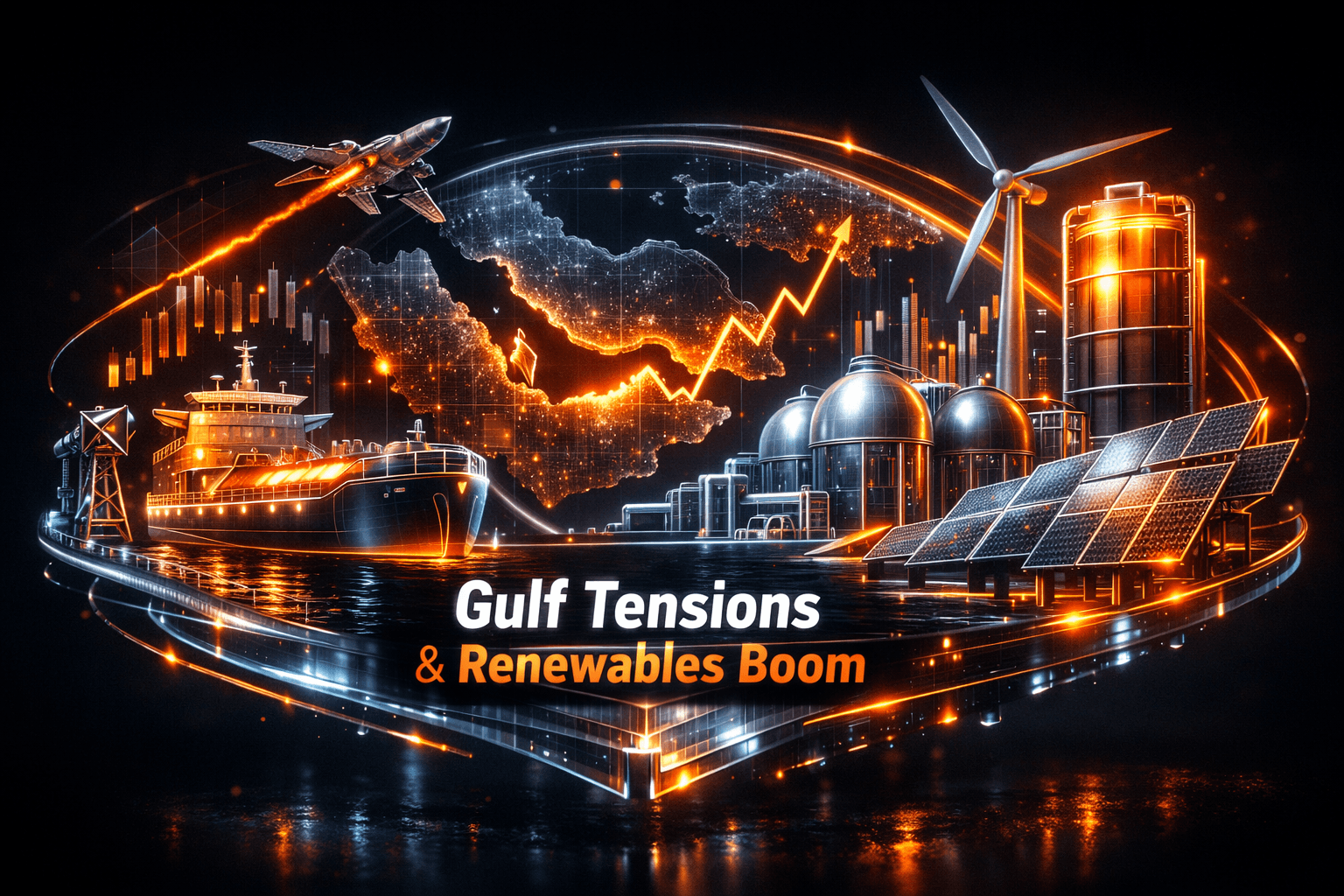
The most consequential development overnight is the sharp escalation in the Persian Gulf that has choked tanker traffic through the Strait of Hormuz and sent oil prices sharply higher. Markets are reacting to renewed U.S.-Iran strikes, attacks on commercial vessels, and comments from analysts that supply risks are now front and center.
At the same time you're seeing strong, structural wins in renewables and LNG: Argentina awarded 700.5 MW of battery projects, Longi started 21 GW of copper-metallized back-contact cell output, and major LNG offtake deals and first shipments are moving markets. That mix creates a tug of war between short-term supply shocks and longer-term clean energy momentum.
Market Highlights
Key overnight moves and headlines to scan this morning.
- Oil prices surged more than 5% on Wednesday, spiking as much as 7% at one point after attacks on commercial ships and renewed hostilities in the Gulf were reported.
- U.S. forces carried out strikes against Iran for a second day, and Bloomberg reported tanker traffic through Hormuz virtually halted, with only one sanctioned VLCC observed on the route.
- Argentina awarded 20 BESS projects totaling 700.5 MW under the AlmaSADI tender, an estimated $700 million in investment to strengthen grid nodes outside Buenos Aires.
- Longi began 21 GW production of copper-metallized back-contact solar cells, pushing a silver-free Alloy Contact Matrix process that aims to cut cell costs and boost back-contact module competitiveness.
- TotalEnergies, listed as $TTE, shipped the first LNG cargo from Mexico's Pacific coast to Asia during ramp up and ADNOC reached a 15-year deal to supply 1 million tonnes per annum of LNG to INPEX.
- Goldman Sachs, referenced by analysts at $GS, warned renewed Gulf hostilities threaten an extended oil supply disruption, noting Middle East production remains about 10.5 million barrels per day below pre-war levels.
Key Developments
Gulf escalation and tanker traffic disruption
Renewed U.S.-Iran strikes and reported attacks on commercial vessels have pushed crude futures higher and increased shipping risk premiums. With tanker transits through Hormuz effectively grinding to a halt, insurers and charterers may divert cargoes and raise freight costs, squeezing flows and adding volatility to oil, fuel, and LNG markets.
What does this mean for you, the trader or long-term investor? Expect energy commodity volatility to stay elevated while the situation evolves, with short-term spikes possible if key export routes remain constrained.
Renewables show scale and policy progress
Argentina's AlmaSADI awards allocate 700.5 MW of battery storage to strengthen critical nodes, with roughly $700 million of investment expected. Spain released its first national agrivoltaic map to standardize project data and support regulation, improving visibility for developers and investors.
Longi's ramp of 21 GW of copper-metallized back-contact cells signals a cost-down move across the solar supply chain. That's a literal reduction in silver usage and a silver lining for module makers and project economics, especially if the process proves durable at scale.
LNG commercial momentum despite geopolitics
Liquefied natural gas saw two positive items: TotalEnergies shipped the first Pacific-coast Mexican LNG cargo to Asia during project ramp up and ADNOC secured a 15-year deal to supply 1 million tonnes per annum of LNG to INPEX. Those deals lock in demand and support long-term midstream cash flows even as short-term shipping routes are rerouted.
For buyers and infrastructure owners this helps underpin utilization assumptions, but geopolitical shipping risk could still raise logistical costs and compress near-term margins.
What to Watch
Focus on the drivers that will determine near-term moves and longer-term themes.
- Global oil inventories and front-month crude moves, because they reflect how tight physical markets become if Hormuz remains disrupted.
- Shipping and insurance notices, plus the Baltic Dirty Tanker Index, for signs of rerouting costs and higher freight premiums.
- Official developments out of Washington and Tehran, and any OPEC+ response to price moves, since policy steps can change forward supply expectations quickly.
- Project timelines for the Argentina BESS awards and Spain's agrivoltaic regulatory rollout, since these set near-term procurement and permitting milestones you can track.
- Longi production ramp and technology adoption rates, because copper-metallized back-contact cells could push module price competition if deployed broadly.
- LNG contract flows and cargo tracking, since ADNOC's 15-year deal and TotalEnergies' shipment show sustained demand for long-term offtake even amid short-term shipping risk.
How will you position for both volatility and structural growth? Stay selective and watch the calendar for policy announcements and corporate updates that change the supply picture.
Bottom Line
- Geopolitical risk in the Strait of Hormuz is the near-term market driver, sending oil up more than 5% and halting most tanker traffic.
- Renewables and storage are advancing: Argentina awarded 700.5 MW of BESS and Spain launched a national agrivoltaic map to improve planning and transparency.
- Supply chain innovation is underway, with Longi's 21 GW copper-metallized back-contact line aiming to cut cell costs and reduce silver use.
- LNG commercial momentum continues as $TTE ships first Pacific Mexican cargo and ADNOC signs a 15-year, 1 MMtpa deal with INPEX, supporting demand visibility.
- Expect elevated volatility in fossil fuels while structural growth in clean energy and long-term gas contracts offers a counterbalance; monitor shipping, policy, and project execution closely.
FAQ Section
Q: How will Gulf tensions affect oil prices and fuel costs? A: Short-term price spikes and higher volatility are likely if tanker traffic remains constrained, which can push up refining feedstock costs and retail fuel prices temporarily.
Q: Will the Argentina battery awards change grid reliability quickly? A: The 700.5 MW of BESS awards are intended to bolster critical nodes and the projects should improve regional reliability as they come online, but construction and commissioning timelines will determine when you see full benefits.
Q: Does Longi's copper back-contact line change solar economics now? A: Longi's 21 GW ramp is a meaningful supply-side move that could lower cell costs over time, but module-level adoption and system-level pricing effects will depend on yield, reliability, and broader supply chain responses.