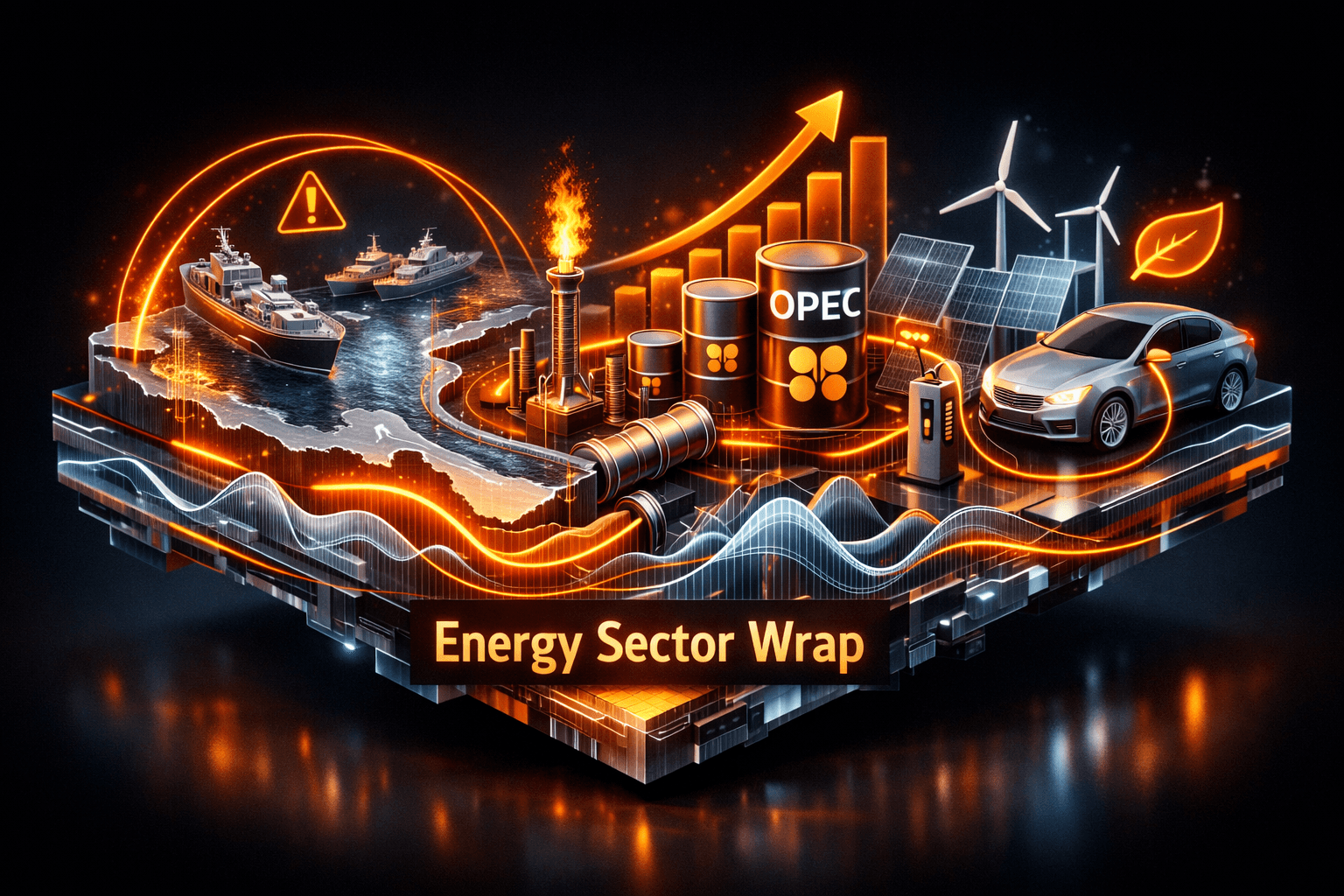
The Big Picture
Geopolitics and policy continued to set the tempo for energy markets on Jul 3, with OPEC reporting a sharp production rebound even as the Strait of Hormuz remains an unresolved wildcard. You should view the recovery in Gulf output alongside ongoing shipping uncertainty, because both will shape near-term oil and base-metals prices.
At the same time you saw encouraging signals in demand-side stories: mainstream EV models logged strong sales and new clean-fuel projects advanced. That mix leaves investors with mixed signals, and it raises questions about where risk and opportunity sit heading into the long weekend.
Market Highlights
U.S. markets are closed for Independence Day; the last trading day was Thursday, July 2, and trading resumes Monday, July 6. Below are the key facts and figures from today's reports.
- OPEC output, Reuters survey: 19.43 million barrels per day in June, up about 3.3 million bpd from May's plunge to a multi-decade low.
- Strait of Hormuz: diplomatic back-and-forth continues. Washington has until July 19 to lift its naval blockade under a June 17 memorandum, while Tehran's commitments remain conditional.
- EV demand: Hyundai moved over 20,000 IONIQ 5 units in the first half of 2026, signaling steady consumer appetite for mainstream EVs.
- Hydrogen and clean fuels: Orica is proceeding with a 50 MW hydrogen hub in New South Wales, and Mitsubishi signed a deal for 100,000 tonnes per year of green methanol from 2030.
- Canada infrastructure: Alberta applied to list the West Coast Oil Pipeline project as a project of national interest, advancing export options to Asia.
- Regulatory focus: Texas oil regulator directed operational changes intended to improve RRC efficiency, signaling state-level regulatory attention to permitting and oversight.
Key Developments
OPEC Rebound vs Hormuz Uncertainty
OPEC members increased production to 19.43 million bpd in June, a rebound of roughly 3.3 million bpd from May, as Gulf producers restored some previously shut-in barrels. That's a material recovery in headline terms, but agencies and analysts caution output remains well below pre-crisis levels.
At the same time, continued uncertainty over transit through the Strait of Hormuz keeps price outlooks volatile. Energy forecasting groups are recalibrating 2026 and 2027 supply assumptions, and analysts note that upside or downside risks still hinge on naval and diplomatic steps this month.
Metals and Copper: Policy, Not Passage, May Decide the Next Move
Base metals are still reacting to the Strait of Hormuz story, but commentators say copper's next leg will depend more on Washington's timeline and policy moves than on immediate shipping flow. The U.S. has until July 19 to lift its blockade under the recent memorandum, and that deadline is shaping market expectations now.
That means you need to watch U.S. policy signals as closely as physical flow updates, because tariffs, sanctions relief, or naval posture changes could move prices even if shipping reports look mixed.
EV Momentum and Clean-Fuels Expansion
Demand-side developments were broadly constructive. Hyundai's IONIQ 5 sold over 20,000 units in H1 2026, keeping it among the top-selling EVs in the U.S. Meanwhile $TSLA remained in the headlines with new model launches and delivery updates discussed in the Electrek podcast, and Volkswagen and BMW also highlighted upcoming EV models.
On the clean-fuels front, Orica's decision to proceed with a 50 MW hydrogen hub in New South Wales and Mitsubishi's 100,000 t/yr green methanol purchase from Acme are signs the decarbonization supply chain is scaling. These moves suggest steady industrial demand for low-carbon fuels over the medium term.
What to Watch
As you plan for next week, focus on three practical areas. First, monitor diplomatic and naval developments related to the Strait of Hormuz, because any shift could change forward curves quickly. What will Washington do by July 19, and how will Tehran respond?
Second, watch OPEC and non-OPEC output reports and inventories. Production data that follow the June rebound will tell you whether the recovery is sustained or transient. Third, track demand indicators for EVs and clean fuels, including quarterly delivery reports and offtake agreements that will show whether growth remains on track.
Risk factors to monitor include renewed shipping disruptions, policy reversals on sanctions or blockades, and potential supply chain bottlenecks for battery metals. Keep an eye on state-level regulatory moves in key jurisdictions like Texas, which can affect permitting and production timelines.
Bottom Line
- OPEC's June production rebound is meaningful, but supply has not returned to pre-crisis norms, keeping upside and downside scenarios open.
- Geopolitical uncertainty in the Strait of Hormuz remains the dominant short-term risk for oil and base metals markets.
- Demand signals from EV sales and clean-fuel deals suggest medium-term structural growth in electrification and low-carbon fuels.
- Policy shifts, especially U.S. decisions by July 19, and state regulatory actions in places like Texas could swing sentiment quickly.
- Take a selective approach and monitor the catalysts above, because the market picture is mixed and evolving.
FAQ Section
Q: How does OPEC's June production change affect oil prices? A: The June rebound eases immediate supply tightness, but prices still depend on shipping risk, inventories, and demand trends, so data suggests continued volatility.
Q: Will EV sales growth offset metal-market volatility? A: Rising EV sales support long-term demand for battery metals, but short-term prices can be driven by geopolitics and policy, making the near-term outlook variable.
Q: What should you watch this week? A: Track diplomatic updates on the Strait of Hormuz, OPEC and inventory reports, and any U.S. policy signals ahead of the July 19 deadline, because those factors will likely set near-term direction.