The Big Picture
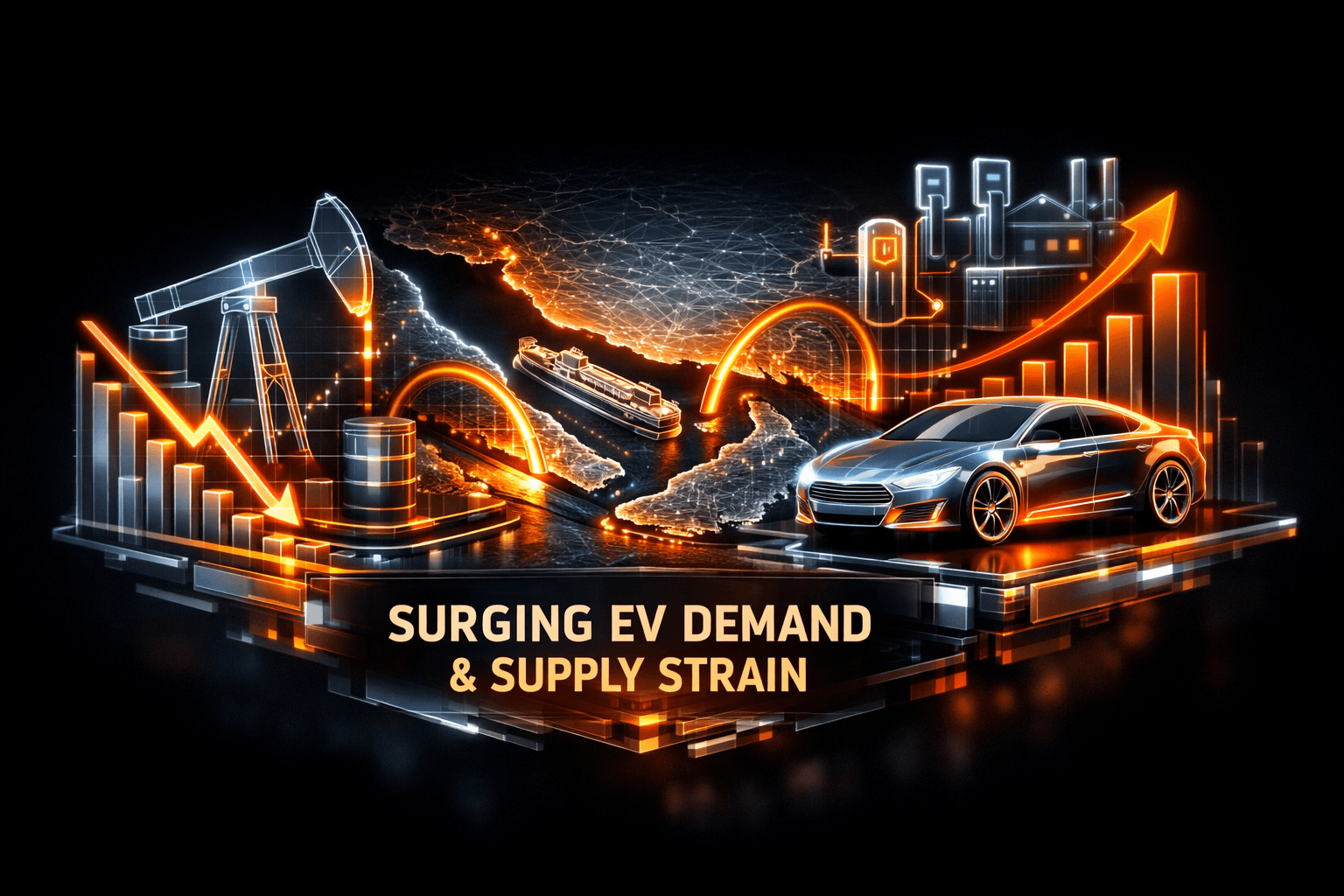
Oil-market supply signals tightened and EV momentum accelerated today, creating a bullish backdrop for broad energy flows. U.S. crude stocks fell by almost 4 million barrels, Iran issued stricter transit rules in the Strait of Hormuz, and Tesla posted deliveries far above Wall Street estimates.
Those developments matter because they tighten near-term liquid fuel availability while demand for electrified transport keeps expanding. If you follow energy prices or energy transition stocks, today’s headlines suggest both elevated price sensitivity and accelerating structural change.
Market Highlights
Here are the quick facts and market moves you need to know from today’s session.
- U.S. crude inventories, excluding the SPR, dropped to 408.4 million barrels as of June 26, a decline of almost 4.0 million barrels week over week, according to the EIA report cited by Rigzone.
- Geopolitical risk rose after Iran warned tankers to follow Tehran-approved routes in the Strait of Hormuz, increasing supply risk for crude transits through the waterway.
- Tesla $TSLA reported 480,126 vehicle deliveries in Q2 versus Street estimates near 406,600, and produced 451,758 vehicles in the quarter. Shares were volatile intraday and settled near unchanged into the cash open.
- Automakers kept up the EV push: Subaru launched the Trailseeker EV with 375 hp and a starting price under $40,000, while Tesla introduced the Model Y L, a 6-seat variant priced at $61,990 and rated for about 325 miles.
- Shell agreed to sell a 50 percent stake in a Gulf of Mexico production hub, including the Coulomb tieback, to Ridgewood Energy and Talos Energy for $1.7 billion, per Rigzone.
Key Developments
Global supply tightness: U.S. inventories fall, Middle East risks rise
The EIA weekly report showed U.S. crude stocks fell nearly 4 million barrels to 408.4 million barrels. That kind of withdrawal tends to support prices, especially when paired with geopolitical friction. Iran’s fresh warning that tankers must follow Tehran-approved routes through the Strait of Hormuz raises the cost of risk for shipping through a critical artery.
What does this mean for you? Tighter crude availability and shipping-risk premiums can lift benchmark oil prices and reverberate across refining and downstream margins, especially if the situation in the Gulf curbs throughput or insurance costs rise.
EV demand keeps expanding: Tesla blowout and new model launches
Tesla delivered 480,126 vehicles in Q2, well above consensus, and produced 451,758 units. Those numbers point to resilient end-user demand and operational recovery after a softer start to the year. Tesla shares showed intraday volatility but the delivery beat is a clear positive signal for electrification momentum.
Meanwhile, Subaru’s Trailseeker EV launching under $40,000 with standard AWD and 375 hp targets mainstream SUV buyers. Tesla’s new Model Y L opens a higher-price, six-seat segment with a $61,990 launch price and an estimated 325-mile range. Combined, these product moves broaden EV appeal across price points.
Regional constraints and asset moves: Canadian tanker ban and Shell sale
Canada’s federal backing of a tanker ban off British Columbia’s north coast removes a key export pathway for Alberta crude, complicating provincial plans to expand West Coast pipeline exports. That regulatory stance reduces short-term outlet options for Canadian barrels and could keep domestic differentials wide.
On the corporate front, Shell sold its non-operated Gulf platform stake and the Coulomb tieback for $1.7 billion. The deal reflects ongoing portfolio reshaping among majors, and buyer interest from independent producers suggests focused capital redeployment rather than a retreat from U.S. Gulf production.
What to Watch
Expect market sensitivity to continue. You’ll want to monitor several near-term catalysts and risks that can swing prices or sentiment tomorrow and beyond.
- Oil-price reaction to the EIA report and any comments from OPEC+ or traders, especially if U.S. stock draws persist.
- Developments around the Strait of Hormuz and any diplomatic or naval updates, since shipping constraints change risk premia quickly.
- Tesla’s share-price reaction to delivery detail and guidance clarity, plus how EV competitors respond to product pricing like Subaru’s Trailseeker under $40,000.
- Macro data due this week and next, including U.S. GDP and inflation updates, which influence fuel demand expectations and interest-rate-driven commodity flows.
- Supply-chain or security hits to renewable deployment, highlighted by the strike on a Kyiv solar warehouse, which could slow near-term project rollouts in affected regions.
Which of these matters most to your portfolio? That depends on whether you’re positioned for commodity upside or for longer-term electrification gains.
Bottom Line
- Supply-side signals tightened today, with U.S. crude stocks down nearly 4 million barrels and heightened Gulf shipping risk, a bullish mix for oil prices.
- EV adoption shows momentum, led by Tesla’s delivery beat and lower-price entries like Subaru’s Trailseeker, supporting energy-transition themes.
- Regulatory moves, including Canada’s tanker-ban backing, keep outlet constraints in place for some crude producers and add regional price risk.
- Corporate asset sales such as Shell’s $1.7 billion Gulf divestiture reflect capital redeployment, not a collapse in production activity.
- Watch oil-price action, Strait of Hormuz updates, and EV unit trends into next week for the clearest near-term signals.
FAQ Section
Q: How does a fall in U.S. crude stocks affect fuel prices? A: Lower inventories tighten available supply and tend to push benchmark oil prices higher, which can flow through to gasoline and diesel prices at the pump.
Q: Will Tesla’s delivery beat lift the whole EV sector? A: Tesla’s strong deliveries support demand narratives and can boost supplier and peer stocks, though outcomes vary by company fundamentals and margins.
Q: How should you think about geopolitical shipping risks like Iran’s Strait of Hormuz warning? A: Shipping-route restrictions increase short-term supply risk and volatility, so you should monitor developments closely and follow insurance and shipping-cost moves.