The Big Picture
Upstream momentum and near-term supply worries set the tone across energy markets today, even as renewables face fresh regulatory and security scrutiny. You saw concrete moves in gas and drilling that could tighten supplies, but you also saw policy and cybersecurity concerns that complicate the clean-energy narrative.
This matters because your exposure to energy now depends on which part of the sector you own. Are you focused on traditional oil and gas where activity and tightness are building, or on renewables where regulatory risk is rising? The market is sending mixed signals, and selectivity will matter.
Market Highlights
Trading reflected the split story, with oil and gas names generally supported while some renewable and grid-exposure names pulled back on policy headlines.
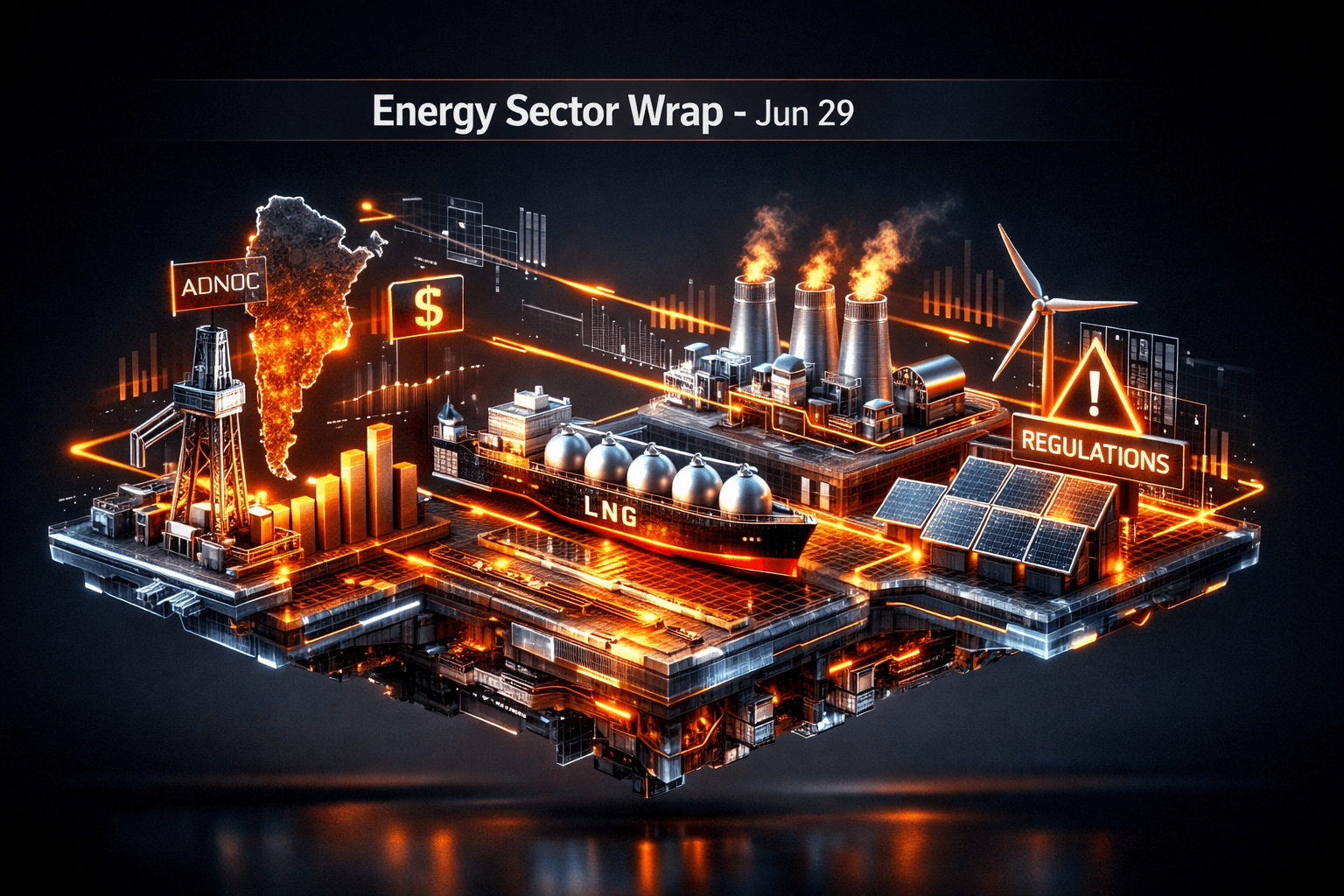
- ADNOC and Eni ($E) agreed to buy minority stakes, 32% each, in three Vaca Muerta gas blocks tied to Argentina's LNG project, a direct vote of confidence in long-cycle gas supply.
- Baker Hughes' North America rig count rose by 21 rigs week on week, marking an eighth straight weekly increase, signaling sustained upstream activity; traders monitored $BKR-related flow data.
- Geopolitical jitters in the Strait of Hormuz reduced broadcasting ship traffic and spurred urgent LNG demand, with Pakistan seeking cargoes for delivery this week, supporting near-term LNG tightness.
- Renewables felt pressure: Germany is weighing cybersecurity restrictions on Chinese inverters after a parliamentary inquiry, and commentary questioned whether China’s coal growth is outpacing its clean-energy buildout.
- Auto and EV headlines were mixed: Ford ($F) testing a $30,000 EV pickup boosted EV adoption storylines, while Tesla ($TSLA) faces a new class action over Full Self-Driving claims, a legal risk for legacy EV narratives.
Key Developments
Gas investment: ADNOC and $E move into Vaca Muerta
Abu Dhabi’s XRG, ADNOC’s investment arm, and Italy’s Eni ($E) signed Sale and Purchase Agreements to each take 32% stakes in Meseta Buena Esperanza, Aguada Villanueva and Las Tacanas. These blocks feed Argentina’s LNG export ambitions and tie foreign capital to South American gas development.
For you that means more international backing for LNG feedstock, a factor that could support LNG volumes years out, while also highlighting where capital is flowing in a higher-price environment.
Supply and security: Hormuz, Pakistan, rig counts
Attacks over the weekend in the Strait of Hormuz cut the number of ships broadcasting passage, though traffic continued. Pakistan urgently sought LNG deliveries this week as a result, showing how quickly regional incidents can strain spot markets.
At home, the Baker Hughes North America count rose by 21 rigs, the eighth weekly increase, suggesting production activity is climbing. You should note, higher rig counts take time to translate to materially higher output, but the trend points to increased upstream spending.
Renewables under pressure: China, Germany and the public-utility debate
New analysis and commentary questioned the speed of China’s energy transition, noting coal use has surged this century even as renewables expand. That complicates long-term emissions narratives and implies coal-related demand remains relevant.
Separately, Germany is considering restrictions on Chinese inverters over cybersecurity concerns, and U.S. political shifts are reviving public-utility debates tied to AI-driven load growth. These developments underscore regulatory and supply-chain risks for solar and grid equipment makers, and they could shift procurement and investment patterns.
What to Watch
There are a few near-term catalysts and risks you should track.
- LNG spot and charter rates, plus weekly flow reports, will react to Hormuz developments and Pakistan’s urgent buying. Watch price and cargo routing for signs of sustained tightness.
- Progress on the ADNOC and $E deals, and timeline for Vaca Muerta development, will influence medium-term gas supply expectations. Look for capex schedules and export capacity milestones.
- Regulatory moves in Europe on Chinese inverters, and any U.S. utility policy changes tied to AI or municipalization, could reshape supply chains and project economics for renewables and storage.
- Upstream activity metrics, including next Baker Hughes rig updates and operator-level spending calls, will signal whether the rig-count rise converts into higher production.
- Legal and product risks in EVs, highlighted by the Tesla class action and new Ford testing, could influence automotive suppliers and battery-related demand. Who wins from faster EV rollout, and who bears the legal risk?
Bottom Line
- Energy headlines are balanced between a near-term bullish case for oil, gas and LNG and growing regulatory pressure on renewables; selectivity matters for your exposures.
- ADNOC and Eni’s 32% stakes in Vaca Muerta blocks back longer-term LNG supply, while immediate LNG tightness is being driven by Strait of Hormuz disruptions and urgent buying by Pakistan.
- North America’s rig count rising for eight straight weeks indicates higher upstream activity, though production gains lag drilling increases.
- Policy and cybersecurity risks in Europe and commentary on China’s coal use add complexity for renewable power and equipment suppliers.
- Watch LNG flows, rig-count updates, and regulatory developments closely, because they will drive near-term market direction and volatility.
FAQ Section
Q: How will the ADNOC and $E stakes in Argentina affect global LNG supply? A: The deals signal more capital for Vaca Muerta development, which supports longer-term LNG feedstock expectations, but new export capacity will take years to come online.
Q: Should short-term LNG prices be a concern after Strait of Hormuz attacks? A: Short-term prices can spike when shipping is disrupted and buyers like Pakistan seek urgent cargoes, analysts note, so watch spot and freight rates for volatility.
Q: Do German inverter reviews and China coal trends mean renewables are at risk? A: They introduce regulatory and supply-chain risks that can slow deployment or shift sourcing, but they don't end the clean-energy transition; the picture is evolving.