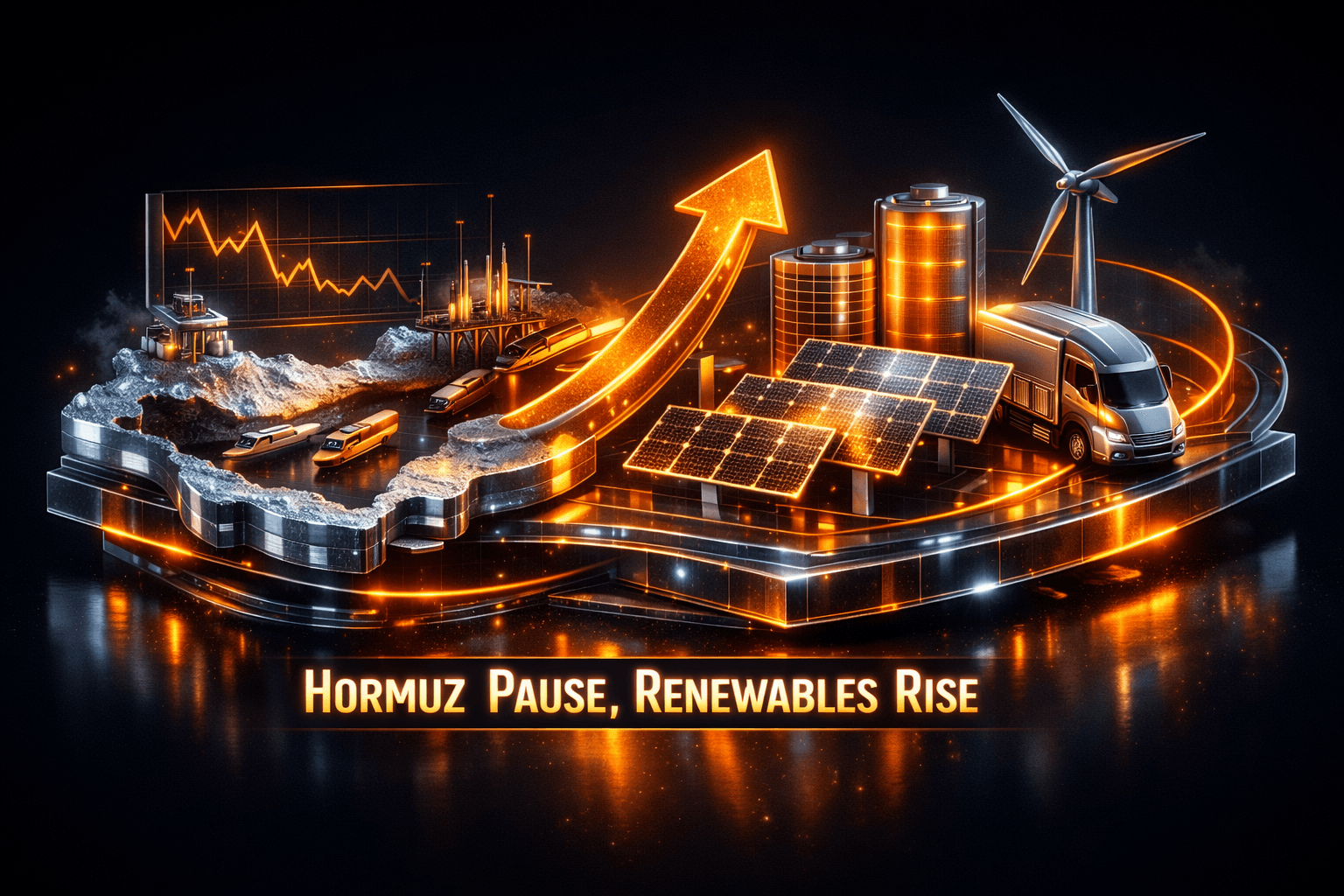
The Big Picture
The U.S. and Iran reached an interim deal that will reopen the Strait of Hormuz and pause hostilities, a development that could ease geopolitical risk for oil and gas markets. But the pathway back to normal flows looks slow, and supply disruptions and labor actions will still keep prices and logistics on edge for weeks to months.
At the same time you're seeing concrete progress in renewables and long-duration storage, from a 1.2 GW TOPCon cell plant in India to a planned 5 GWh compressed-air storage project in Romania. So what does this mean for you as an investor? In short, mixed signals call for selectivity and attention to near-term catalysts and production risk.
Market Highlights
Quick facts and price cues to watch as U.S. markets open.
- Geopolitics: U.S. and Iran agree to pause the war and reopen the Strait of Hormuz, starting a 60-day negotiation window, Reuters and Rigzone report.
- Supply impact: Over 10 million barrels per day were shut in after the Hormuz closure in March, and analysts say it could take months to ramp wells back to prior output.
- LNG risk: The Australian Fair Work Commission refused to bar a strike at the Ichthys LNG facility, a 9.2 million ton per year plant, a move that could curtail exports and tighten markets.
- Solar manufacturing: HVR Solar will build a 1.2 GW TOPCon cell factory in Uttar Pradesh, India, signaling more localized module supply and potential cost improvements.
- Storage and tech: CRRC Zhuzhou Institute showcases a liquid-cooled energy storage system with 25% higher energy density and 20% smaller site footprint. Airengy and Hagag Europe plan a 5 GWh compressed-air storage plant in Romania, aiming for commercial operation in early 2028.
- EV freight and electrification: Scania wins a 105-unit electric semi order, underscoring rising demand for heavy-duty electrification in Europe.
- Representative stocks: Energy majors may react to supply signals today, keep an eye on $XOM and $CVX for broader oil market moves and $VWAGY for transport electrification news.
Key Developments
Hormuz Reopening and the Supply Lag
The headline here is significant, you won't see a new calm overnight. The interim U.S.-Iran agreement and the planned reopening of the Strait of Hormuz set the political stage for lower risk premia, but OilPrice and others caution that more than 10 million barrels per day were shut in after the chokepoint closed in March.
Producers will need time to bring wells and associated infrastructure back online. Shipping operators are already acting cautiously, with Japanese shipowners saying they'll wait for a formal signed agreement before rerouting vessels. In short, expect a gradual unwind rather than an immediate flood of barrels.
Labor Action Keeps a Short-Term Premium on Gas
The Australian Fair Work Commission denied a request to stop strikes at the Ichthys LNG facility, keeping the possibility of curtailed exports on the table. That could tighten regional LNG availability this northern summer, especially if other producers remain cautious about ramping exports.
For traders and you watching gas markets, that’s a reminder that geopolitical headlines and labor disruptions can offset one another, leaving absolute direction unclear in the near term.
Renewables and Long-Duration Storage Move From Announcements to Projects
On the clean energy side, activity is tangible. HVR Solar’s 1.2 GW TOPCon cell factory in Uttar Pradesh is part of a wave of manufacturing investment aimed at shortening global supply chains. You should note timing, since new capacity affects cost curves only after ramp and commissioning.
Storage innovation also matters. CRRC’s liquid-cooled system promises 25% higher energy density and 20% lower site footprint, while the Airengy and Hagag Romania project targets 5 GWh of compressed-air storage, with commercial operation likely in early 2028. These projects improve grid flexibility and backstop renewables penetration over time.
What to Watch
Here are the catalysts and risk factors that could move markets today and in coming weeks. Keep your focus on near-term supply indicators and longer-term capacity builds.
- Formal signing on the U.S.-Iran agreement, due Friday. Will shipping re-route quickly or wait for firm assurances?
- Daily oil production reports and shipping lane traffic, especially measures of exports from Persian Gulf terminals. Look for incremental increases rather than big jumps.
- Labor negotiations at Ichthys and any broader strike contagion across LNG facilities. A sustained outage would keep Asian gas prices elevated.
- Progress and timelines for the HVR Solar factory and the Romania storage project. Commercial dates will affect supply planning and local power markets.
- Market reaction in energy equities, notably majors and renewables manufacturers. Watch $XOM and $CVX for oil moves, and industrial names tied to storage and EV fleets for clean energy momentum.
- Policy and tax developments, including the restored 5 percent safe harbor for solar that preserves tax-credit timelines, which could affect project financing ahead of the July 4 deadline.
Bottom Line
- Sentiment is mixed: geopolitics eased but physical flows will lag, so short-term price relief may be limited.
- Near-term downside is balanced by supply risks such as the Ichthys strike and operator caution from shipowners.
- Renewables and storage continue to show tangible progress, with manufacturing and long-duration projects likely to reshape supply chains and grid flexibility over the next 18 to 36 months.
- Your approach should be selective and catalyst-driven, focusing on verified production and contract timelines rather than headlines alone.
- Watch for the formal Hormuz agreement signing and for production notices from Middle Eastern operators as the clearest short-term signals.
FAQ
Q: How quickly will oil flows return after the Strait of Hormuz reopens? A: Data suggests it will take months to fully restore more than 10 million barrels per day that were shut in, since wells need time to ramp and shipping logistics must normalize.
Q: Could the Ichthys LNG strike materially tighten global gas markets? A: Yes, Ichthys handles 9.2 million tons per year, so prolonged industrial action could tighten regional LNG availability and keep price premiums in place.
Q: Do the renewable manufacturing and storage announcements change near-term energy prices? A: Not immediately, you should view factories and multi-GWh storage projects as medium-term supply and flexibility improvements that will affect costs and grid resilience over years rather than days.