The Big Picture
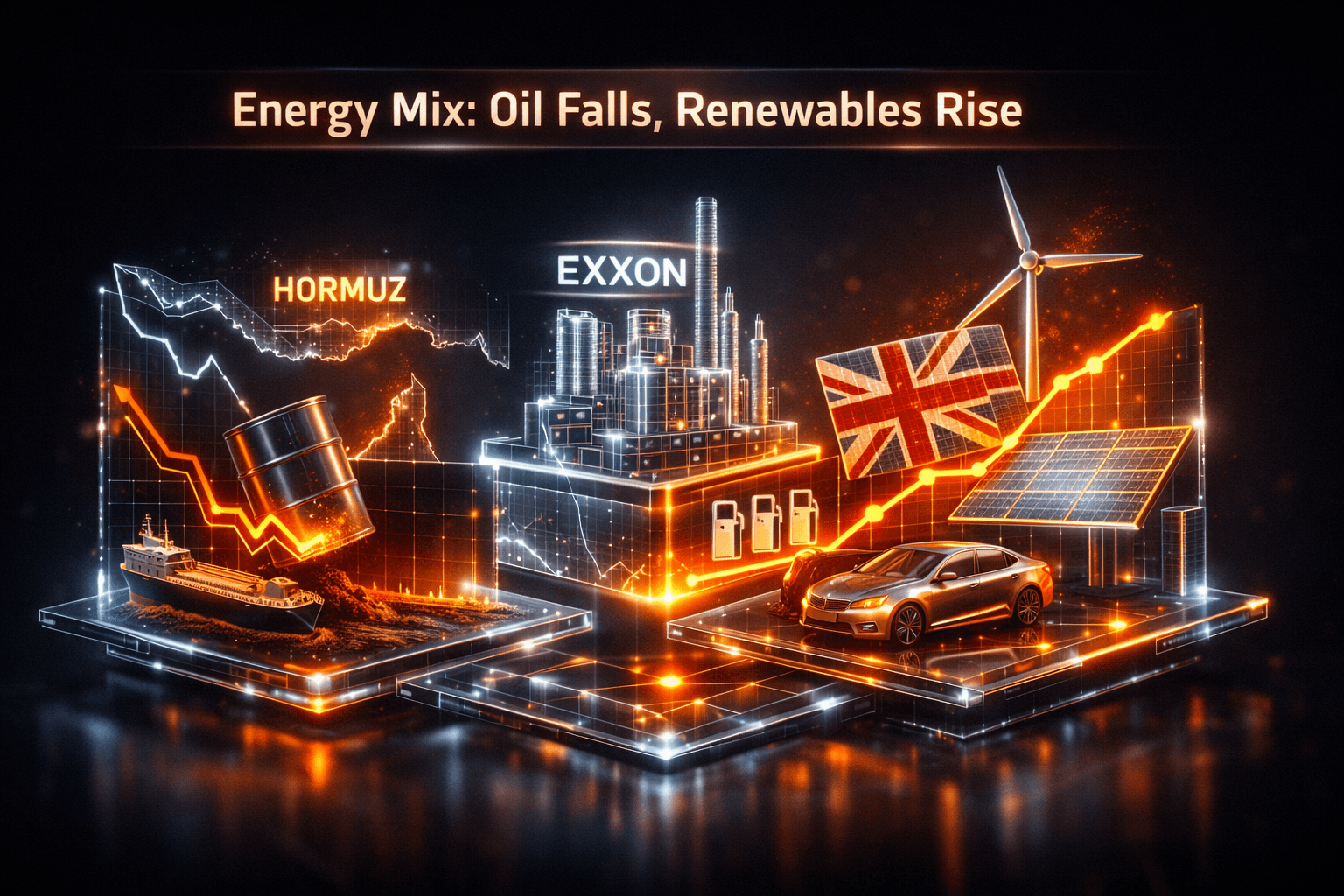
Global energy headlines delivered a mixed bag for the sector as of Friday, June 12. Oil prices slid to a four-month low on renewed hopes for a U.S.-Iran interim deal to reopen the Strait of Hormuz, while merger chatter, regulatory moves and progress in clean energy technologies provided countervailing signals.
U.S. markets were closed Saturday, June 13, so the price and sentiment context below refers to developments as of Friday, June 12 and events published on June 13. You’ll want to weigh both near-term oil volatility and longer-term structural shifts in renewables as you think about sector exposure.
Market Highlights
Key facts and figures to note as you head into the long weekend.
- Oil: Prices fell sharply to a four-month low as of Friday, June 12 after reports that the U.S. and Iran edged closer to an interim deal to reopen the Strait of Hormuz, easing premium risk on Gulf flows.
- ExxonMobil $XOM: Reported internal talks about potential acquisitions including Woodside, signaling possible consolidation interest among majors.
- UK policy: London set a firm deadline of January 1, 2027 to ban diesel and jet fuel refined from Russian crude in third countries, tightening an important sanctions loophole.
- Renewables and EVs: Trina Solar launched a 620 W TOPCon 'Shield' module for North America, while the Bellevue Gold mine ran 155 consecutive hours on 100 percent renewable power. Peugeot unveiled a 280 hp E-208 GTi electric hot hatch at Le Mans.
- Jamaica: The island is weighing offshore exploration to reduce $1.5 to $2 billion in annual fuel import bills, even as climate vulnerability raises policy trade-offs.
Key Developments
Oil market and geopolitics
Reports that the U.S. and Iran are closer to an interim agreement to reopen the Strait of Hormuz put downward pressure on oil prices as of Friday, June 12. Rigzone noted a four-month low for oil after those diplomatic signals, and analysts say a reopened Hormuz would reduce premiums tied to shipping risk.
Geopolitics remains fluid, though. Another analysis highlighted growing strategic ties among Russia, China and Iran, which could reconfigure longer-term supply chains and trading flows. How will you weigh immediate price relief against longer-term geopolitical shifts?
Regulatory shifts reshaping product flows
The UK announced a deadline of January 1, 2027 to ban imports of diesel and jet fuel refined from Russian crude in third countries, closing a notable sanctions route. That move is likely to redirect product flows and create winners and losers among refiners and trading houses depending on their exposure to Russian barrels.
For you, that means monitoring refiners with high third-country Russian crude processing and watching freight and refining spreads as the deadline approaches. Analysts note this could tighten supplies of certain refined products into the UK in the near term, with knock-on effects across Europe.
Clean energy progress and industrial electrification
Electrification and renewables posted tangible wins. Trina Solar launched a 620 W TOPCon 'Shield' module aimed at North America, a sign of continued innovation and cost-intensity in solar manufacturing. Meanwhile, an industrial trial in Sweden showed an electric terminal tractor running on in-road charging without plugging in, and the Bellevue Gold mine operated for 155 straight hours on 100 percent renewables.
Those developments suggest you should keep an eye on project adoption rates and module shipments, because improved durability and on-site charging can lower total energy costs for heavy industry and logistics fleets.
What to Watch
Here are the catalysts and risks that could move the sector next week and beyond.
- Diplomacy and supply: Watch for further U.S.-Iran negotiation updates. Any formal interim agreement that eases Strait of Hormuz risk could keep oil on the defensive, while setbacks would likely lift prices.
- M&A signals: Monitor official disclosures from $XOM and potential targets like Woodside. Early-stage talks can turn quickly into formal offers or be abandoned.
- Regulatory timeline: Track UK implementation details for the Jan 1, 2027 ban on fuels refined from Russian crude. Supplier contracts and shipping routes may adjust well before the deadline.
- Renewable tech rollouts: Check Trina Solar shipment guidance and announcements from industrial electrification pilots. You’ll want to know if pilot projects scale to commercial deployments.
- Local exploration outcomes: Jamaica’s offshore plans could reshape Caribbean supply dynamics if discoveries occur, but results and permitting will take time and face climate scrutiny.
Bottom Line
- Oil is under short-term pressure as of Friday, June 12 due to diplomatic progress around the Strait of Hormuz, but geopolitical relationships remain a wild card.
- Regulatory moves, notably the UK ban on fuels refined from Russian crude by Jan 1, 2027, will shift product flows and create transitional winners and losers in refining and trading.
- Corporate activity matters: $XOM’s reported M&A interest highlights consolidation risk and potential strategic repositioning among majors.
- Clean energy advances are real and rising, from high‑wattage solar modules to industrial electrification trials, suggesting structural demand growth for renewables and battery-related supply chains.
- Maintain selectivity. You should watch catalysts closely and avoid knee‑jerk moves based solely on short-term oil volatility.
FAQ Section
Q: How will a U.S.-Iran interim deal affect oil prices? A: Short term, it has eased shipping risk and helped push prices lower as of Friday, June 12, but prices remain sensitive to follow-on developments and broader geopolitical shifts.
Q: What does the UK ban on fuels refined from Russian crude mean for refiners? A: The Jan 1, 2027 deadline forces refiners and traders to alter sourcing and contracting over time, which may tighten specific product markets ahead of the cutoff.
Q: Are recent renewable technology advances investment relevant to energy portfolios? A: Data suggests continued cost and performance gains in solar modules and electrification pilots, so you may want to monitor corporate earnings and project rollouts that reflect commercialization of these technologies.