The Big Picture
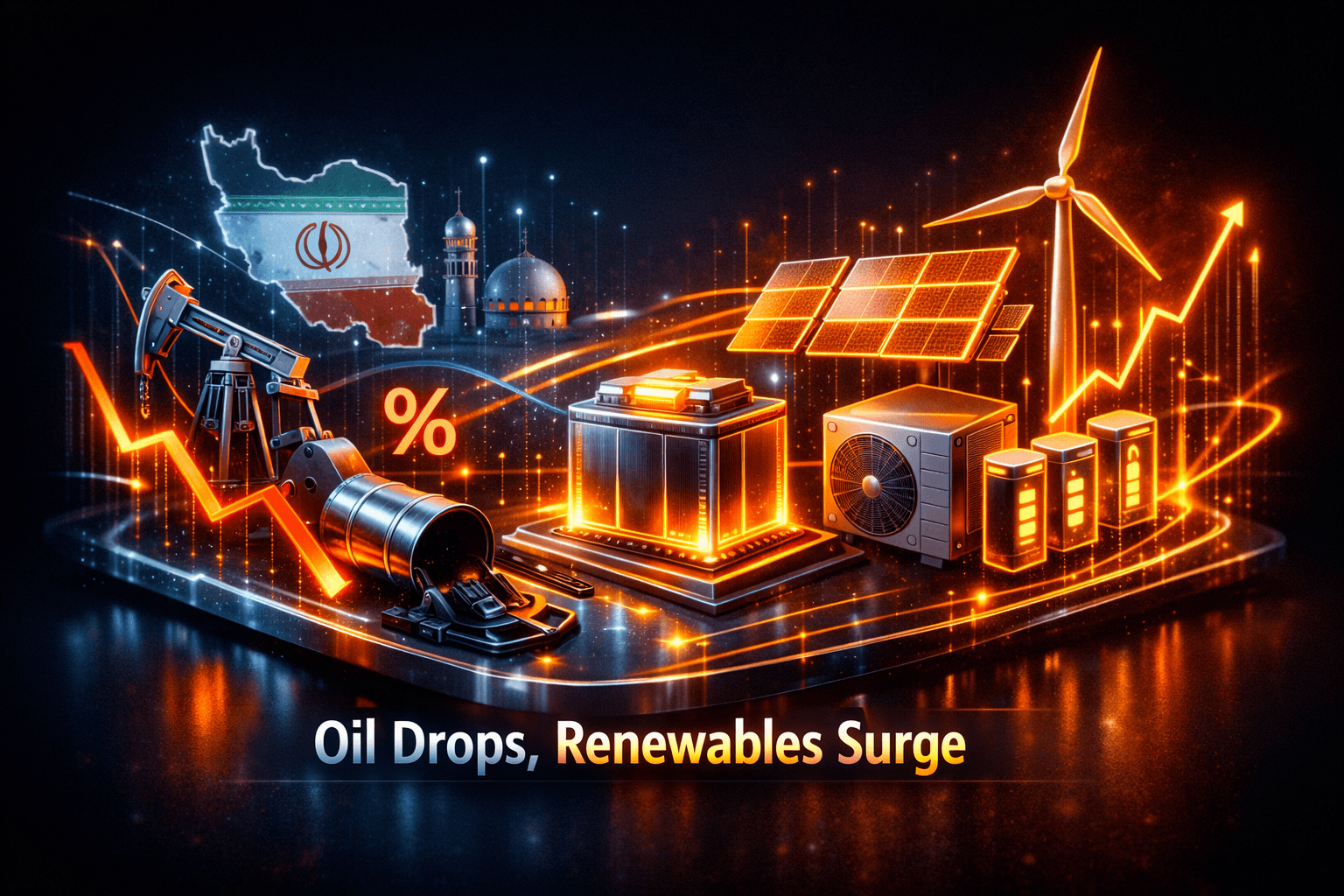
Oil benchmarks plunged early Friday, driven by market optimism that the U.S. and Iran have made progress toward a deal, sending Brent down about 4.34% to $86.36 and WTI down about 4.47% to $83.88. That move is the most immediate market story for energy traders this morning, and it's reshaping near-term demand expectations for producers.
At the same time you're seeing clear momentum in the clean energy complex, with major investments in smart energy systems, storage-friendly auction design in Chile, and the first real-world trials of solid-state EV batteries. So what should you watch as markets open? The headlines create a mixed picture for energy allocations today and into the summer.
Market Highlights
Quick facts and market moves to start the session.
- Brent Crude slipped 4.34% to $86.36 and WTI fell 4.47% to $83.88 in early European trade, extending yesterday's losses.
- Russian crude production averaged 9.009 million barrels per day in May, the lowest monthly output in a year according to OPEC data, a data point that keeps supply-side risks on the table.
- China's $DQ, Daqo New Energy, announced a CNY 6 billion investment, about $835 million, to build a smart energy systems base focused on power equipment and storage for AI data centers.
- Chile released preliminary terms for a technology-neutral 2026 power tender that excludes high-emission fuels and favors storage-backed bids, with 15-year contracts and time-of-day blocks.
- India imposed retail fuel limits to avoid shortages, capping diesel at 200 litres per customer and banning commercial buyers from retail pumps, a sign of localized supply stress.
- Innovations to watch include a 9-in-1 home heat pump led by Sadi, founded by Tesla veteran Drew Baglino, and the first on-road solid-state EV battery deployments in North America.
Key Developments
Oil slides on Iran peace optimism
Markets reacted sharply after reports suggested the U.S. has pulled back from strikes on Iran and signaled progress toward a deal. The immediate effect has been a roughly 4% decline in global crude benchmarks, as traders price lower near-term geopolitical risk. You should expect heightened volatility while talks remain in flux, and remember that supply data like Russia's May output of 9.009 mbd can push prices the other way.
Renewables and storage momentum accelerates
Daqo New Energy is moving beyond polysilicon with a CNY 6 billion, roughly $835 million, Kunshan project to make advanced power equipment and storage for AI data centers. Chile's auction rules also tilt toward solar plus storage, offering 15-year contracts and time-of-day blocks that favor hybrid projects. Those developments indicate demand for storage is growing, and they help explain why you might see more investment headlines in the renewable supply chain this year.
Technology and logistics reshape the transition
Two threads matter for investors. First, innovation is advancing: Sadi's 9-in-1 heat pump and early solid-state EV battery rollouts point to faster adoption of high-efficiency electrification and vehicle technologies. Second, infrastructure is a practical constraint. DHL executives warned that oversized wind blades and heavy battery cargo create transport bottlenecks and higher costs, a reality that could slow project delivery and raise capex. How will the industry balance rapid demand and real-world logistics? That's a central question for project timelines.
What to Watch
Focus on catalysts that will influence energy prices and sector sentiment over the coming days.
- Geopolitics and Iran talks, plus any official U.S. statements, will likely drive near-term oil volatility. Ask yourself how durable the price drop is if talks stall.
- OPEC and monthly crude supply reports, especially Russian output changes, can swing prices. Data suggests supply tightness still exists despite today's drop.
- Chile's auction timeline and bidding rules, along with other regional tenders, will signal demand for storage and hybrid builds and affect project pipelines.
- Delivery risks for large renewables equipment and shipping costs are a hidden wildcard for project schedules and margins, so monitor logistics commentary from suppliers and shippers.
- Watch pilot deployments of solid-state batteries and heat pump rollouts for commercialization signals. These tech milestones can change cost curves over time.
Bottom Line
- Oil's more than 4% fall this morning reflects lower perceived geopolitical risk, but supply indicators like lower Russian output and regional fuel caps keep downside limited.
- Renewables are gaining traction through big investments, storage-friendly auction structures, and new home and vehicle technologies, which points to steady long-term demand growth.
- Transport and logistics constraints are a practical drag on project delivery and could raise costs for developers, so factor that into your view of project timelines.
- You should watch both macro drivers like geopolitics and micro drivers like auction rules and tech pilots to form a balanced view of the sector.
- Analysts note the market is sending mixed signals today, so a selective, data-driven approach is warranted rather than broad assumptions about any single subsector.
FAQ Section
Q: How will today's oil price drop affect energy company profits? A: Lower prices generally pressure upstream revenues and cash flow for producers, while refiners and some downstream players can see margin benefits; the net effect depends on company exposure and hedges.
Q: Does Chile's auction make solar plus storage a better investment case? A: Yes, time-of-day blocks and 15-year contracts improve revenue certainty for hybrid projects, which supports financing and project economics for solar-plus-storage developers.
Q: Are logistics issues likely to delay renewables deployment? A: They can. Oversized turbine parts and large battery shipments add complexity and cost, so project timelines may slip unless supply chain planning improves.