The Big Picture
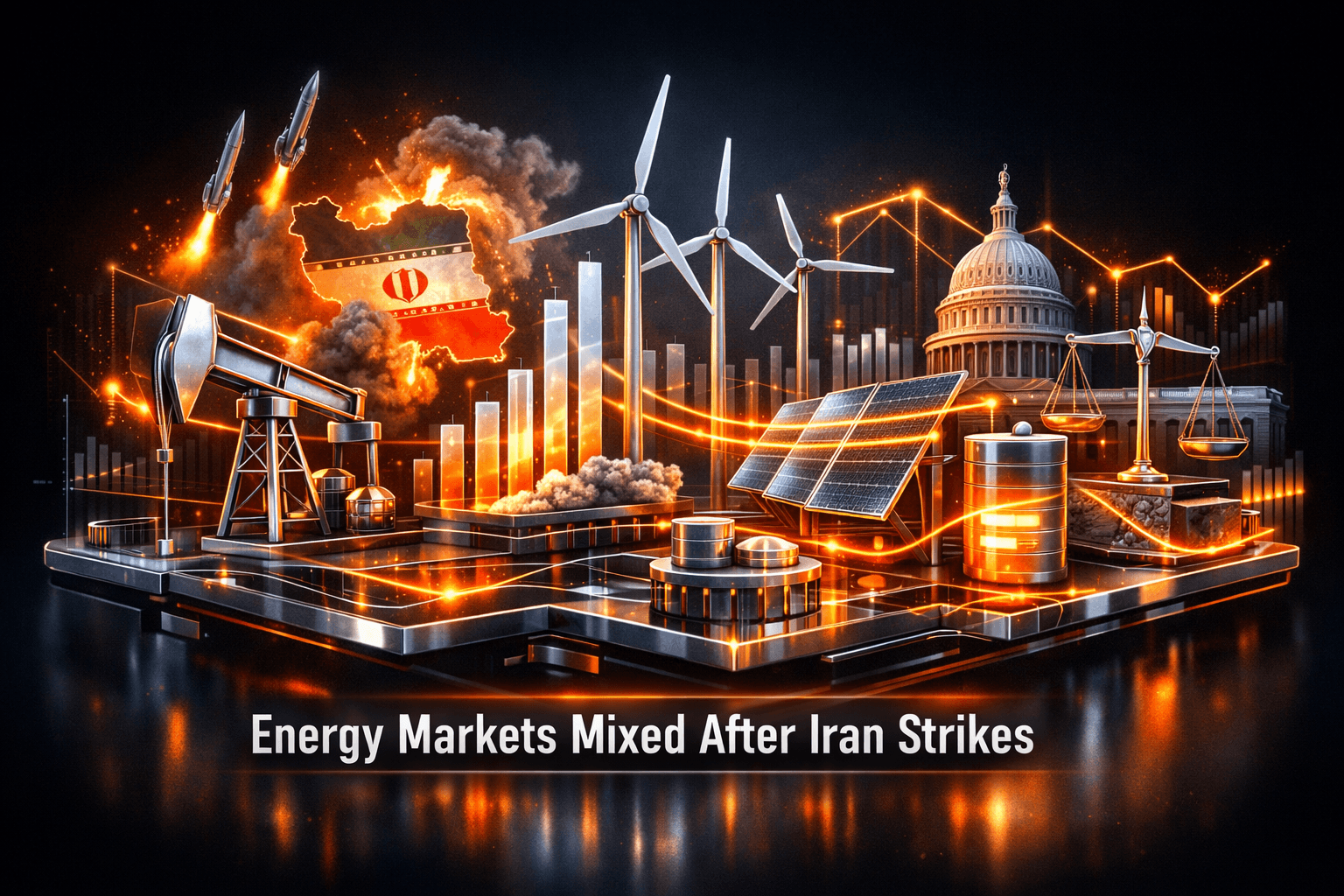
Oil prices moved higher today as renewed U.S.-Iran tensions pushed traders toward safe haven crude. That geopolitical squeeze is balancing against continuing progress in renewable technologies and battery projects, creating a mixed day for the Energy sector.
This matters for you because the market is no longer driven by a single narrative. Geopolitical risk can lift oil-linked stocks while innovation and deployment in solar and storage are changing the long term demand picture for fuels and utilities.
Market Highlights
Here are the quick facts and market moves investors noted today.
- Oil prices settled higher after reports of strikes and stalled talks between the U.S. and Iran, reviving geopolitical risk premiums in crude markets.
- $TTE, the company tied to an offshore wind lease settlement, is at the center of a nearly $1 billion deal to walk away from two U.S. leases, prompting state legal challenges.
- $IBE brought online a major battery energy storage project in Spain with 58 MW of power and 120 MWh of storage capacity.
- $JKS announced a 700 W TOPCon solar module with 25.91 percent efficiency, underscoring gains in module-level output and cost per watt improvements.
- GasBuddy flagged U.S. pump price relief as potentially short lived, pointing to ongoing volatility in retail fuel costs that can affect consumer sentiment.
Key Developments
Geopolitics Lifts Oil Prices
Reports of strikes tied to Iran and stalled diplomacy sent oil futures higher late in the session. Traders who expected a 2026 supply-driven glut are being reminded that geopolitical risk can quickly tighten effective supply, even while many producers continue to pump near record levels.
For you this means energy names tied to crude can see faster, short term moves when tensions spike. Expect volatility to remain a feature while the situation stays unresolved.
Offshore Wind Fight Moves to Court
New York led a group of state attorneys general in suing over the federal deal that pays nearly $1 billion to TotalEnergies to relinquish two U.S. offshore wind leases. States from Maine to New Jersey joined the challenge, arguing the cancellations harm local economies and climate goals.
Will legal fights slow renewable project deployment in the U.S.? That is the immediate question. The case raises policy risk for developers and utilities that are counting on federal and state approvals to meet long term decarbonization timelines.
Renewables: Tech and Storage Keep Advancing
Iberdrola started up what it calls Spain's biggest battery energy storage installation, delivering 58 MW and 120 MWh of capacity. That project strengthens grid integration for variable renewables and lowers curtailment risk for wind and solar producers.
At the module level, $JKS unveiled a 700 W TOPCon panel with 25.91 percent efficiency. Higher wattage and conversion gains are lowering levelized costs and improving project returns, even as policy and permitting create regional uncertainty.
What to Watch
Monitor these catalysts and risks that will shape trading and positioning into tomorrow.
- Geopolitical headlines on U.S.-Iran tensions, which can swing crude and refined fuel prices day to day. You should watch newsflow at the open for immediate price moves.
- Legal developments in the offshore wind lawsuit and any federal responses, because court outcomes could affect project schedules and compensation frameworks for developers.
- Retail fuel metrics and GasBuddy updates, since a rebound in gasoline prices could pressure consumer sentiment and regional inflation readings.
- Deployment milestones and module pricing from solar manufacturers, which influence utility-scale project economics and EPC schedules.
- Earnings and guidance from major oil majors such as $XOM and $CVX, which may update capital allocation if the geopolitical premium persists.
How should you frame your exposure to the sector? Take a selective approach, because near term volatility from geopolitics sits alongside durable technology gains in renewables.
Bottom Line
- Energy headlines were mixed today, with oil lifted by geopolitical risk while renewable technology and storage projects continued to advance.
- Policy and legal risks in the U.S. are creating uncertainty for offshore wind and could slow near term deployment despite private sector progress.
- Technology gains, such as $JKS's 700 W module and $IBE's 120 MWh storage project, are lowering costs and improving integration for renewables.
- Expect continued volatility in fuel prices; short term relief at the pump may be temporary according to GasBuddy.
- Stay selective and monitor headlines closely, because geopolitical and regulatory developments will likely drive the next large moves in energy markets.
FAQ Section
Q: What drove oil higher today? A: Reports of strikes and stalled diplomacy between the U.S. and Iran increased geopolitical risk and pushed crude futures higher.
Q: Will the offshore wind lawsuit stop all projects? A: The litigation targets specific lease cancelations and compensation deals, so it creates regional uncertainty but does not automatically halt all projects nationwide.
Q: Do new solar modules and batteries change investment math? A: Higher efficiency modules and larger storage units improve project economics and grid reliability, but permitting and policy remain critical variables you should monitor.