The Big Picture
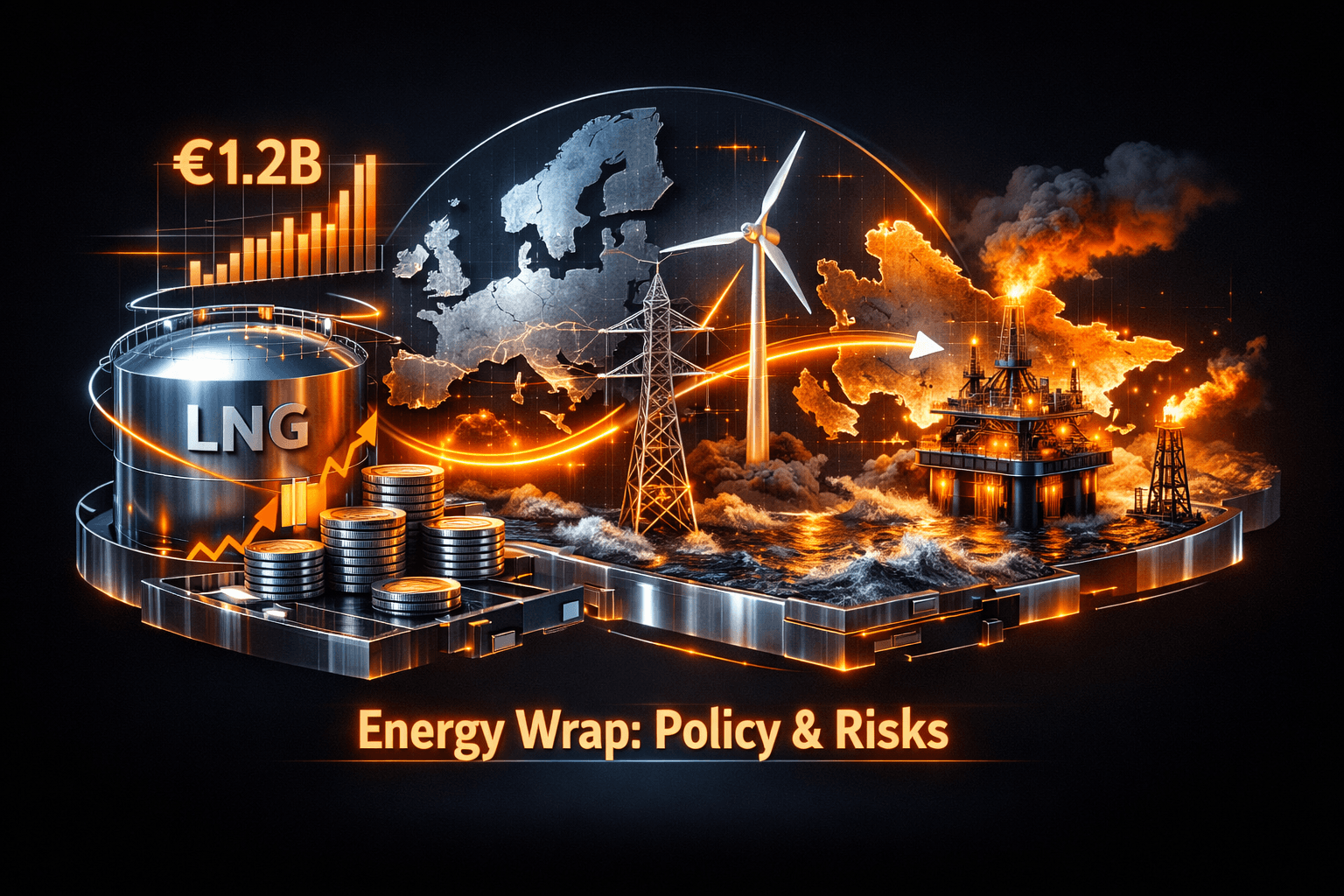
Today’s Energy headlines served up a blend of policy support, cross-border infrastructure plans and reminders of structural risk. The Netherlands backed a $1.2 billion subsidy to refill national gas stocks, while Turkey and Azerbaijan proposed an electricity corridor to link the Caspian region to southeast Europe.
That supportive policy backdrop sits beside warnings about stranded-asset risk in utilities and mixed renewable installation trends in Europe. What does this mean for your exposure to energy and utilities? It means the sector is offering both new catalysts and clear risks, so you need a selective approach.
Market Highlights
Key facts and figures from today’s top stories, condensed for quick reading.
- Netherlands approves up to $1.2 billion subsidy for EBN Capital BV to refill gas reserves, signaling active energy security policy.
- Turkey says it will pursue an Azerbaijan-Europe electricity corridor modeled on TANAP, aiming to boost interregional power flows and grid resilience.
- France reached 33 GW of cumulative solar capacity as of March 31, 2026, with 1,495 MW added in Q1, slightly lower than Q1 2025.
- Oil and exploration news: Equatorial Guinea cleared a block farm-out that advances Europa Oil & Gas’s Barracuda prospect toward drilling.
- Consumer energy-tech deals and EV testing: EcoFlow’s 2,048Wh DELTA 2 Max is on sale for $899; Hyundai was spotted testing a high-tech SDV setup; Tesla $TSLA’s FSD v14 draws praise and safety cautions.
- NOAA forecasts a below-normal 2026 Atlantic hurricane season, which could reduce weather-driven supply volatility for coastal energy infrastructure.
Key Developments
Utilities and the Risk of Stranded Assets
An OilPrice piece today flagged a potential stranded-asset crisis for utilities, arguing that traditional planning assumptions could leave assets underperforming. The analysis raises questions about how long stable dividend yields and regulated returns will hold if policy or demand patterns shift rapidly.
For you that means watching balance-sheet strength and capital plans at utilities, and considering how exposed firms are to long-lived fossil investments versus modern grid investments and renewables.
Cross-Border Infrastructure: Turkey, Azerbaijan and Grid Connectivity
Turkey’s energy minister said the country plans an electricity corridor from Azerbaijan into southeast Europe, dubbed the ‘electricity version of TANAP’. The proposal aims to leverage existing political and commercial ties to expand power exports and interconnection capacity.
Could this change regional power dynamics and ease supply concerns in southeast Europe? Potentially, yes. You should track project timelines and developer partners, because grid corridors tend to create multi-year revenue streams for transmission firms and contractors.
Upstream Moves and Gas Security
Equatorial Guinea’s approval of a Chinese partner in Europa Oil & Gas’s license advances the Barracuda prospect toward drilling, signaling continued upstream activity in frontier basins. Meanwhile the Netherlands’ $1.2 billion refill subsidy is a clear state intervention to shore up gas reserves after recent drawdowns.
Together these items show governments and companies addressing near-term supply and exploration needs, while keeping longer-term transition pressures in play.
What to Watch
Here are the catalysts and risks that could move markets tomorrow and beyond.
- Policy updates and budget moves in Europe and the Netherlands, including how the $1.2B subsidy is disbursed and whether other countries follow suit.
- Progress on the Turkey-Azerbaijan electricity corridor, including feasibility studies, financing partners, and expected timelines. Project announcements could favor transmission and engineering firms.
- Utility capital plans and regulatory filings, especially any guidance that addresses asset retirement, decommissioning assumptions, or shifts away from fossil assets.
- Q2 earnings from major utilities and energy companies, which may reveal how firms see demand, margins and capex for 2026 and beyond.
- Renewables installation trends across Europe, with the Q1 slowdown in French solar raising the question, will growth re-accelerate later this year?
- Operational updates on Barracuda and similar upstream prospects, plus any industry reaction to NOAA’s below-normal hurricane season outlook, which could temper supply-risk premia.
What should you pay attention to first? Look to policy and project timelines, because they usually set the pace for capital allocation and market sentiment.
Bottom Line
- Mixed signals dominate today: government support and new corridor plans sit alongside warnings about long-term utility risks.
- The Netherlands’ $1.2B subsidy and the Azerbaijan-Europe corridor boost short- to medium-term energy security and infrastructure demand.
- European solar capacity keeps growing, but Q1 installations slowed, so watch downstream policy and permitting for signs of renewed momentum.
- Upstream activity in places like Equatorial Guinea shows capital is still flowing into exploration, which can support exploration services and smaller oil names.
- Given the mix of catalysts and risks, analysts note a selective approach is warranted, focusing on balance-sheet strength and exposure to tangible project timelines.
FAQ Section
Q: How will the Netherlands’ $1.2B subsidy affect gas prices? A: The subsidy aims to refill strategic stocks and reduce vulnerability, which could ease short-term price spikes tied to storage shortages but won’t directly set market prices.
Q: Does the proposed Azerbaijan-Europe electricity corridor boost renewables? A: Yes, expanded interconnection usually helps integrate variable renewables across regions, but actual renewables growth will depend on local policy and grid upgrades.
Q: Should I be worried about stranded assets at utilities? A: The risk is real and depends on regulatory change, demand shifts and asset lifecycles, so you should monitor company disclosures and capital plans for signs of exposure.
Thanks for reading. Keep an eye on policy announcements and project milestones, and you’ll have a clearer read on where the opportunities and risks lie in the energy space.