The Big Picture
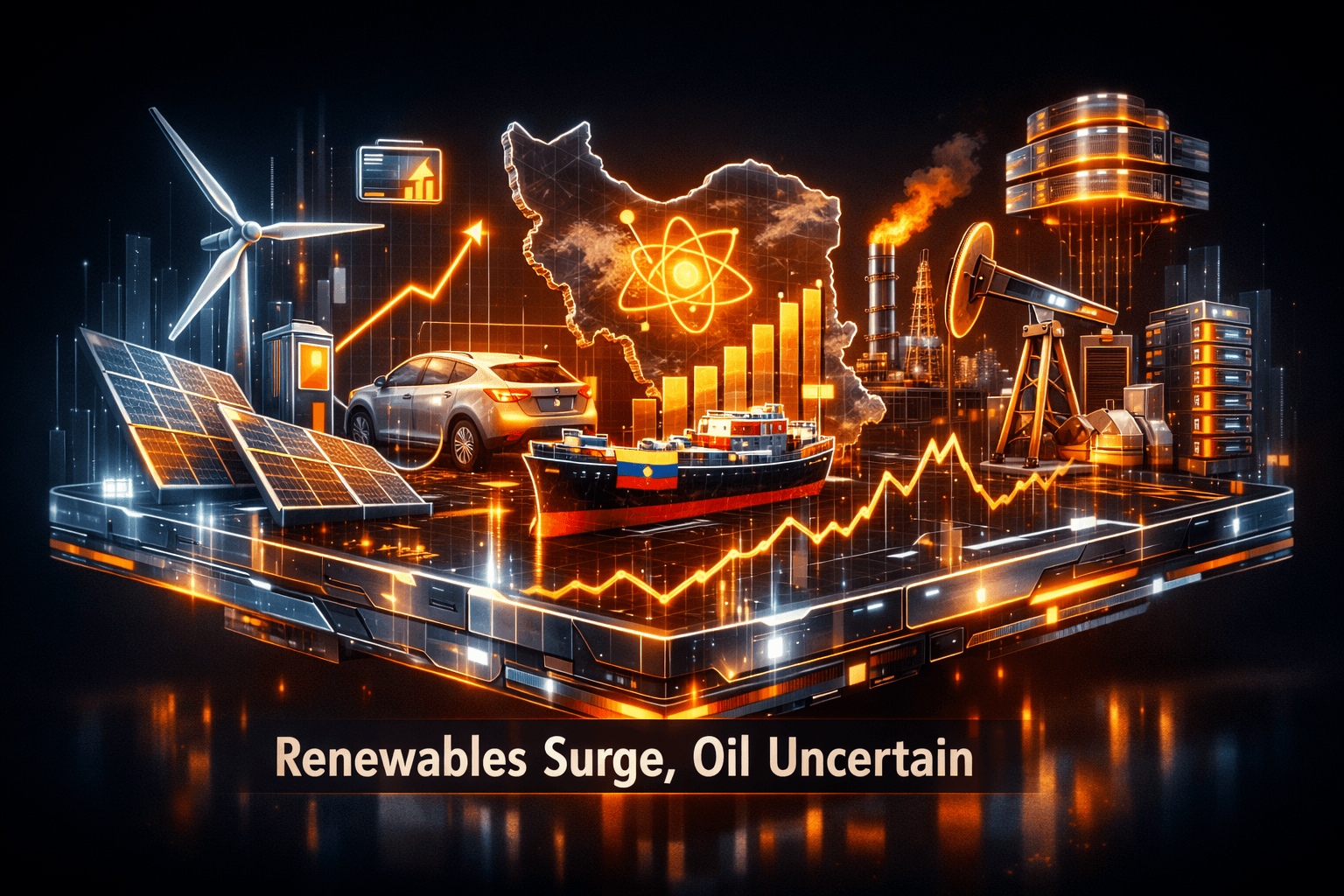
Renewable energy and electric vehicle trends kept building momentum over the long weekend while geopolitical friction and shifting oil flows left crude markets in a state of uncertainty. As of Friday, May 1, the story for energy investors is a mixed bag, with big utility-scale solar deals and agrivoltaics on one side, and Iran-related risks plus a surge in Venezuelan oil exports on the other.
Why does this matter to you? Policy, project-scale PPAs, and shifts in global flows will shape prices and corporate strategies heading into Monday, May 4, when U.S. markets reopen. Data suggests demand from tech and AI growth will add a structural layer of energy consumption that both fossil fuel and clean power suppliers are already trying to address.
Market Highlights
Here are the quick facts and market cues to keep in mind as you look at energy positions heading into the long weekend.
- Tesla $TSLA introduced a China-built Model 3 Premium RWD in Canada at CAD 39,490, roughly USD 29,000, marking a new low price point for the model in that market.
- Salt River Project and NextEra Energy Resources, part of NextEra Energy $NEE, signed a power purchase agreement for 3,000 MW of solar plus 1,000 MW of battery storage in Arizona, a 4 GW buildout through 2027.
- Oil prices slipped as talks with Iran remained unresolved, while Venezuela boosted exports to 1.23 million barrels per day in April, the highest since 2018.
- Research from KAUST showed firmware-level detection of inverter attacks can be highly accurate, but current communication standards don’t pass that signal to operators.
Key Developments
Tesla price move widens EV affordability debate
Tesla $TSLA launched a China-sourced Model 3 Premium RWD in Canada priced at CAD 39,490, converting to about USD 29,000. The move, enabled by Giga Shanghai production, creates a sharp price gap versus higher-end trims and signals how global supply chains can compress retail EV prices.
For you that means cheaper EV options may accelerate adoption in price-sensitive markets, but the shift could pressure unit margins for OEMs and lead to competitive re-pricing across segments. Will other manufacturers match lower-cost imports? That's one question investors will want answered.
Large-scale solar and storage deal underscores utility-scale momentum
Salt River Project and NextEra Energy Resources sealed a PPA for 3,000 MW of solar and 1,000 MW of storage in Arizona to be built by 2027. This is a significant commitment to firmed renewables at utility scale and highlights how regulated and municipal utilities are moving toward large solar plus battery portfolios.
Analysts note such deals improve grid resilience and provide long-term revenue visibility for developers. If you're watching clean-energy names, $NEE and other large developers stand to gain from sustained PPA activity and storage price declines.
Geopolitics: Iran tensions and Venezuela supply reshape oil signals
Negotiations between Iran and the U.S. remained uncertain while the Strait of Hormuz situation continued to constrain flows, factors that pressured oil prices as of Friday. At the same time Venezuela increased oil exports to 1.23 million bpd in April, a seven-year high that adds tangible supply into the market.
That combination creates conflicting signals for oil prices, with supply upticks from Venezuela partially offsetting geopolitical premium. You should monitor shipping and sanctions updates closely, because they can quickly swing sentiment and the forward curve.
What to Watch
Here are the catalysts and risks that could move energy stocks and project economics when markets reopen Monday.
- Oil and shipping updates: Track Iran negotiation developments and any changes to the U.S. naval posture or port blockades. Those are price drivers you need to monitor.
- Renewable project milestones: Watch announcements on construction starts and interconnection for the 4 GW Arizona deal, and any similar large PPAs that signal off-take demand.
- EV pricing and supply-chain moves: See if other automakers respond to Tesla's low-priced China-sourced Model 3 in Canada, and monitor order books and MSRP changes for compact EVs.
- Energy demand from AI and data centers: Big Tech names like $NVDA, $GOOG, and $MSFT are catalyzing demand growth. Follow corporate announcements on dedicated power deals or on-site generation for data centers.
- Grid cyber risk: The KAUST inverter findings mean operators, regulators, and vendors may need to update standards. If firmware integrity signals start getting transmitted, that could become a material operational improvement for solar farms.
Bottom Line
- Renewables are scaling fast at utility scale, with a 4 GW solar plus storage PPA showing strong project-level demand.
- EV adoption trends remain positive, aided by lower-cost imports such as Tesla's Canada Model 3 offering, which could pressure pricing across the segment.
- Oil markets face conflicting forces: Iran-related risk supports a premium, while increased Venezuelan exports add supply and weigh on prices.
- Energy demand from AI and data centers is an emerging, structural tailwind across generation types, but it also raises questions about where incremental capacity will come from.
- Cybersecurity gaps in inverter communications are a practical operational risk for solar fleets, one that could attract regulatory attention and vendor investment.
FAQ Section
Q: How will big PPAs affect utility and developer stocks? A: Large PPAs typically provide multi-year revenue visibility and support developer pipelines, analysts note this can improve credit profiles but execution and transmission constraints still matter.
Q: Should you expect more low-priced EV imports like Tesla's Model 3 in Canada? A: Data suggests global sourcing and local tariffs drive pricing dynamics, so you may see more competitive China-sourced models where regulatory and tariff conditions allow it.
Q: Is oil supply or geopolitics the bigger near-term risk? A: Right now both matter, and market direction will likely hinge on shipping flows and diplomatic developments while supply increases from places like Venezuela add downward pressure.