The Big Picture
TotalEnergies' decision to proceed with a $1.2 billion onshore wind plus battery project in Kazakhstan is the clearest signal yet this morning that big oil and gas majors are accelerating capital into renewables and storage. That deal, which the company says can power about 1 million people, highlights the scale at which the energy transition is attracting traditional energy groups.
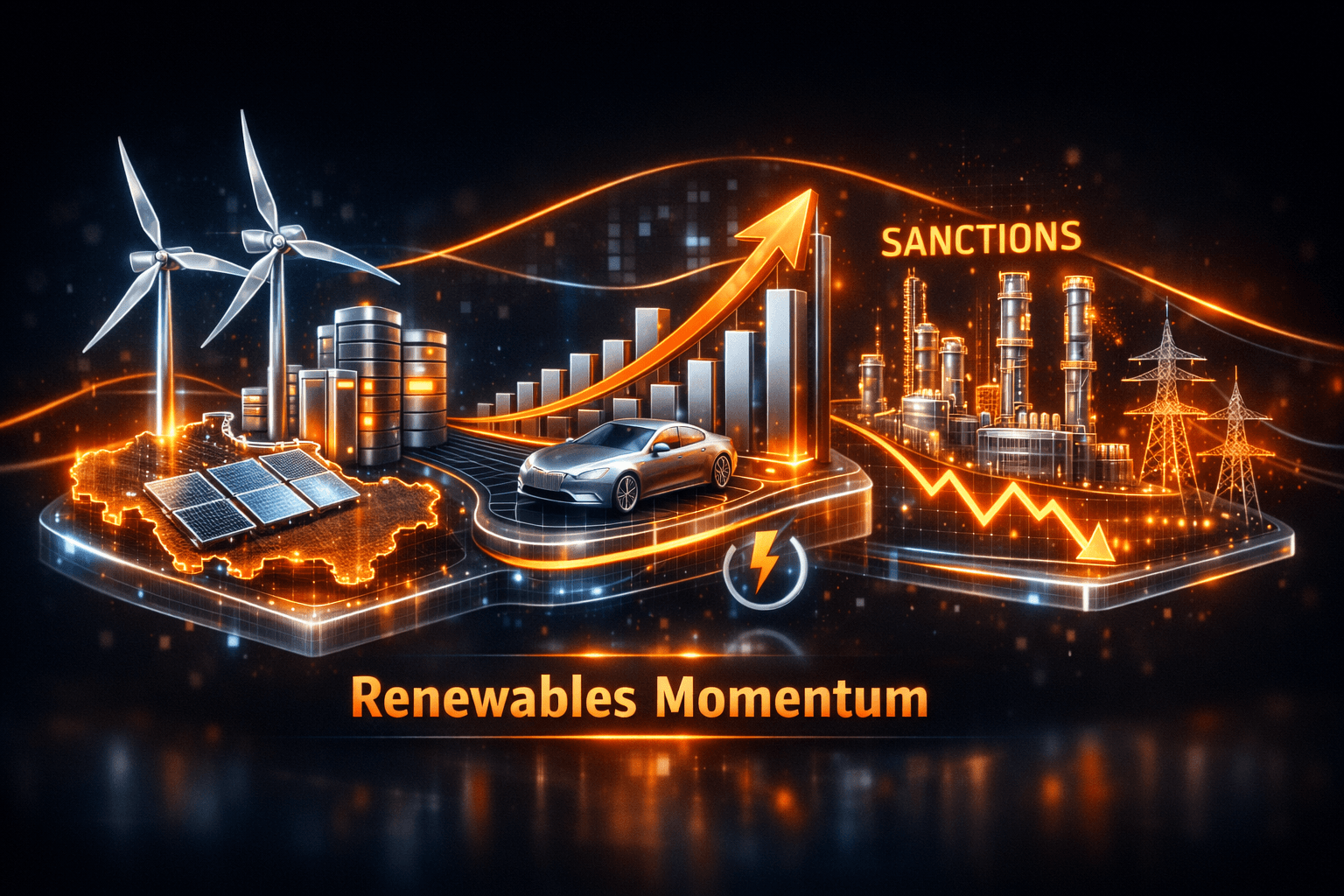
At the same time, data from India and surging Chinese solar shipments suggest a broad, if uneven, global shift toward low-carbon power and electrification. You should note the risks too, because sanctions, local environmental findings, and emerging grid gaps underline that the transition will be bumpy.
Market Highlights
Key moves and numbers investors will want to track this morning.
- TotalEnergies, $TTE, greenlights a $1.2 billion onshore wind and battery project in Kazakhstan, capacity to power roughly 1 million people.
- Iberdrola completes sale of Mexican assets including 2.6 GW to Spanish buyer Cox for $4 billion, a strategic exit that reshapes $IBE's footprint.
- Hengli Petrochemical shares plunged about 10% after U.S. sanctions over alleged Iranian crude purchases, a sharp move for $600346.SS today.
- Ember's Global Electricity Review shows India cut fossil-fuel generation by 3.3% or 52 TWh in 2025, underscoring renewable gains.
- Chinese solar exports spiked 125% in March as buyers rushed shipments ahead of an April tax-rebate change, signaling policy-driven ordering.
- China’s metals makers reported roughly $21 billion in combined profits for Q1, helped by higher copper and aluminum prices tied to broader market disruptions.
- Ford’s electric Mustang Cobra Jet 2200 ran a 6.87-second quarter mile, highlighting performance advances for $F and the EV sector.
Key Developments
TotalEnergies backs Kazakhstan wind plus storage
The $1.2 billion project announced today by $TTE and local partners combines onshore wind with battery energy storage to serve an estimated 1 million people. For you that means one more large-scale example of major energy firms shifting capital into long-duration storage and renewables, which could accelerate competition and supply chain activity in regions outside Western Europe and North America.
India’s renewables reduce fossil output, Chinese exports surge
Ember data showing a 3.3% drop in India’s fossil-fuel generation for 2025, down 52 TWh, is an important demand signal. Combined with China’s 125% leap in solar exports in March, the numbers suggest policy and deployment timing are driving rapid changes in global power mixes. Are these trends structural or lumpy because of policy timing? You’ll want to separate one-off surges from sustainable demand growth when you review developer and equipment maker guidance.
Sanctions and local impacts create near-term volatility
The U.S. sanctions action against Hengli Petrochemical triggered a roughly 10% share drop for $600346.SS and underscores geopolitical risk in refining and crude trade. At the same time, a two-year field study in Inner Mongolia found large PV plants raised local temperatures by about 0.8 degrees Celsius, an operational finding that could invite new permitting scrutiny for very large solar arrays. These developments show momentum, but also point to immediate risk and regulatory flashpoints.
What to Watch
Here are the catalysts and risks that could move energy stocks and project economics over the coming weeks.
- Project awards and financing: Watch announcements from majors and developers for follow-on investments similar to $TTE's Kazakhstan project. You’ll want to track funding sources and offtake contracts.
- Policy and trade timings: Chinese solar export patterns were driven by a tax-rebate change. Check for further policy deadlines that could front-load or defer orders, and monitor tariff or subsidy updates.
- Sanctions and geopolitics: The Hengli sanctions matter for refinery margins and crude flows. Keep an eye on related compliance rulings and any ripple effects on Asian refining runs.
- Grid adequacy signals: Transpower’s warning of an early 2030s gap in New Zealand highlights the need for planned capacity investment. Grid bottlenecks and capacity shortfalls are often catalysts for local project approvals and higher power prices.
- Operational and environmental scrutiny: The PV warming study may trigger localized permitting changes. Developers and you should expect more environmental assessments for large solar farms in sensitive climates.
Bottom Line
- Renewables momentum is building, evidenced by big-ticket projects and declines in fossil power generation in large markets like India.
- Major energy companies are redeploying capital into storage and renewables, but near-term volatility remains from sanctions and local environmental findings.
- Policy-driven demand spikes, such as China’s March solar rush, can create noisy data. Distinguish between timing-driven surges and sustained demand growth.
- Grid and permitting risks will shape where capacity is built and when. You should monitor local market signals for investment timing.
- Analysts note that metals and EV tech advances add cross-sector tailwinds, even as geopolitical risks create intermittent headwinds.
FAQ Section
Q: How significant is TotalEnergies' Kazakhstan project for renewables deployment? A: It’s sizable at $1.2 billion and includes battery storage, showing majors are funding utility-scale projects outside traditional markets, which broadens deployment geography.
Q: Should I expect the decline in India’s fossil generation to continue? A: Data suggests renewables and milder weather drove a 3.3% drop last year, but future trends will depend on new renewable capacity, weather variability, and policy support.
Q: Do sanctions on refiners like Hengli affect global oil prices? A: Sanctions can disrupt flows and add regional price volatility. Markets may react to supply rerouting and compliance risks, so these actions are worth watching.