The Big Picture
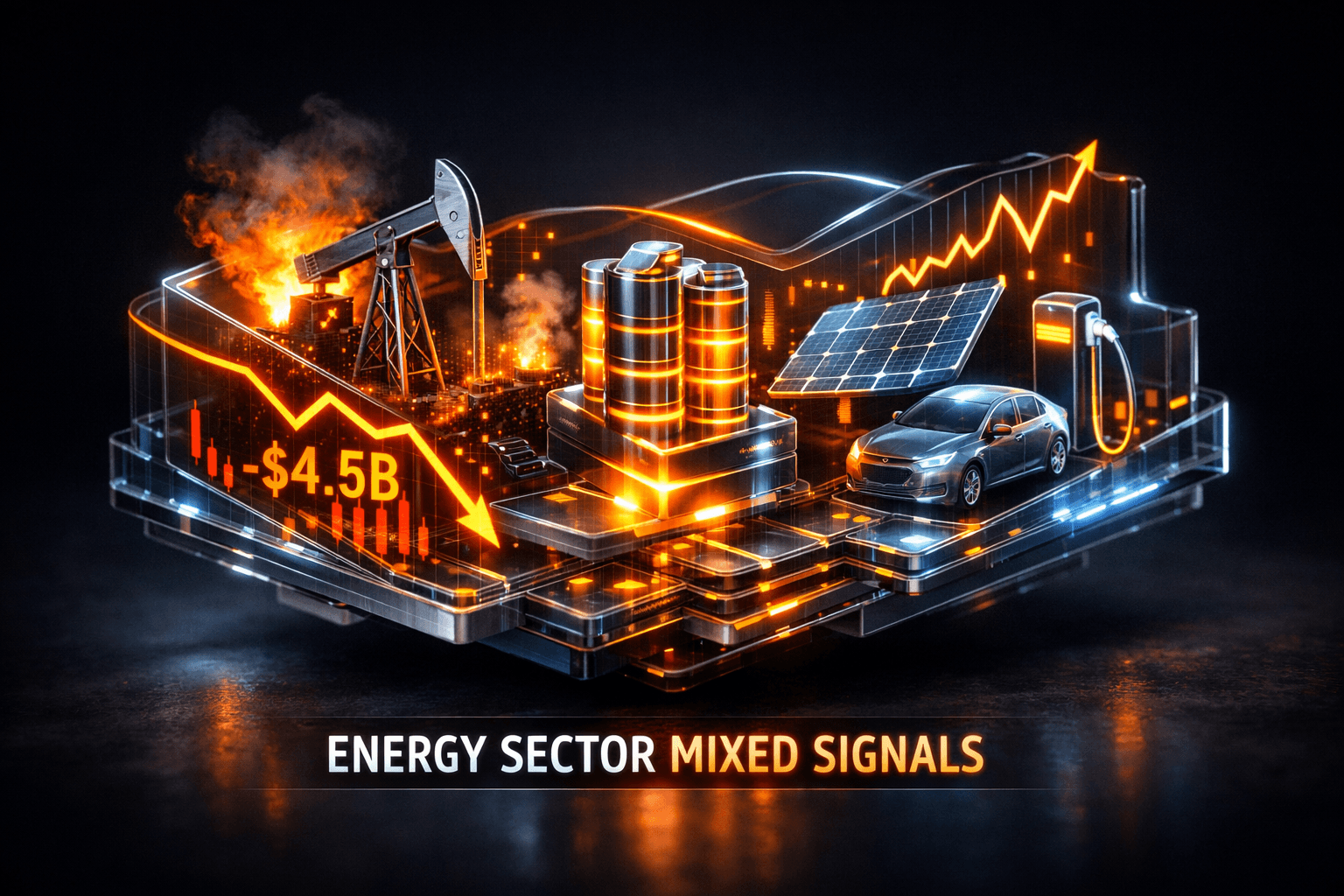
Today the energy complex sent mixed signals, with geopolitics and volatile trading on one side and steady clean-energy progress on the other. A reported, multi-hundred-million-dollar trading loss at the world’s largest oil trader and renewed threats around the Strait of Hormuz amplified near-term supply risk.
At the same time you saw concrete corporate moves that point to the energy transition continuing, including a $70 million battery feedstock investment and promising perovskite module test results. Those positives don’t erase the immediate uncertainty, but they matter to your longer-term exposure.
Market Highlights
Major facts and market-moving numbers from today’s headlines that you should know.
- Vitol reported a trading loss described as “hundreds of millions” after oil bets went wrong amid the U.S.-Israel war with Iran, a reminder of how fast volatility can hit trading desks.
- Geopolitical pressure remains high, with Iran threatening Gulf ports and U.S. comments on a possible Strait of Hormuz blockade, elevating oil supply risk for global markets.
- Ecuador’s oil production fell to about 349,000 barrels per day in 2025, an 8.5% annual decline, with policy fragmentation cited as the primary cause.
- India more than doubled export duties on diesel and jet fuel, a policy move that could tighten global product flows and influence regional pricing dynamics.
- Battery and critical materials: $E (Eni) committed $70 million in equity to Nouveau Monde Graphite and plans to offtake 15,000 tonnes per year of graphite concentrate from phase 2 of a Canadian mine project.
- Solar tech: Halocell Energy and Sofab Inks reported perovskite modules that maintained roughly 100 percent of normalized efficiency after 1,300 hours of accelerated combined light and damp-heat testing.
- EV space: New photos and comparisons kept interest high in the small SUV segment, with $RIVN (Rivian) R2 vs $TSLA (Tesla) Model Y size and efficiency comparisons drawing social media attention, and Kia starting EV3 prototypes in Mexico for U.S. launches later this year.
- Retail and consumer energy tech promotions appeared too, with Anker SOLIX advertising power-station discounts up to 65 percent in Earth Day sales.
Key Developments
Vitol’s trading loss highlights volatility risk
Reports that Vitol’s derivatives desk lost hundreds of millions on oil and fuel bets show how quickly traders can be caught when physical flows get trapped and prices spike. For investors this underscores counterparty and market-structure risk in extreme scenarios, and it helps explain why some commodity desks tightened risk controls today.
Strait of Hormuz tensions keep oil markets on edge
Iran’s threats against Gulf ports and U.S. statements about restricting traffic near Hormuz have kept oil and refined-product supply risk elevated. You should expect headline-driven price swings until diplomatic or operational clarity returns, and regional developments will likely dominate near-term energy news flow.
Transition bets: batteries and perovskites move forward
Public and private capital kept flowing into transition technology today. Eni’s $70 million equity backing of a Canadian graphite project and an offtake plan for 15,000 tonnes per year strengthens battery supply chains. Meanwhile, Halocell and Sofab’s perovskite work preserved about 100 percent efficiency after 1,300 hours of stress tests, progress that could help reduce solar LCOE over time.
What to Watch
Looking ahead you’ll want to monitor both short-term risk drivers and medium-term structural trends. Which headlines will matter most to your positions?
- Geopolitical updates: Any escalation or de-escalation near the Strait of Hormuz will move crude and product prices quickly. Track comments from regional actors and shipping reports.
- Policy and trade: India’s higher export duties on diesel and jet fuel could shift trade flows. Watch regional fuel margins and merchant shipping patterns for signs of tighter supply.
- Corporate and capital flows: Follow battery feedstock offtakes, mine financing and project milestones tied to graphite and other critical minerals. Deals like $E’s investment are signals of supply-chain prioritization.
- Tech validation: Additional perovskite durability data and production roadmaps will determine whether lab gains translate to cost declines you can expect over the next several years.
- Market risk management: Given the Vitol report, pay attention to volatility measures and liquidity in futures markets. Who’s exiting and who’s increasing exposure matters for price moves.
Bottom Line
- Near-term: Geopolitical and trading shocks raise oil and refined-product price risk, so expect headline-driven volatility that can move markets intraday.
- Medium-term: Investments in battery feedstock and promising solar tech keep the energy transition on track, creating selective opportunities in materials and renewable tech supply chains.
- Policy moves matter: Export duties and national policy choices are reshaping regional flows and can quickly influence margins and availability.
- Risk management is key: The trading loss at a major commodities house is a reminder to watch market liquidity and counterparty exposure when volatility spikes.
- Analysts note you should stay selective and monitor catalysts closely, because short-term shocks and long-term transition forces are acting at the same time.
FAQ Section
Q: How will the Iran and Hormuz tensions affect gasoline prices in the U.S.? A: Price moves depend on how much shipping and crude flows are disrupted. Traders may bid crude and product prices higher on escalation. Monitoring shipping delays and refinery run rates will give you clues.
Q: Does Eni’s $70 million investment mean battery materials are a safe bet? A: It’s a sign of growing corporate commitment to secure feedstock, but it does not guarantee returns. You should watch project execution, timelines and market demand for graphite before drawing conclusions.
Q: Are perovskite solar modules ready for mass deployment? A: The recent 1,300-hour stress test is promising, but broader reliability, scale-up and manufacturing economics must be proven before widespread adoption.
Investment disclaimer: This article is for informational purposes only. It does not constitute personalized investment advice or a recommendation to buy, sell or hold any security. Analysts note the news items above suggest elevated near-term risk and ongoing transition-driven opportunities, but your decisions should reflect your own risk tolerance and research.