The Big Picture
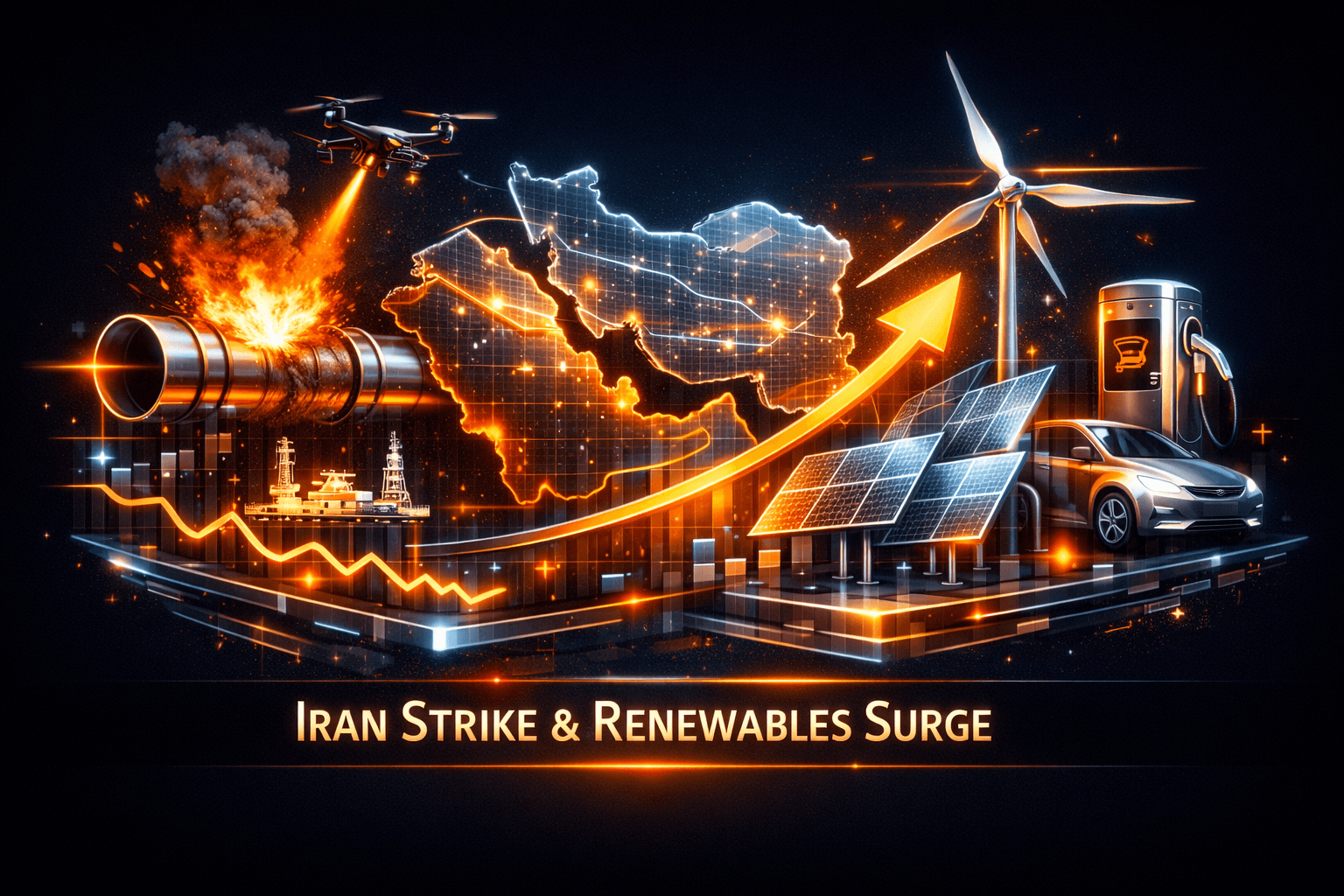
Geopolitics and transition-era investment collided in the energy complex today, leaving you with mixed signals. Early reports of an Iranian drone strike on Saudi Arabia's East-West pipeline and confirmation that Exxon Mobil $XOM lost about 6 percent of global output this quarter pushed short-term supply risk higher.
At the same time, significant capital and policy moves kept a steady drumbeat for longer-term supply diversification and clean energy expansion. You saw a $2 billion cross-border crude pipeline proposal, robust solar additions in Brazil, easier DIY solar rules in Germany and fresh IPO and EV infrastructure news, all of which matter for where returns may come from next.
Market Highlights
Key moves and data points investors watched today are summarized below.
- Geopolitical shock: Reuters and OilPrice reported an Iranian drone strike hit a pumping station on Saudi Arabia's 1,200 km East-West pipeline, which earlier had been running at an emergency capacity of about 7 million barrels per day.
- Production hit: Rigzone reported Exxon Mobil $XOM lost roughly 6 percent of global output in Q1 as the Iran war disrupted Persian Gulf operations.
- Pipeline investment: Bridger Pipeline's proposed 36-inch line would span nearly 650 miles and cost about US$2 billion, with up to 1.13 million barrels per day capacity and an initial operating rate near 550,000 bpd.
- Renewables momentum: Brazil added 2.3 GW of solar in January and February, and Germany relaxed rules to allow larger plug-in PV systems without an electrician.
- EV and storage: Tesla $TSLA revealed a Supercharger for Business configurator showing roughly $500,000 in hardware and about $940,000 all-in cost for a V4 8-stall site. EcoFlow launched Earth Day sale pricing and new portable models with discounts up to 62 percent.
- Corporate finance: China’s Sigenergy launched a Hong Kong IPO with retail books open through April 13, backed by major asset managers.
Key Developments
Iran strikes and oil supply disruption
Reports that Iran struck Saudi Arabia's East-West pipeline shocked markets because that pipeline had been a key bypass route around the Strait of Hormuz, running at emergency levels near 7 million barrels per day. The strike adds fresh near-term risk to global crude flows and helps explain why majors such as Exxon suffered output losses in Q1.
For you that means heightened price sensitivity to any follow-up incidents and to operational reports from Gulf producers over the next days and weeks.
U.S.-Canada pipeline proposal expands North American flows
Bridger Pipeline's proposed 650 mile, 36-inch line would cost about US$2 billion and could move up to 1.13 million bpd, initially operating near 550,000 bpd. Analysts note the project would boost export flexibility for Canadian crude and tighten connectivity to U.S. refining hubs, offering an offset to some Middle East supply concerns over time.
It won't relieve immediate disruption, but long lead-time infrastructure like this points to continued private investment in North American logistics.
Renewables, storage and EV infrastructure keep advancing
Brazil's 2.3 GW of solar additions in the first two months of 2026 highlights rapid centralized buildout even as distributed growth slowed. Germany's relaxed VDE rules for plug-in PV and storage lower adoption friction for households and small business owners. Meanwhile, Sigenergy's Hong Kong IPO and consumer deals from EcoFlow signal both capital markets appetite and retail demand for storage and distributed generation.
EV infrastructure moved forward as well, with $TSLA's Supercharger for Business pricing making the economics explicit for commercial operators. That should accelerate comparisons between public charging and traditional fuel economics in some locations.
What to Watch
Several near-term catalysts will determine whether today feels like a turning point or just another volatile session. What should you watch tomorrow and in the coming week?
- Follow Gulf reports: any confirmation of more damage or pipeline outages will keep crude volatility elevated. Market moves will be sensitive to operational updates from Saudi Aramco and neighboring producers.
- Energy company production updates: look for more quarterly operational disclosures from majors about Q1 output impacts tied to the Iran conflict, and read them closely for durable impairment versus temporary shutdowns.
- Regulatory and permitting signals: watch progress on the Bridger pipeline permitting and financing. Approvals and contracting milestones will affect the project's timeline and regional supply dynamics.
- Renewables rollouts and policy: Germany's new rule implementation guidance and Brazil's monthly build data will signal how fast distributed and centralized solar trends continue through 2026.
- EV charging economics: compare $TSLA's stated ROI windows for Supercharger sites to local electricity prices and traffic patterns. Data suggests location will determine payback materially.
How should you weigh these forces? Adopt a selective approach and keep an eye on both near-term supply disruptions and longer-term capacity additions.
Bottom Line
- Geopolitical risk rose today after a reported Iranian drone strike on the East-West pipeline, raising short-term crude supply concerns.
- Exxon lost about 6 percent of global output in Q1 due to the Iran war, underscoring the operational impact on majors.
- Long-term supply resilience and transition momentum remain, highlighted by a proposed US-Canada pipeline, strong solar additions in Brazil and policy easing in Germany.
- EV charging and storage markets are moving to commercialization with explicit pricing from Tesla and retail demand signals from EcoFlow promotions.
- Data suggests a mixed environment for you, with elevated near-term volatility but ongoing structural investment that matters for future returns.
FAQ Section
Q: How might the Iran-Saudi pipeline strike affect oil prices tomorrow? A: Short-term price sensitivity will rise if outages are confirmed, as markets react to supply risk and replacement logistics.
Q: Will the Bridger pipeline ease North American crude bottlenecks quickly? A: No, major pipeline projects take months to years for permitting and construction, but approval would improve long-term export and inland flow flexibility.
Q: Are EV charging and home storage becoming cheaper for businesses and consumers? A: Yes, recent pricing disclosures from $TSLA for business sites and aggressive retail sales from EcoFlow show falling installed and equipment costs, though location and usage still determine payback.
This summary is for informational purposes only. Analysts note evolving risks and opportunities in both fossil and clean energy segments, so keep monitoring operational reports and policy moves.