The Big Picture
Oil prices climbed to multi-year highs as geopolitical tensions in Iran intensified, reintroducing supply risk into global energy markets and reshaping near-term economics for producers and consumers alike. At the same time, technological progress in batteries and steady renewable growth in unexpected places are keeping the low-carbon transition squarely on the agenda.
Markets were closed Sunday, so the latest headlines will be absorbed heading into the next trading day, Monday, March 23. If you follow energy names, you’ll want to parse how higher commodity prices, potential taxes, and shifting demand for EVs and renewables could change sector dynamics.
Market Highlights
Key facts and moves to note as of the last trading session, Friday, March 20, and the weekend news flow.
- Oil: Prices surged to multi-year highs as of Friday, March 20 after Iran-related conflict escalated, reviving concerns about supply disruptions and pushing oil back to the front of investors' minds.
- Petrobras discovery: $PBR reported a new gas find offshore Colombia in Block GUA-OFF-0, which the company says consolidates the offshore gas province and boosts regional gas potential.
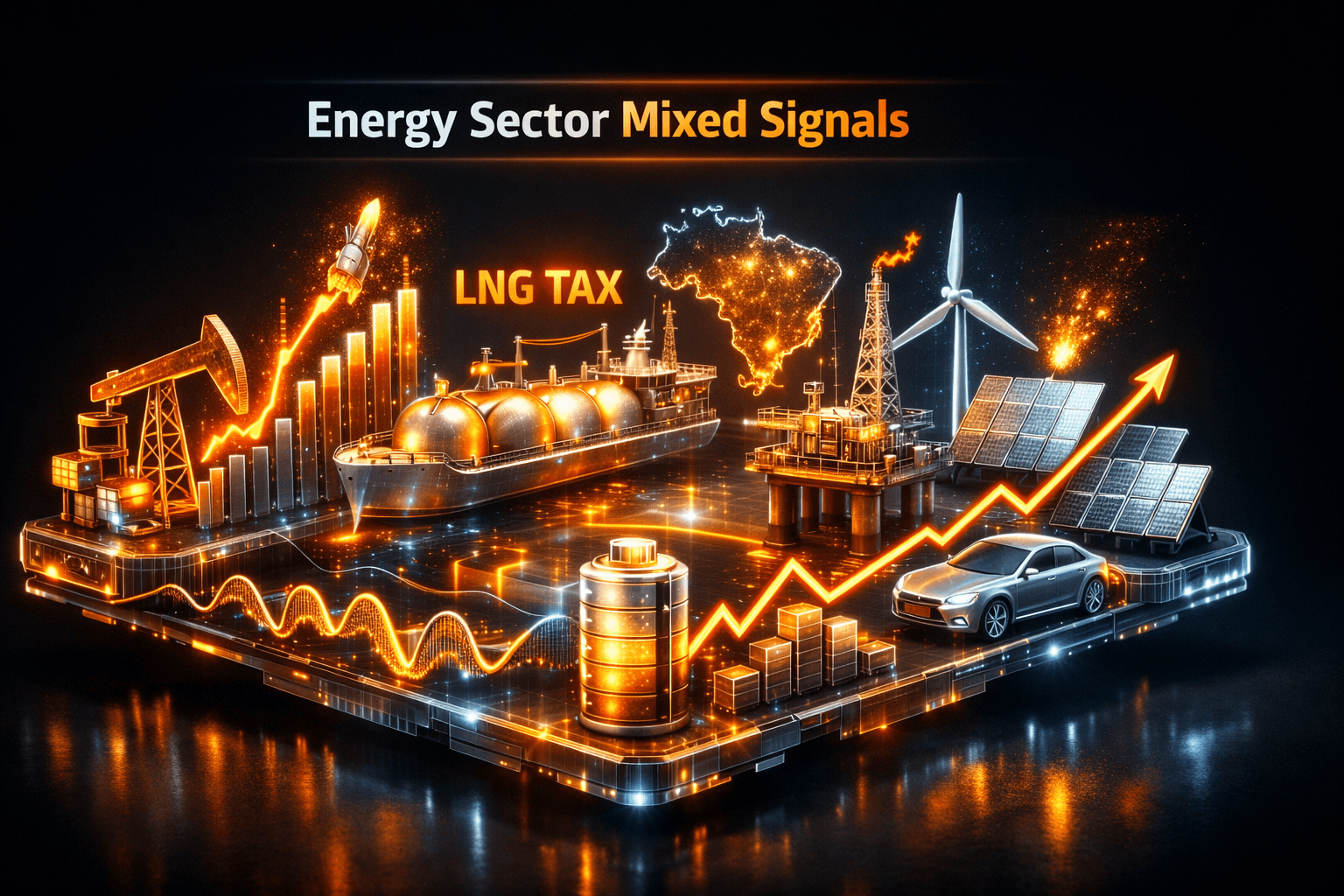
- Australia LNG tax: Australian Prime Minister Anthony Albanese has asked Treasury to study a potential windfall tax on LNG, a development that could affect Australian producers' margins and project economics.
- EV and renewables: Simon Loos expanded its electric semi fleet to over 200 units with a 75-truck order for Mercedes-Benz eActros 600 vehicles. Meanwhile, U.S. solar adoption remains strong in red states despite federal policy shifts.
- Automotive demand signals: Audi’s RS e-tron GT is being deeply discounted, with offers north of $50,000 reported, highlighting pricing pressure at the top end of the EV market.
- Tech capex: Tesla announced a $25 billion Terafab chip project alongside SpaceX, a massive bet on in-house semiconductor capacity that could affect $TSLA’s capital allocation and supply chains.
- Battery innovation: CSIRO researchers advanced quantum battery work that may eventually alter charging-time economics for large-scale storage, though commercial impact remains distant.
Key Developments
Geopolitics Pushes Oil Prices Higher
Escalation in the Iran conflict pushed oil to multi-year highs, reintroducing a classic commodity risk into portfolios. Higher oil benefits upstream producers and national exporters, but it raises input costs for airlines, shipping, and energy-intensive industries.
For you, that means companies leveraged to higher hydrocarbons will see margin relief, while demand-side names may face pressure. Analysts note geopolitical volatility can be swift and unpredictable, so volatility is likely to remain elevated.
Policy Pressure: Australia Eyes LNG Windfall Tax
Australia’s Treasury will study a potential windfall tax on the LNG sector after Prime Minister Albanese requested an analysis. This adds a regulatory risk premium for LNG projects and could prompt reassessments of project returns or dividend policies among Australian producers.
If you own or watch companies with large Australian LNG exposure, expect heightened policy risk and nearer-term news flow on consultation outcomes. Who bears the cost, producers or consumers, will be a central question.
Renewables, EVs and Storage: Momentum, but Mixed Signals
Renewables are marching ahead in places you might not expect. Reporting shows strong solar growth in traditionally conservative states, driven by economics and voter preferences at the local level. Commercial fleets are electrifying too, with Simon Loos taking 75 Mercedes eActros trucks and expanding its BEV fleet to more than 200 units.
Still, demand is uneven. Deep discounts on premium EVs like Audi’s RS e-tron GT underline pricing and adoption shades across segments. On the technology front, CSIRO’s quantum battery work hints at a long-term upside for storage, but commercialization remains a ways off. So you’re seeing both structural demand and short-term noise in EV and storage markets.
Latin America Gas Upside
$PBR’s gas discovery offshore Colombia strengthens regional gas supply prospects and could support regional LNG feedstock availability over time. The find may de-risk exploration narratives in that basin and influence nearby investment decisions.
For those tracking gas exposure, new discoveries can gradually change regional price dynamics and project economics, even as global LNG policy risks, like Australia’s potential tax, create countervailing forces.
What to Watch
Look ahead to catalysts that could move sentiment when markets reopen on Monday, March 23.
- Oil price trajectory and supply headlines from Iran. Continued escalation would likely keep commodity prices elevated and volatility high.
- Progress and statements on Australia’s LNG tax review. Treasury timing and scope will matter for producers' guidance and analyst models.
- Tesla updates on the Terafab project and how management plans to finance or phase the $25 billion investment, which could influence $TSLA’s capital allocation story.
- Commercial adoption metrics for heavy-duty BEVs and follow-on orders from logistics firms. Corporate fleet commitments can be a durable demand signal.
- Technical progress and commercialization timelines from CSIRO on quantum batteries. Breakthroughs could change storage economics, but don’t expect an overnight shift.
What should you watch first? Start with commodity headlines and any policy moves, because they tend to have the fastest market impact.
Bottom Line
- Geopolitical risk has put oil back in the spotlight, supporting producers but raising costs for many end users.
- Discoveries like $PBR’s Colombian gas find add supply-side depth, but regulatory moves such as an Australian LNG windfall tax introduce new uncertainties.
- Renewables and electrification show continued momentum, driven by commercial orders and state-level demand. Still, EV pricing pressure and high-end discounts are a reminder that adoption is uneven.
- Technological advances in batteries offer long-term upside, but commercial timelines are still uncertain. This is a mixed bag for investors focused on transition themes.
- Analysts note that near-term trading will be dominated by commodity and policy headlines. Stay selective and track catalysts closely.
Investment disclaimer: This article is for informational purposes only. It does not constitute a recommendation to buy, sell, or hold securities and is not personalized financial advice. Analysts note risks and opportunities; you should consult a licensed professional before making investment decisions.
FAQ Section
Q: How will higher oil prices affect renewable energy stocks? A: Higher oil can lift energy sector sentiment broadly and increase costs for consumers, but renewable economics often depend more on power prices, subsidies, and technology costs than on crude oil alone.
Q: Could an Australian LNG windfall tax hit global LNG prices? A: A domestic windfall tax would primarily affect producer returns and project economics in Australia. It could influence global supply dynamics if it deters investment, but immediate global price effects would depend on broader supply and demand balances.
Q: Is the CSIRO quantum battery a near-term investment opportunity? A: The research is promising for charging and scaling, but commercialization appears distant. Data suggests it’s a longer-term technological upside rather than an imminent market mover.