The Big Picture
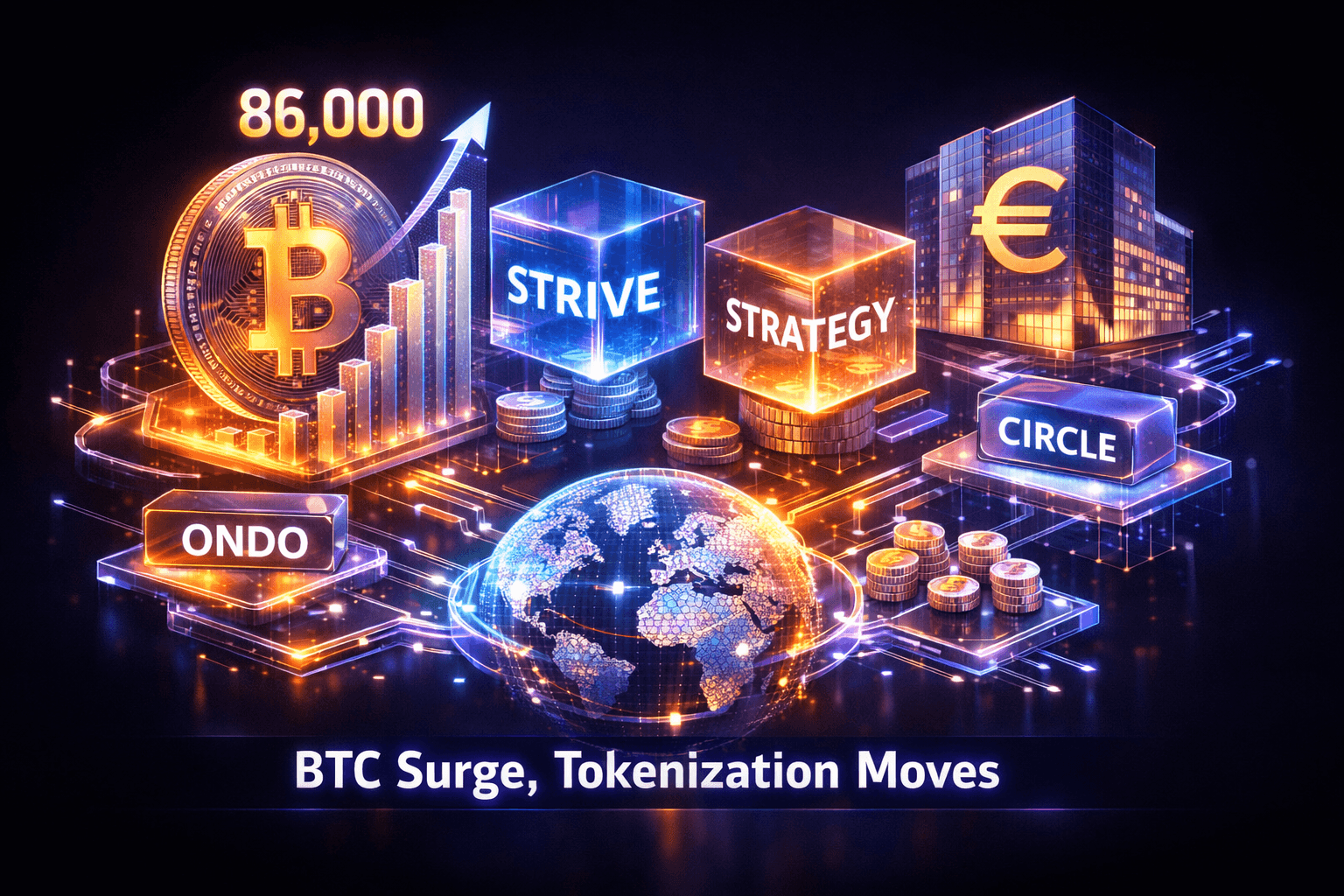
Bitcoin momentum grabbed headlines today, crossing the $86,000 mark as two large treasuries disclosed a combined $182.7 million purchase. That price action, paired with fresh institutional product launches and central bank moves into tokenized securities, made this a day where adoption stories drove sentiment.
Why does this matter to you as a retail investor? Because the market is increasingly wiring traditional finance and institutional demand into crypto rails, which can amplify flows into major assets like Bitcoin while creating new venues for exposure to tokenized stocks and fixed income.
Market Highlights
Quick facts and price moves that shaped the session.
- Bitcoin surged past $86,000 after public disclosures showed Strategy and Strive treasuries added a combined $182.7 million in BTC.
- The privacy-focused AI token Venice, ticker VVV, is up roughly 3,000 percent year to date and traded near $34 at its recent high, reflecting speculative appetite for AI-related crypto plays.
- Circle launched Bitcoin-backed USDC borrowing for institutional clients, enabling firms to tap BTC for dollar liquidity without selling their holdings.
- European Central Bank announced plans to invest its own funds in euro-denominated public-sector debt using its Pontes tokenized securities service.
- Ondo rolled out an in-kind conversion system for tokenized stocks and ETFs, letting approved institutions mint and redeem tokens using underlying securities instead of cash.
- Coinbase is allowing eligible retail customers to request IPO shares at the offering price through its platform, with Oura named as the first offering, broadening retail access to primary deals, and $COIN facilitating the distribution.
- Political and regulatory headlines included a crypto-aligned PAC pledging $30 million in an Ohio Senate race, and the Russian central bank saying the country’s crypto industry could be operating legally by year-end.
Key Developments
Bitcoin momentum and big buys
Strategy and Strive disclosed a combined $182.7 million Bitcoin buy, a development that coincided with BTC moving past $86,000. Public treasury purchases tend to be watched closely because they signal demand from entities treating Bitcoin as a treasury asset.
What does this mean for market structure? It suggests concentrated buyers are still active and that headline-sized purchases can move prices quickly. You should note that concentrated flows can increase volatility as well as drive momentum.
Tokenization picks up steam
Several stories converged around tokenization today, giving the theme tangible momentum. The ECB’s plan to invest its own funds through Pontes and Ondo’s in-kind conversion capability both lower frictions for tokenized bond and equity markets by tying tokens to real-world securities.
TD Cowen’s caution that demand for tokenized stocks may be limited is an important counterpoint. Still, central bank involvement and new institutional plumbing mean tokenization is moving from theory to production, and that’s a sign of the times for market infrastructure.
Institutional plumbing and product innovation
Circle’s launch of Bitcoin-backed USDC borrowing for institutional clients is a clear example of product innovation aimed at letting institutions extract liquidity without crystallizing tax events or selling BTC. This could broaden use cases for wrapped dollar liquidity inside crypto markets.
Meanwhile, Coinbase opened a new channel for retail access to IPO shares via its distribution service, starting with Oura. That expands how you may access primary equity offerings using a crypto-native broker.
What to Watch
Look ahead to these catalysts and risks that could shape crypto markets tomorrow and into the coming weeks.
- Price sensitivity around BTC: With Bitcoin above $86,000, any confirmation of further multi-hundred-million dollar buys or large offloads could accelerate moves in either direction.
- Tokenization rollouts: Watch Pontes live trades and Ondo’s early institutional conversions for evidence tokenized securities can settle at scale. Will activity follow the infrastructure quickly or will demand lag?
- Product adoption: Monitor uptake of Circle’s BTC-backed USDC borrowing and any metrics Circle publishes on lending volumes. Usage will indicate whether institutions prefer liquidity without selling BTC.
- Regulatory shifts: The Russian central bank’s timeline to legalize parts of the crypto industry could shift trading flows, and US regulatory signals remain a backdrop for market risk.
- Speculative alt activity: Tokens like VVV are volatile. If speculative money rotates from alt AI tokens into blue-chip crypto, you may see cross-market flows that affect liquidity.
Bottom Line
- Institutional and sovereign moves are pushing crypto infrastructure into production, which supports longer term adoption themes rather than purely speculative narratives.
- Large disclosed buys and new liquidity products are bullish signals for Bitcoin demand, but they also raise volatility risk in the short term.
- Tokenization shows momentum with ECB and industry players building rails, though buy-side appetite for tokenized stocks is still debated by banks.
- You should watch product uptake metrics and any further large treasury disclosures as near-term market drivers.
- Regulatory and political developments remain key risk factors. Keep an eye on live rollouts and official guidance for clarity.
FAQ Section
Q: Will the ECB buying tokenized securities make tokenization mainstream? A: The ECB’s move is a major institutional validation that should lower execution risk, but mainstream adoption will depend on liquidity, custody standards and buy-side demand.
Q: How does Circle’s Bitcoin-backed USDC borrowing affect BTC holders? A: It gives institutions a way to get dollar liquidity against BTC without selling, which can reduce forced sells but may increase leverage in the system.
Q: Are tokenized stocks ready for retail investors? A: Infrastructure is progressing, with platforms and conversion tools launching, but demand and regulatory clarity will determine how quickly tokenized stocks become a practical retail option.