The Big Picture
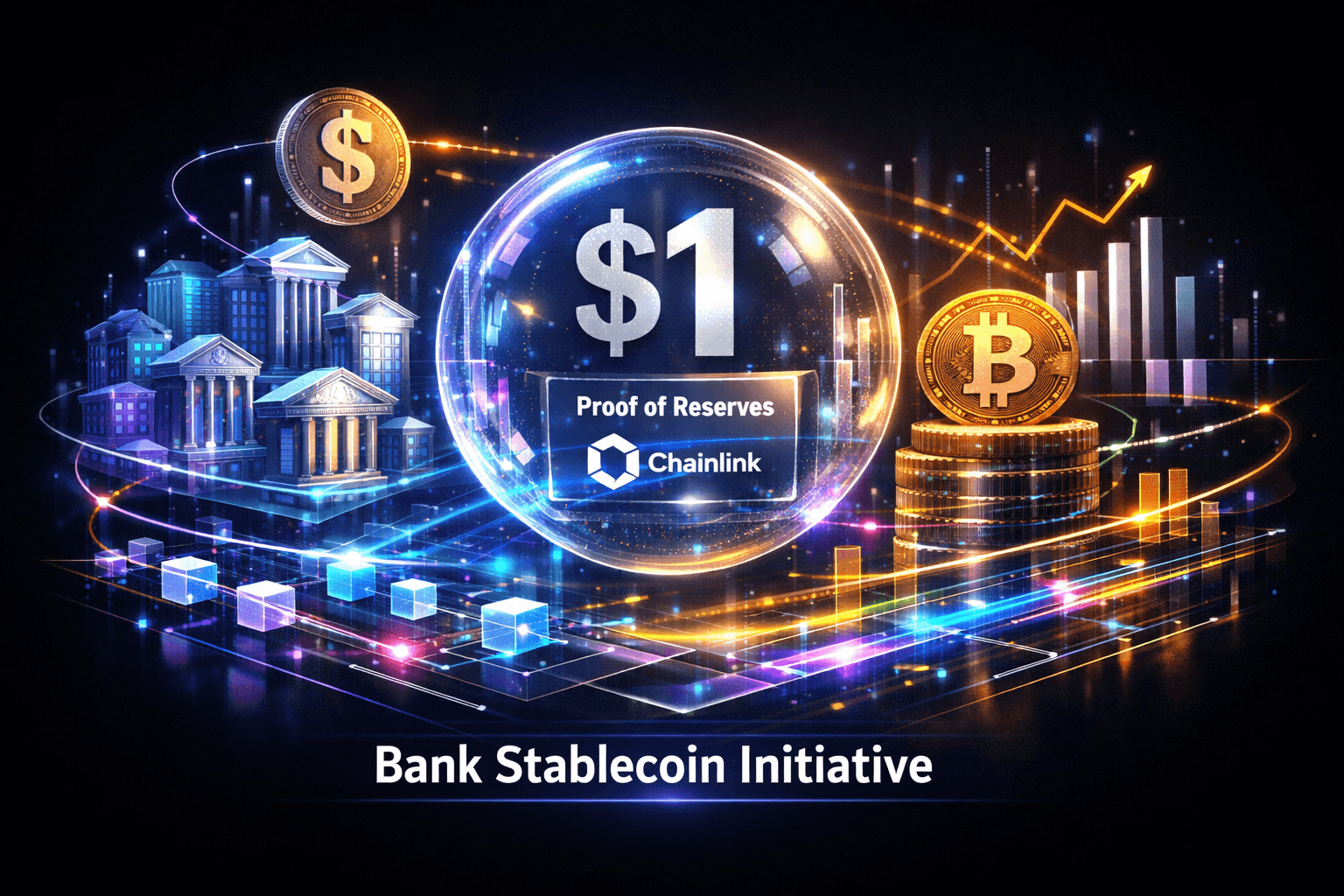
The biggest development today was the revelation that 21 banks, including $GS and $BAC, are planning a joint U.S. dollar stablecoin with a target launch in the first half of 2027. This is the clearest sign yet that major financial institutions are moving from pilots to coordinated product plans for tokenized dollars.
Why does this matter to you? A bank-backed dollar token could reshape liquidity rails, alter competitive dynamics for existing stablecoins, and push more product innovation on-chain. It may also accelerate regulatory engagement with tokenized fiat at scale.
Market Highlights
Quick facts and market moves to note from today.
- Bank consortium: 21 banks are involved, targeting a U.S. dollar token by H1 2027, with a euro token planned next.
- Bitcoin flows and fundraising: Capital B raised €7.6M from Adam Back to fund additional $BTC purchases; Strategy sold nearly 7,000 BTC at about $60,000 before buying back above $80,000, a roughly 33% price gap.
- Adoption research: Cornell surveyed 25,880 people on bitcoin usage, showing pockets of practical use even where technical understanding is limited.
- Oracles and reserves: Wyoming added Chainlink, $LINK, reserve verification to its state-issued FRNT stable token, enabling near-real-time onchain reserve proofs.
- Regulatory watch: New Jersey asked the U.S. Supreme Court to weigh in on who regulates sporting-event contracts on prediction markets, centering on Kalshi and cross-jurisdictional rules.
- Price-pattern chatter: Traders flagged an August spike-and-fade as a potential "Bart Simpson" pattern, raising conversation about flash-crash risk versus normal corrections.
Key Developments
Bank-Led Dollar Stablecoin
Today’s top story is the coordinated plan by 21 banks to launch a dollar stablecoin by the first half of 2027, with a euro version to follow. Large banks like $GS and $BAC joining a consortium signals institutional comfort with tokenized fiat infrastructure and could legitimize bank-native settlement onchain.
For investors this suggests a multi-year ramp for tokenized banking products, more institutional custody and compliance tooling, and renewed competition for existing dollar-pegged tokens. Could this be the tip of the iceberg for bank-backed token infrastructure? Possibly, and you'll want to track rollout details and regulatory filings.
Regulatory Spotlight on Prediction Markets
New Jersey officials petitioned the U.S. Supreme Court to resolve who regulates sporting-event contracts offered by prediction markets, centering on Kalshi. The move escalates a high-profile jurisdictional fight between state gaming authorities and federal market regulators.
The outcome could affect how derivatives-like crypto products are offered to U.S. residents and set precedent for state versus federal oversight of tokenized betting and derivative platforms. You should follow the docket because a major ruling could reshape product compliance and access.
Onchain Adoption, Bitcoin Flows and Market Structure
On the demand side, Cornell’s adoption index of 25,880 respondents shows practical uses for bitcoin in some communities, while public figures like Ricardo Salinas continue to promote bitcoin as a hedge against fiat inflation. At the same time, Capital B’s €7.6M raise and Strategy’s coordinated sells and repurchases of nearly 7,000 BTC highlight active institutional positioning.
These stories together suggest stronger demand and more sophisticated capital movement into $BTC, but they also underline that institutional cost of capital and balance-sheet decisions can drive short-term volatility. Are you positioned for more volatility in the weeks ahead? It's worth planning for larger swings as institutions rebalance.
What to Watch
Look ahead to the most important catalysts and risks that could move markets tomorrow and over the coming months.
- Stablecoin rollout timeline: Watch for formal announcements, whitepapers, or regulatory filings from the bank consortium through late 2026. Implementation details will matter for custody, peg mechanisms, and transaction rails.
- Supreme Court action: Track the New Jersey petition and any calendar moves on the Kalshi matter. A court decision could clarify regulatory jurisdiction and influence product access in the U.S.
- Onchain reserve proofs: Monitor Chainlink integrations and FRNT activity for real-time reserve reporting, which may raise transparency standards across stable tokens.
- Bitcoin flows and volatility signals: Follow institutional balance-sheet notices, fundraising announcements, and onchain accumulation metrics. Traders debating a "Bart Simpson" pattern mean you should expect sharp, short moves and plan risk management accordingly.
- Macro and rate dynamics: Banks' cost of capital has already influenced trading decisions, so keep an eye on U.S. rates and bank earnings that could affect capital deployment into crypto exposures.
Bottom Line
- Institutional infrastructure is accelerating, with 21 banks aiming for a U.S. dollar stablecoin by H1 2027; this could change liquidity and compliance norms for tokenized fiat.
- Onchain transparency is improving as Chainlink is used for reserve verification, raising the bar for stable token audits and market trust.
- Demand signals for bitcoin remain strong through fundraising and public endorsements, but institutional cost of capital continues to drive tactical selling and re-entry, which increases short-term volatility.
- Regulatory risk is active, especially around prediction markets; a Supreme Court decision could have broad implications for tokenized derivatives and betting products in the U.S.
- Stay selective and keep your risk controls in place, monitor filings and onchain metrics, and watch regulatory calendars closely for headline risks that could move markets suddenly.
FAQ Section
Q: How soon will the bank-backed dollar stablecoin launch? A: The consortium aims to have a U.S. dollar token live by the first half of 2027.
Q: Does Chainlink's reserve verification make stablecoins safer? A: Onchain reserve proofs increase transparency and reduce some counterparty risk, but they do not eliminate regulatory or market risks.
Q: Should I expect more Bitcoin volatility after these announcements? A: Data suggests institutional flows and public fundraising can increase short-term volatility, so you should plan risk management accordingly.