The Big Picture
Crypto headlines on Jul 18 showed a market at once maturing and still vulnerable. You saw fresh capital flows and governance fights alongside regulatory moves and new malware, so the sector sent mixed signals about short-term risk and long-term adoption.
That balance matters because you need to weigh growth opportunities against developing policy and security threats. With U.S. stock markets closed, crypto traded around the clock meaning news flow will set the tone heading into Monday, Jul 20.
Market Highlights
Quick facts and notable moves you should know as of Friday, Jul 17 and into the weekend.
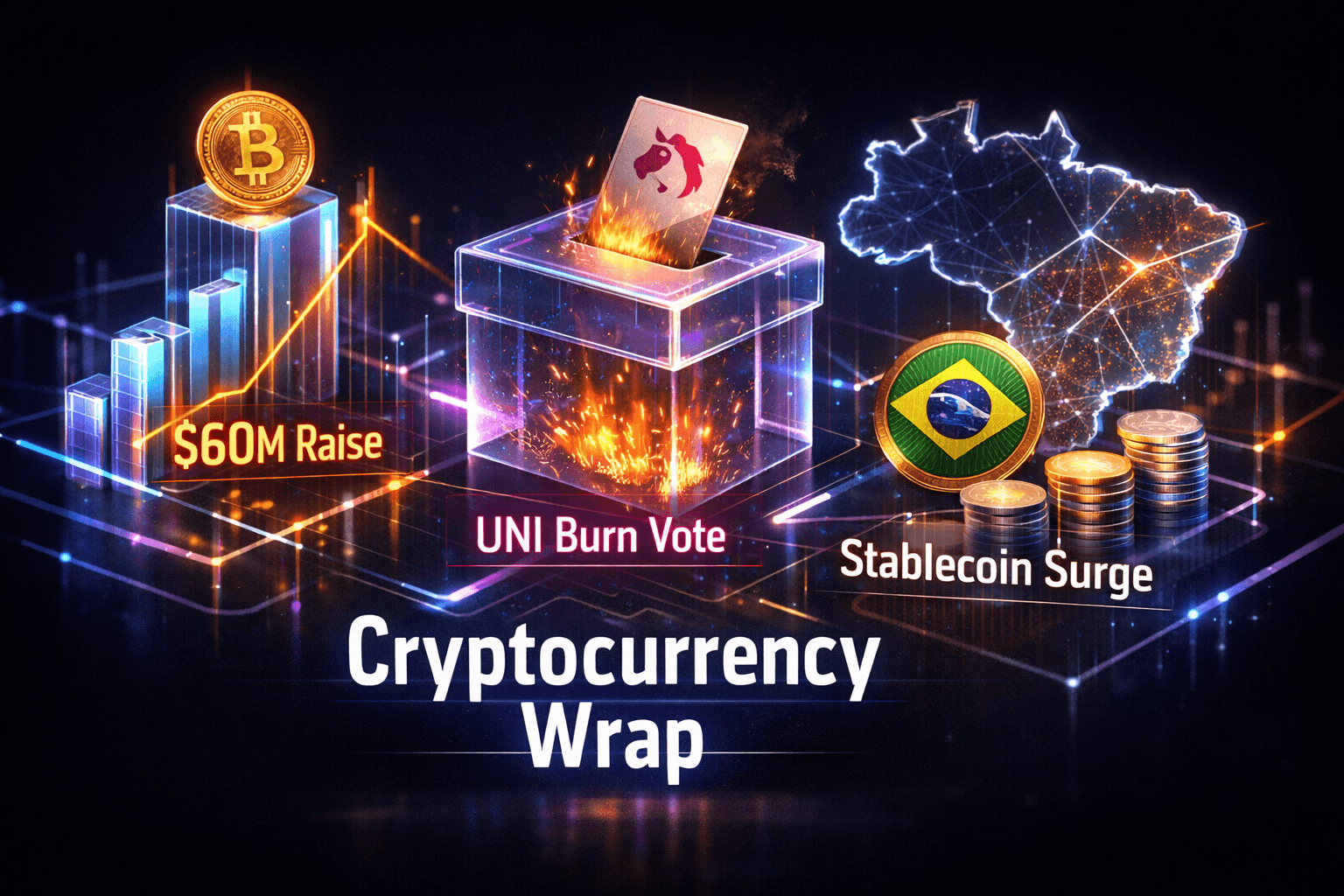
- Bitcoin Japan plans a roughly $60 million raise to finally buy Bitcoin after prior capital was deployed to stakes tied to SpaceX and Figure AI.
- Uniswap governance will vote on proposals routing v4 fees and Robinhood Chain fees into the UNI burn system, with voting open July 19 through July 26, which could increase UNI deflationary pressure.
- Bank of America names Sonali Theisen head of its global digital assets platform and Kevin Milsom head of AI transformation, signaling more institutional integration between crypto and AI at $BAC.
- Coinbase style adoption narratives continue as crypto executives argue younger, digital-native users may rely less on banks, while dollar-pegged stablecoins now account for about 90% of Brazil's crypto transactions.
- Security and regulatory headlines accelerated: Kaspersky flagged a malware framework targeting crypto investors and France ordered ISPs to block prediction market Polymarket over gambling concerns.
Key Developments
Bitcoin Japan taps EVO Fund for $60M to buy BTC
Bitcoin Japan, which previously held no bitcoin, is planning a roughly $60 million raise with EVO Fund to purchase Bitcoin. The company said earlier funding rounds instead concentrated on stakes tied to SpaceX and Figure AI, its two AI infrastructure investments to date.
For investors this is notable because it shows public crypto companies still pivoting capital toward direct Bitcoin exposure, even after earlier allocations to non-crypto assets. It also raises governance and execution questions if a firm that brands itself around Bitcoin held none until now.
Uniswap governance vote could expand UNI burn
Two proposals in Uniswap's governance process would route new fees into the UNI burn mechanism set up under December's UNIfication overhaul. Voting opens July 19 and runs through July 26, and the outcomes could increase token burn rates if passed.
That matters because increased burns reduce circulating supply, which data suggests could amplify token price sensitivity to demand. You should watch participation rates and on-chain signaling, because governance outcomes will shape DeFi fee economics going forward.
Regulation, payments and security: Brazil, France and malware
Dollar-linked stablecoins are capturing about 90% of Brazil's crypto transaction volume, prompting U.S. policy concern about non-dollar payment channels even as Brazil expands Pix and other rails. At the same time, France ordered ISPs to block Polymarket over gambling concerns, showing regional regulatory fragmentation.
Security firm Kaspersky identified a new malware framework targeting crypto investors through social engineering and trojanized GitHub apps. These threats underscore that as adoption grows, so will the attack surface you face while interacting with wallets or dApps.
What to Watch
Here are the catalysts and risk factors likely to shape the story next week and beyond.
- Uniswap governance vote, July 19-26: Watch turnout and whether fee routing to the UNI burn passes, because that could change supply dynamics for $UNI.
- Bitcoin Japan raise progress: Track the final size and deployment timeline of the $60 million plan, and whether proceeds are used to buy BTC quickly or allocated gradually.
- Brazil policy and U.S. response: Will Washington escalate diplomatic pressure over payment rails, and how will stablecoin issuers respond to potential compliance demands?
- Security incidents: If the Kaspersky-flagged malware is exploited broadly, expect increased phishing and possible short-term liquidity moves in affected tokens and exchanges.
- Institutional moves out of $BAC and others: Bank of America's hires suggest more bank-level integration of crypto and AI. Will other institutions accelerate similar hires?
What should you be doing this weekend? Review your security hygiene, make sure your wallets and recovery methods are intact, and monitor on-chain governance dashboards if you hold governance tokens.
Bottom Line
- Mixed signals dominate the sector: adoption and institutional ties are growing, but regulatory and security headwinds remain.
- Uniswap's upcoming vote is a near-term on-chain catalyst that could affect UNI supply dynamics and DeFi fee flows.
- Stablecoins are becoming core to payments in markets like Brazil, which raises geopolitical and compliance questions you should follow.
- New malware targeting crypto users raises the bar for individual security practices; the silver lining is that awareness helps reduce your risk.
- With U.S. markets closed, news flow over the weekend may move crypto prices when markets reopen on Monday, Jul 20, so stay informed.
FAQ Section
Q: What does the Uniswap vote mean for UNI holders? A: The vote could direct new protocol fees into the UNI burn mechanism, which would reduce circulating UNI if passed, and investors should track vote participation and implementation timing.
Q: Should I be worried about the new malware flagged by Kaspersky? A: You should be cautious, update software, avoid suspicious links and verify sources on GitHub or social channels, because attackers often use social engineering to target crypto users.
Q: Do Brazil's stablecoin trends threaten the dollar globally? A: Dollar-linked stablecoins dominate local crypto flows in Brazil today, which poses policy questions, but long-term impact on the dollar depends on broader trade, regulatory and fiat-rail developments.