The Big Picture
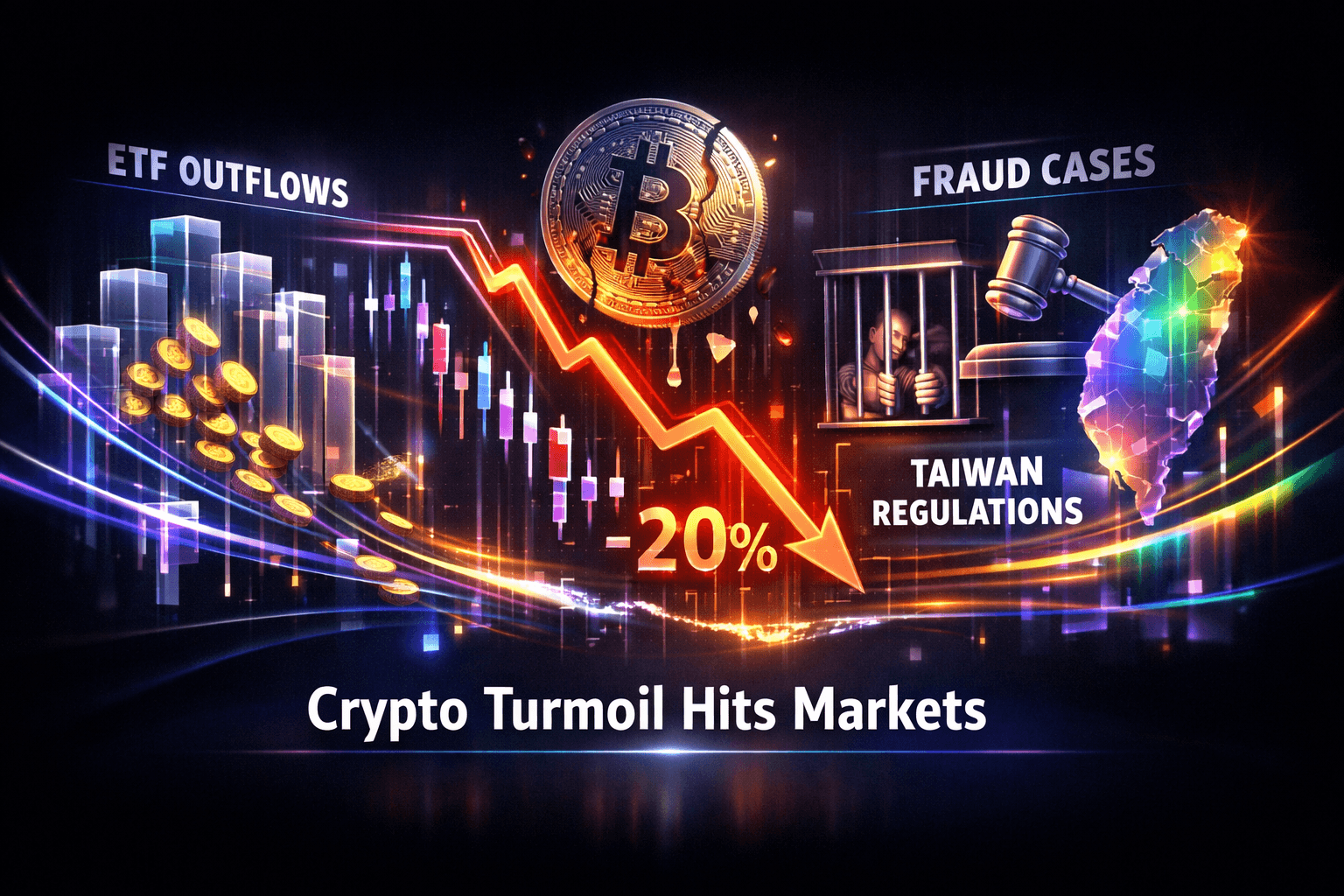
US spot Bitcoin ETFs recorded a record $4.5 billion of outflows in June, and Bitcoin lost roughly 20% on the month, signaling a sharp shift in investor appetite overnight. At the same time, authorities in multiple jurisdictions moved aggressively against crypto fraud and market manipulation, creating a stronger enforcement backdrop.
For you as a retail investor this matters because liquidity trends and legal risk are driving price action and could determine where volatility lands next. The combination of heavy redemptions and fresh prosecutions raises near-term uncertainty even as some regulators try to provide clearer rules.
Market Highlights
Quick facts and moves to note from overnight and pre-market developments.
- US spot Bitcoin ETFs: record outflow of $4.5 billion in June, pushing year-to-date net outflows to about $5.5 billion, according to Cointelegraph and CoinDesk reporting.
- Bitcoin price: down about 20% in June, with analysts flagging monthly chart damage and technical risk to lower support levels, per CoinDesk.
- Enforcement actions: Former Goliath Ventures CEO Christopher Delgado pleaded guilty in a $400M Ponzi scheme reported by Decrypt and Cointelegraph. South Korea moved to prosecute an alleged pump-and-dump whale, reported by The Block.
- China: a Shanghai court sentenced five people to prison in a $29 million crypto forex scheme, also reported by The Block.
- Regulation: Taiwan’s legislature passed a comprehensive crypto and stablecoin law requiring platform licensing under the Financial Supervisory Commission, covered by Cointelegraph and The Block.
Key Developments
US Bitcoin ETF Outflows and Market Chart Risk
June’s $4.5 billion ETF outflow marked the worst month on record for US spot Bitcoin ETFs, beating prior outflow months by almost 29 percent. The redemptions were concentrated late in the month, with nine consecutive days of net outflows to close June, according to CoinDesk and Cointelegraph.
Chart analysts say the monthly price action looks ominous after a 20 percent drop, and technical indicators suggest lower support could be tested. What should you watch for next, relative flow trends or on-chain demand?
High-Profile Fraud Cases Increase Enforcement Pressure
Two major fraud stories landed today. Christopher Delgado of Goliath Ventures pleaded guilty to fraud and money laundering in a scheme that took in at least $400 million, with forfeitures of properties and crypto wallets reported by Decrypt and Cointelegraph. Separately, The Block reports South Korean prosecutors are pursuing an alleged pump-and-dump whale who inflated a token price overseas before dumping on a domestic exchange.
Those cases are a clear reminder that regulators and prosecutors are focused on both centralized fraud and market manipulation. The wave of enforcement could mean you face greater counterparty and regulatory risk in platforms and token projects that lack clear compliance.
Taiwan Moves to Provide Regulatory Clarity
In contrast to the enforcement headlines, Taiwan’s legislature passed its first crypto and stablecoin regulations, requiring platforms to obtain licenses from the Financial Supervisory Commission. The law aims to integrate Taiwan with global digital asset markets, according to Cointelegraph and The Block.
Regulatory clarity could be a tailwind for licensed operators and institutional service providers, but it's going to take time for rules to be implemented and for licensing to filter through the market.
What to Watch
Here are the catalysts and risks to monitor today and in the near term that could affect your positions and timing.
- ETF flows, daily: keep an eye on fund-level filings and daily flow tallies for signs the June trend continues or reverses. Persistent outflows would add selling pressure.
- Bitcoin technicals: watch key support zones highlighted by analysts on the monthly and weekly charts. If those levels break, volatility may accelerate.
- Enforcement follow-through: prosecutors in South Korea and other jurisdictions may bring additional charges or actions, which could affect specific tokens and exchanges. Could another large-scale fraud trial or seizure surface?
- Taiwan implementation: monitor the Financial Supervisory Commission’s licensing timetable, submission requirements, and whether major exchanges seek licenses there.
- Macro backdrop: broader US and global risk sentiment, interest rate commentary, and equity market moves will continue to influence crypto flows and volatility.
Bottom Line
- Market sentiment is fragile, with record ETF outflows and a 20 percent monthly Bitcoin drop creating near-term downside risk.
- High-profile fraud convictions and active prosecutions increase legal and counterparty risk across the sector.
- Taiwan’s new law offers regulatory clarity, but implementation will take time and benefit licensed, compliant operators.
- Watch ETF flows and Bitcoin support levels for directional cues, and expect volatility to remain elevated while enforcement actions play out.
- Data suggests caution is warranted, and analysts note you should follow objective metrics before adjusting exposure.
FAQ Section
Q: What caused the $4.5 billion outflow from US spot Bitcoin ETFs in June? A: Data reports show sustained redemptions, with nine consecutive days of net outflows to end June. The outflows reflect changing investor appetite, profit taking, and risk-off positioning.
Q: How serious are the legal cases for the broader crypto market? A: High-profile fraud convictions and prosecutions increase scrutiny on exchanges and token projects, raising compliance costs and short-term market pressure, analysts note.
Q: Will Taiwan’s new crypto law help markets? A: The law provides clearer licensing rules which should reduce legal uncertainty over time, but market impact depends on how quickly regulators implement rules and how many platforms become licensed.