The Big Picture
Regulation and reliability concerns set a cautious tone for the cryptocurrency sector on Jun 26. U.S. and EU policymakers stepped up scrutiny while technical and governance issues raised fresh questions about operational resilience.
Those developments matter because they affect access, institutional adoption and market confidence, and they can change how firms operate and how you position for short-term volatility. Today felt like a tug of war, with a few bright spots but several headlines that heighten downside risk.
Market Highlights
Price moves and market signals were mixed, but the largest stories were policy related.
- $SOL jumped about 9% on Friday as Solana-linked exchange traded and treasury stocks rallied.
- Sol Strategies, ticker $STKE, climbed as much as 22% to a high near $1.20, outperforming broader crypto-related equities.
- Base experienced a second mainnet stall in two days before block production resumed at 16:11 UTC after an alert at 15:33 UTC, highlighting short-term network instability.
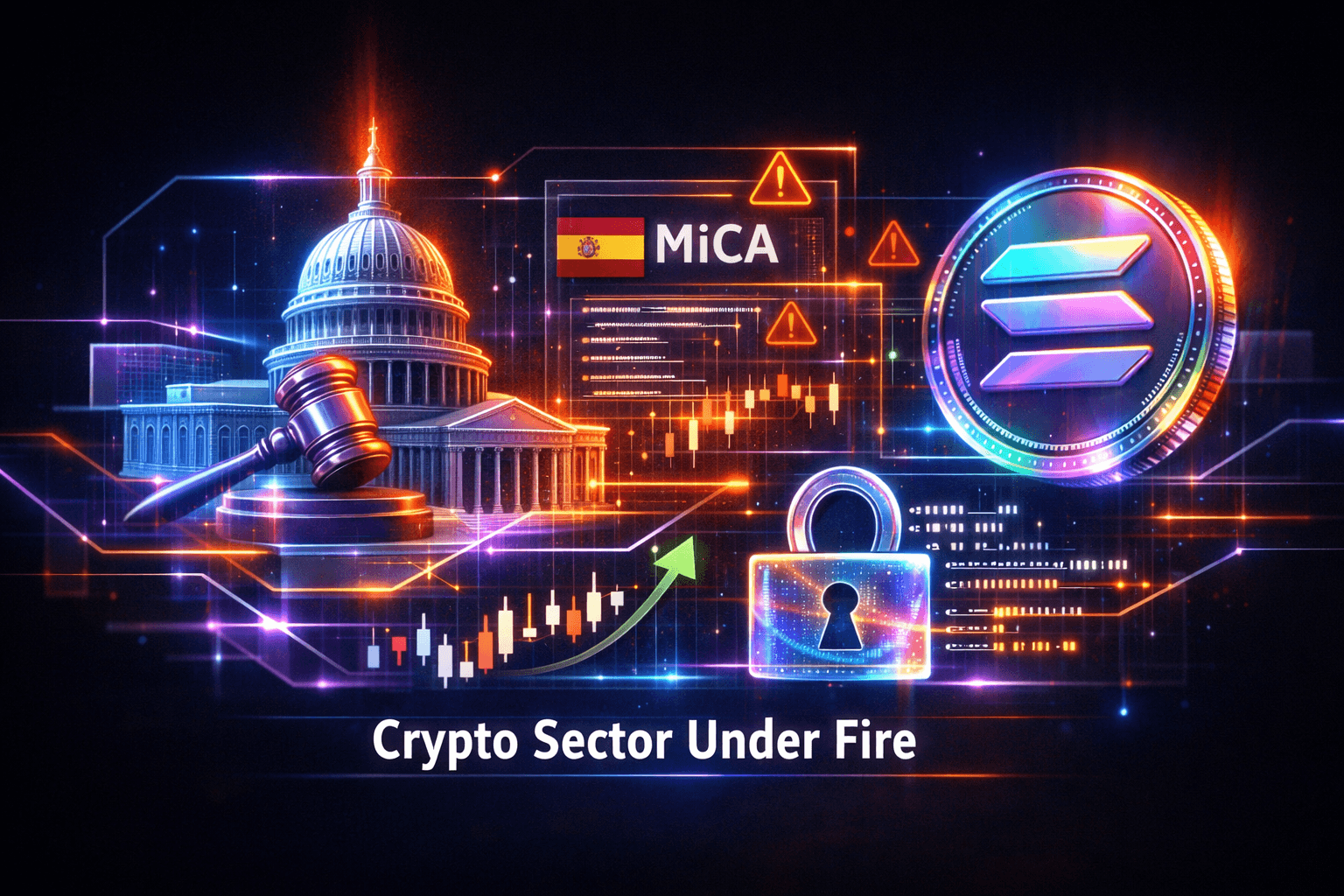
- Spain's regulator said there will be no extensions for non-MiCA compliant firms, increasing near-term licensing pressure for exchanges serving EU users.
- Policy friction in the U.S. continued, with Rep. Maxine Waters urging the Department of Labor to withdraw a proposal on alternative assets in 401(k) plans.
- On the positive side for infrastructure, the Linux Foundation and 18 other organizations launched Akrites to harden open-source projects against AI-powered threats.
Key Developments
U.S. policy push: 401(k)s and congressional scrutiny
Rep. Maxine Waters publicly asked the Department of Labor to withdraw a proposal that would expand access to alternative assets in 401(k) plans. That request signals possible tougher oversight if Waters gains committee authority, and it could slow institutional moves to include crypto-linked products in retirement accounts.
At the same time, senators sent questions to the CFTC over alleged deceptive advertising by Polymarket. Those probes add to regulatory uncertainty for prediction markets and other novel crypto use cases, and they could result in guidance or enforcement that affects how platforms market to U.S. users.
European enforcement: Spain takes a hard line on MiCA
Spain's regulator made clear there will be no exceptions or deadline extensions for firms that need to comply with MiCA licensing requirements. That tight timeline raises the likelihood of market exits or forced restructurings for exchanges serving EU customers without licenses.
For you, that means potential service disruptions in EU markets and increased legal and compliance costs for firms trying to meet MiCA standards quickly. It's a regulatory squeeze that could reshape liquidity paths into Europe.
Infrastructure and tech: Base stalls, open-source defense, and AI limits
Base suffered a second mainnet stall in two days, with operations resuming at 16:11 UTC after the 15:33 UTC alert. Repeated stalling on a major Layer 2 raises reliability questions investors will be watching closely.
On the defensive side, the Linux Foundation's Akrites initiative brings 19 organizations together to protect open-source maintainers from AI-driven attacks, a positive step for software supply chain security. Meanwhile OpenAI rolled out GPT-5.6 to a limited user set because of government constraints, which could slow broader AI tool adoption in crypto analytics for now.
What to Watch
Expect regulatory headlines to continue driving volatility into next week. Look for official responses and timelines from the Department of Labor and the CFTC, and watch how exchanges and custodians react to Spain's no-extension stance for MiCA compliance.
You'll want to monitor Base and other Layer 2 networks for further operational issues. Repeated stalls can influence developer sentiment and short-term token flows, and that could spill into correlated equities like $COIN related products.
Ethereum governance and funding also merit attention. A former Ethereum Foundation leader warned of a funding gap as the Foundation steps back, and new funding institutions or shortfalls could affect protocol maintenance and ecosystem grants. How will those funding discussions resolve, and when will you see concrete plans?
Bottom Line
- Regulatory pressure was the dominant theme today, with U.S. and EU moves increasing compliance risk for firms that serve retail and institutional clients.
- Technical reliability issues, exemplified by repeated Base mainnet stalls, are raising operational risk alongside policy uncertainty.
- Positive infrastructure steps like Akrites improve long-term security, but they don't offset near-term regulatory and governance headwinds.
- Short-term volatility is likely; analysts note that licensing deadlines and oversight probes are key catalysts to watch next week.
- Keep a selective approach, monitor official filings and status updates, and track network health metrics for the assets you follow.
FAQ Section
Q: What does Spain's no-extension MiCA stance mean for crypto exchanges? A: It raises the chance that noncompliant exchanges will have to exit EU markets or restructure quickly to meet licensing rules, which can disrupt liquidity and services.
Q: Should Base mainnet stalls concern you about Layer 2 adoption? A: Repeated stalls increase short-term operational risk and could slow developer migration, but they don't by themselves determine long-term adoption outcomes.
Q: How will U.S. political pressure on 401(k) crypto proposals affect retail access? A: If regulators withdraw or revise proposals, the timeline for broad retirement plan access to crypto-linked products could be delayed or tightened, affecting institutional distribution paths.