The Big Picture
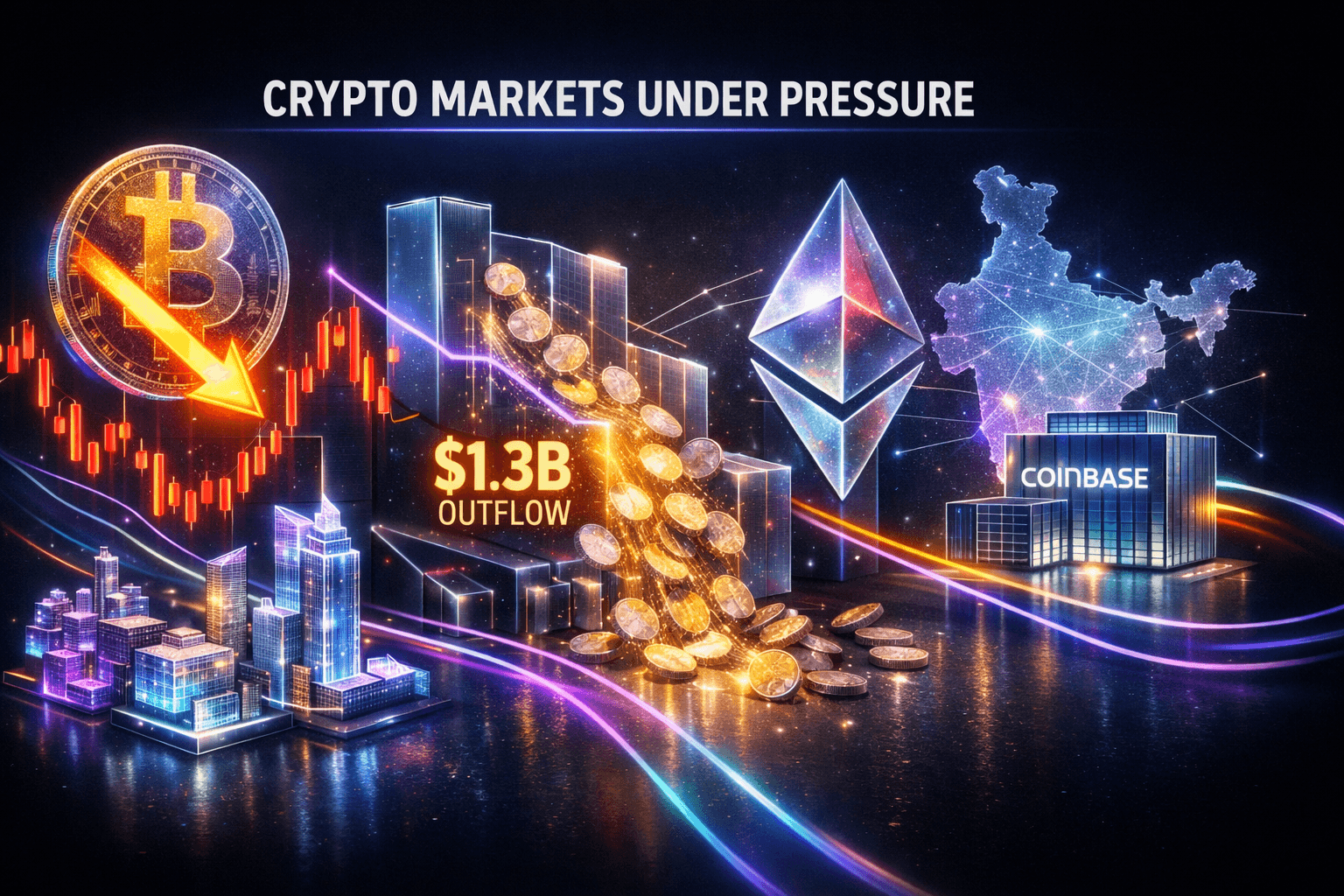
Bitcoin and ether started June under pressure, extending a weaker finish to May and dragging broader crypto sentiment lower. A high-profile $1.3 billion sale tied to BlackRock's IBIT product and geopolitical jitters around Iran amplified selling, even as U.S. equity futures showed some appetite for risk.
This matters because short-term selling and large-block exits can sap liquidity just when markets usually need it most, and they increase the chance you'll see wider spreads and volatile intraday swings. At the same time, longer-term structural stories such as tokenization forecasts and exchange expansion continue to push the sector's development forward.
Market Highlights
Quick facts and movers to watch this morning.
- Bitcoin ($BTC) slipped below $72,000 intraday as risk sentiment cooled after May's weakness, with ether ($ETH) also retreating, according to market reports.
- BlackRock-linked IBIT saw a roughly $1.3 billion block sale, which NYDIG described as a directional holder exiting at sub-market prices.
- Coinbase ($COIN) launched Indian rupee rails and INR order books, adding perpetuals access for local users as part of its expansion push.
- Citi projected the tokenized securities market could grow to $5.5 trillion by 2030, including up to $1 trillion demand for onchain U.S. Treasury bills and $2.6 trillion for tokenized stocks.
- Sui ($SUI) Foundation said a major upgrade fixed the bugs behind three outages, after the network experienced interruptions tied to a 1.72 update and an interim patch.
Key Developments
Price action, geopolitical risk and a large IBIT sale
Bitcoin dipping below $72,000 and ether losses set the tone for a cautious start to June. Cointelegraph highlighted comments from U.S. political developments tied to Iran, which pressured risk assets, while CoinDesk noted U.S. equity futures were higher, suggesting some cross-market divergence.
Separately, NYDIG's take on a $1.3 billion IBIT block sale points to an institutional-level liquidity event. Analysts note that selling at a discount for quick execution often signals a directional exit rather than routine rebalancing, and that can create short-term liquidity squeezes.
Exchange expansion and tokenization push the structural narrative
Coinbase's $COIN move to launch INR order books and rupee rails gives it dedicated liquidity for Indian users and expands perpetuals access. This is execution-focused expansion that could help on-the-ground adoption, and it illustrates how exchanges are chasing growth outside U.S. spot markets.
At the same time Citi's forecast that tokenized securities could reach $5.5 trillion by 2030 reinforces a long-term growth thesis for onchain capital markets. That projection includes large demand pools for tokenized Treasuries and stocks, which suggests infrastructure and custody providers could see sustained interest over the coming years.
Network resilience, privacy apps and regulatory signals
Sui's Foundation said a major upgrade resolved bugs behind three outages, which should restore confidence in network reliability but also raises questions about upgrade governance. Decentralized messaging app BChat, built on Beldex, is being pitched as a privacy-first alternative that goes beyond standard end-to-end encryption.
Meanwhile, ECB board member Isabel Schnabel flagged the digital euro as central to countering stablecoin risks, underscoring that central bank digital currencies and tighter stablecoin rules are likely to be a near-term regulatory theme.
What to Watch
Here are the catalysts and risk points that could move markets this week and beyond. You're going to want to keep an eye on macro prints, regulatory steps, and on-chain flows.
- U.S. macro: The jobs report and other May data could shift risk appetite and liquidity. Expect volatility if numbers surprise.
- Congress and regulation: Lawmakers return and comment periods around platforms like Genius are closing. Regulatory moves on stablecoins and listings could shift issuer behavior.
- On-chain liquidity: Watch large custody flows and institutional product trades, including any follow-up IBIT activity. Big block sales can reverberate through price discovery.
- Network health: Monitor any follow-up Sui announcements and bug fixes. If outages repeat, developer confidence and token performance could be affected.
- Exchange rollouts: Track how $COIN's INR rails perform in practice and whether local liquidity attracts derivative volumes. That will tell you if expansion converts into meaningful revenue.
Bottom Line
- Short-term sentiment is skewed toward caution as BTC and ETH slipped into June and institutional flow showed a large exit.
- Analysts note that big-block trades can widen spreads and increase volatility, so expect choppier sessions for the time being.
- Structural growth drivers, including tokenization and exchange expansion into markets like India, continue to support long-term adoption themes.
- Regulatory developments, particularly around stablecoins and CBDCs, remain a key risk to monitor as they could reshape product design and market access.
- Keep a selective approach to risk, and watch liquidity and on-chain flows closely if you trade or hold positions.
FAQ Section
Q: Should I be worried about Bitcoin and ether dipping below recent levels? A: Short-term weakness is notable and linked to macro and geopolitical headlines, but it does not by itself change long-term narratives. You should watch liquidity and institutional flows for clues about market stability.
Q: What does the $1.3 billion IBIT sale mean for markets? A: Market observers say the size and discounting suggest a directional holder exited, which can tighten liquidity temporarily and increase volatility around institutional products.
Q: Will Coinbase's India expansion matter to global crypto markets? A: Expanding INR rails and local perpetuals access can deepen regional liquidity and broaden user access, which supports adoption, but it will take time to move the global market materially.