The Big Picture
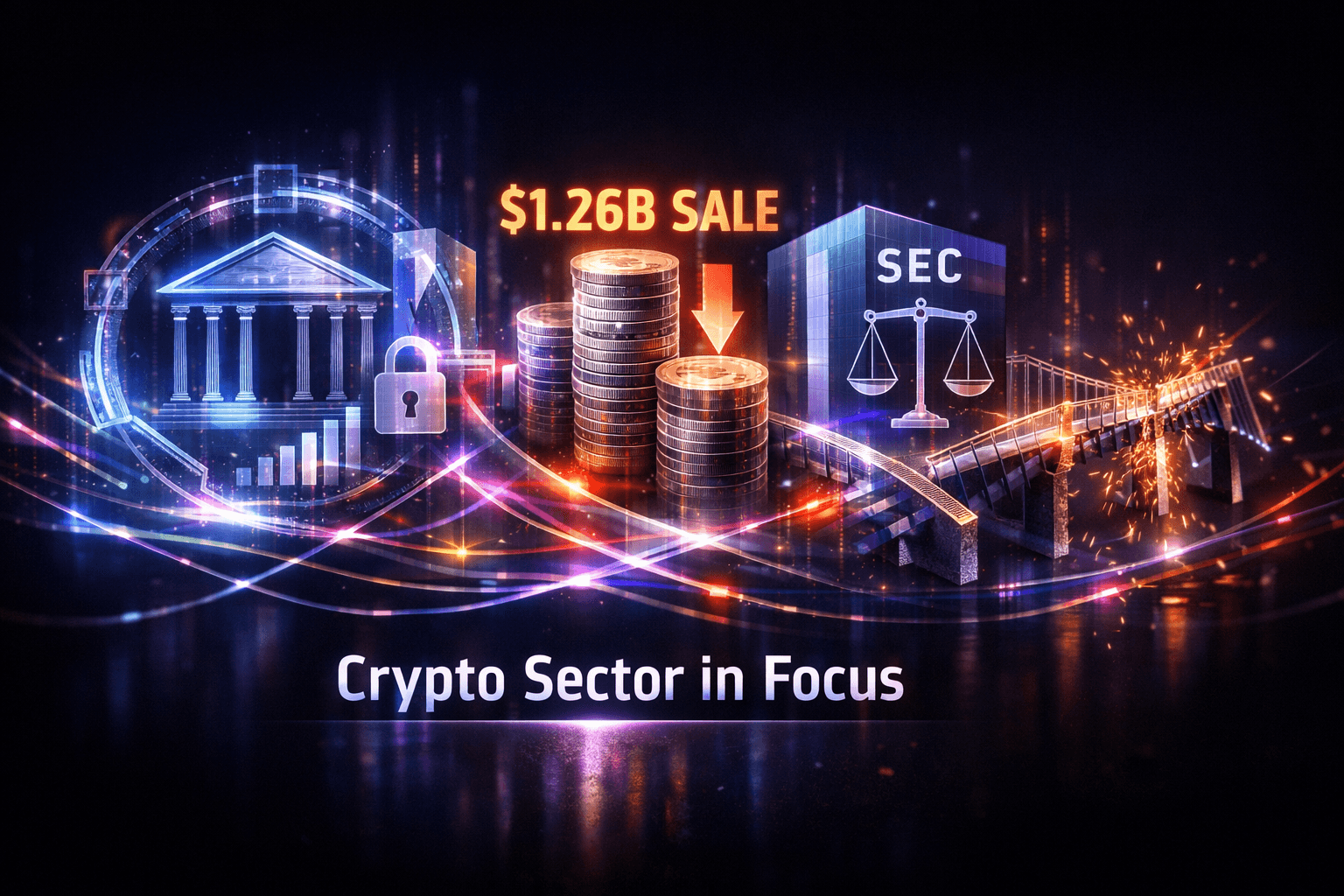
Institutional adoption and product rollout headlines competed with security breaches and enforcement actions on Sunday, leaving the cryptocurrency sector with mixed signals heading into the June trading week. You saw bullish momentum from Wall Street players embracing tokenization and regulated perpetual contracts, but you also saw a $1.26 billion IBIT block sale, a multi-million dollar bridge drain, and a major SEC lawsuit that underscore persistent risks.
Markets were closed for U.S. equities on Sunday, May 31, but crypto markets kept trading around the clock. Bitcoin was heading into the long weekend down roughly 3% for May, and that gave investors reason to balance opportunity with caution.
Market Highlights
Quick facts and price movement context to scan before you dive deeper.
- $IBIT, BlackRock's spot Bitcoin offering, saw an estimated $1.26 billion sale that traders say was likely a rapid exit by a large investor.
- $BTC was set to finish May about 3% lower, with analysts flagging upcoming U.S. PMI data as a near-term catalyst for price action.
- Institutional activity: DTCC chose Stellar's public ledger tech, lifting adoption headlines for $XLM, while Kraken announced plans to roll out regulated perpetual Bitcoin contracts to U.S. institutions soon.
- Security and enforcement: Gravity Bridge lost about $5.4 million in assets to a suspected key compromise, and the SEC sued the founder of Privvy over an alleged $12.3 million fraud.
- Cardano community tension: the Cardano Foundation canceled its 2026 summit after a treasury vote failed to reach the two-thirds threshold, leaving $ADA stakeholders disappointed.
Key Developments
Massive IBIT Sale Raises Questions
A roughly $1.26 billion sale of BlackRock's IBIT drew attention late Sunday, with reports suggesting a rapid exit by a large investor rather than a market-making basis-trade. NYDIG disputed the basis-trade explanation, citing the depth of the discount and the absence of a corresponding spike in CME futures volume, so analysts note the move is likely idiosyncratic rather than systemic.
What does this mean for you? Large ETF block trades can widen intraday spreads and pressure on-rail liquidity, so you should monitor ETF flows and secondary market depth into the week.
Regulated Perpetual Contracts and Wall Street Tokenization
Kraken said it expects to offer CFTC-approved perpetual futures tied to spot Bitcoin to U.S. institutional clients within about a month, signaling quicker product availability for trading desks. At the same time, the DTCC's choice to integrate with Stellar, according to the Stellar Development Foundation, signals institutional appetite for public chain tooling that supports compliance for onchain securities.
These items tie together a clear institutional trend: regulated infrastructure and tokenization are moving from proofs of concept into production. Will that bring more institutional capital into crypto markets? It could, but timing and regulatory clarity remain key.
Security, Enforcement, and Community Governance Headwinds
Security incidents and enforcement kept the bearish headlines flowing. Gravity Bridge lost an estimated $5.4 million in a suspected key compromise, siphoning USDC, ether, tether and native tokens before laundering some proceeds. Separately, the SEC sued the founder of Privvy over an alleged $12.3 million scheme, detailing allegedly misused funds.
Community governance also showed strain when the Cardano Foundation canceled its 2026 summit after a treasury vote fell short of the two-thirds threshold. These developments remind you that technological progress often runs alongside operational and governance challenges.
What to Watch
Here are the catalysts and risk points that could shape crypto markets when U.S. trading resumes on Monday, June 1.
- Data catalysts: U.S. PMI prints early next week could influence risk appetite and BTC price action, as analysts have pointed out.
- ETF and liquidity flows: Monitor secondary market spreads and reported block trades for $IBIT and other spot ETFs, since large exits can amplify volatility.
- Regulatory signals: Watch statements and hearings from the House Financial Services Committee on tokenization, and any follow-up from the SEC in the Privvy case.
- Product launches: Kraken's timeline for regulated perpetuals is a near-term event; institutional demand for those contracts will be an important read-through for derivatives liquidity.
- Security developments: Expect more analysis of the Gravity Bridge compromise and any onchain tracing that points to recovery or additional vulnerabilities.
Bottom Line
- Institutional adoption stories, such as DTCC's Stellar integration and Kraken's planned regulated perps, point to growing infrastructure maturity that could attract more capital.
- Major one-off events, like the $1.26 billion IBIT block sale, can create short-term dislocations but do not necessarily signal a market-wide trend.
- Security breaches and enforcement actions remain an important drag on sentiment and a reminder to monitor counterparty and protocol risk.
- Macro data next week, including U.S. PMI, could sway risk appetite and prompt renewed volatility in $BTC and correlated digital assets.
- Take a selective approach: data and infrastructure upgrades are constructive, but operational and regulatory risks continue to require attention.
FAQ Section
Q: What caused the large $1.26 billion IBIT sale? A: Reports indicate it was likely a rapid exit by a large investor rather than a coordinated basis-trade, and NYDIG noted the trade did not coincide with a spike in CME futures volume.
Q: Will Kraken's regulated perpetuals be available to retail traders? A: Kraken said the initial rollout is aimed at U.S. institutional clients within the next month; broader retail availability will depend on regulatory approvals and exchange decisions.
Q: How serious is the Gravity Bridge exploit for cross-chain security? A: The $5.4 million drain highlights persistent risks in bridging and key management, and analysts say onchain tracing and protocol fixes will be key to assessing long-term impact.