The Big Picture
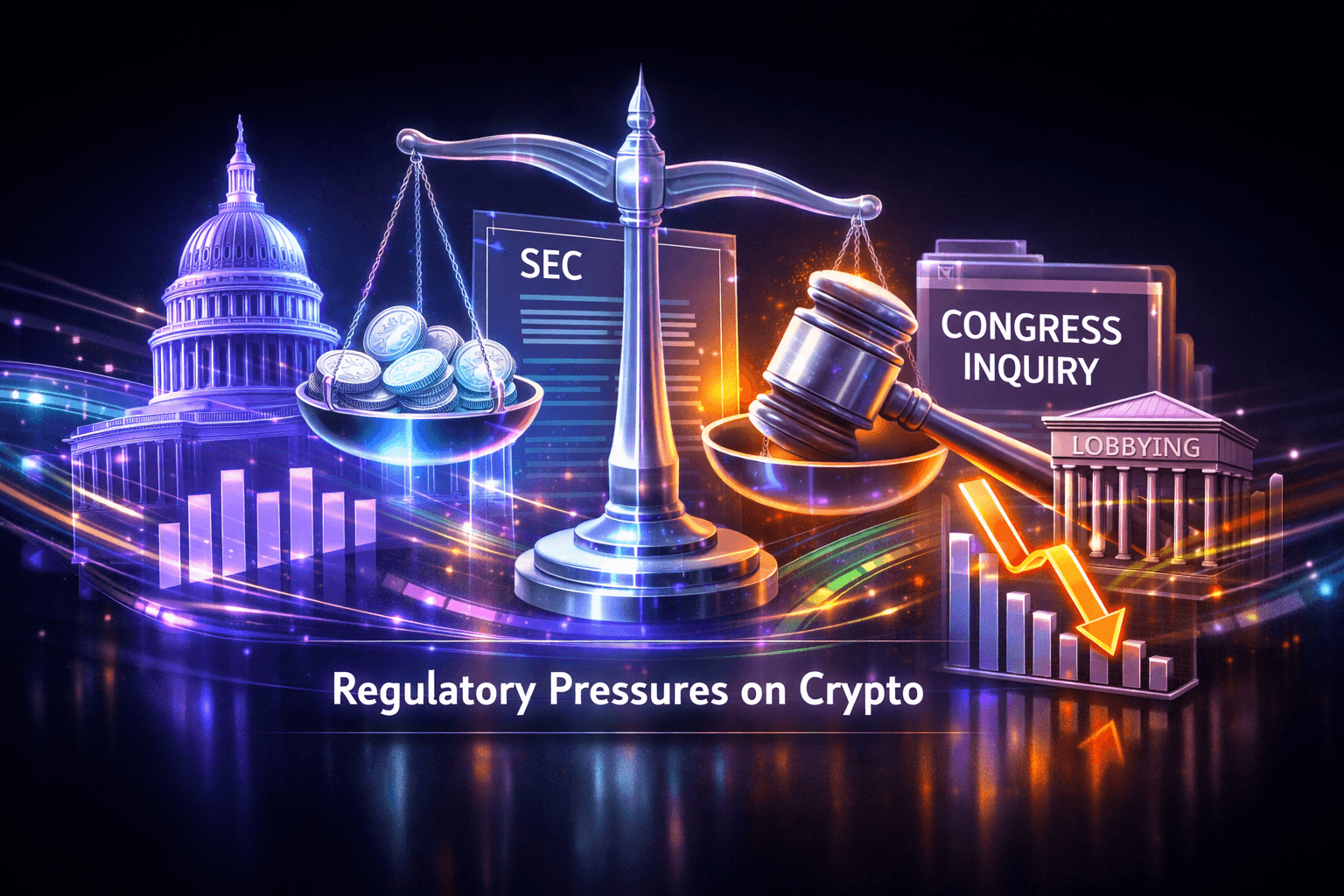
Regulation and legal pressure set the tone for the cryptocurrency sector today. The SEC paused plans for tokenized stocks and broader tokenized asset exemptions while courts and lawmakers kept prediction markets and exchanges under intense scrutiny.
These moves matter because they directly affect how crypto products get brought to market, how firms operate across state lines, and how institutional and retail demand might evolve. If you trade or follow crypto firms, today reinforced that policy risk is front and center.
Market Highlights
Key facts and takeaways you should note from today's headlines.
- SEC action: Reported delays to the SEC's innovation exemption and tokenized asset exemption were published today, signaling slower regulatory clarity for tokenized US stocks and third-party tokens.
- Kalshi and prediction markets: Kalshi launched Americans for Fair Markets as Congress opens an insider trading probe, and Kalshi and Polymarket lost bids to pause Nevada and Washington gambling enforcement at the Ninth Circuit.
- Bitcoin policy: A new strategic bitcoin reserve bill removed a 1 million BTC purchase target and added a 20-year lockup requirement, and a separate freshman congressman pushed to make a national Bitcoin reserve permanent.
- Corporate moves: Robinhood Crypto COO Tanya Denisova is leaving $HOOD after more than five years amid a sharp decline in crypto revenue for the platform.
- Mining and profile stories: F2Pool's founder controls about 11% of bitcoin's hashrate and confirmed a high-profile role in a SpaceX Mars mission, drawing attention to the growing crossover between crypto capital and commercial space ventures.
Key Developments
SEC delays tokenized assets and tokenized stocks
Bloomberg Law and Bitcoin Magazine reported the SEC is delaying an anticipated exemption that would clarify tokenized assets and the agency also put the innovation exemption, which could allow crypto versions of US stocks, on hold. Analysts note this slows the path to widely available tokenized equities and leaves issuers and exchanges in regulatory limbo.
For you, that means product roadmaps tied to tokenized stocks or third-party token frameworks may see longer timelines. The uncertainty could temper institutional issuance and secondary-market activity until regulators provide firmer guidance.
Prediction markets: legal losses and a new lobbying push
Kalshi and Polymarket lost bids today to halt state gaming cases in Nevada and Washington after the Ninth Circuit concluded federal derivatives oversight doesn't automatically shield prediction markets from state gaming laws. Kalshi responded by launching Americans for Fair Markets, an advocacy group aimed at shaping policy debates as Congress opens an insider trading probe into prediction markets.
This is a double-edged sword: litigation and probes increase near-term legal risk, while the lobbying push shows firms will escalate political engagement to protect business models. You'll want to watch legal filings and advocacy outcomes closely.
National bitcoin reserve bill and political momentum
Legislative activity brought a mixed outcome for Bitcoin proponents. The new strategic bitcoin reserve proposal dropped the previously discussed 1 million BTC purchase target but added a 20-year lockup and would require quarterly public proof-of-reserves plus third-party audits. Separately, Representative Matt Van Epps advocated making a national Bitcoin reserve permanent.
Those provisions tighten custody and transparency requirements, which could reassure some institutional actors. At the same time, removing an aggressive purchase target reduces the bill's immediate macro demand implications for $BTC.
What to Watch
Expect policy and court developments to influence price action and business decisions over the next several weeks. Which items will matter most to you?
- SEC timelines: Watch for formal rulemaking updates or new comment deadlines from the SEC on the tokenized asset exemption and innovation exemption. Those signals will shape product launches and exchange listings.
- Prediction market litigation and probes: Follow the Congressional probe into insider trading as well as state court dockets for Kalshi and Polymarket. Court rulings or consent decrees could set precedents for other market operators.
- Legislative progress on the bitcoin reserve: Track hearings, amendment votes, and audit requirements tied to the strategic bitcoin reserve bill. Proof-of-reserves rules could affect custody services and audit firms.
- Corporate earnings and revenue updates: $HOOD and other retail platforms will report results that reflect crypto revenue trends. You should monitor company commentary for guidance on product strategy and cost actions.
- Reputational and market signals: High-profile stories like the F2Pool founder's SpaceX role can shift narrative tone, but they won't substitute for regulatory clarity. Stay selective and look for confirmed filings and official comments.
Bottom Line
- Regulatory and legal friction dominated today's headlines, creating near-term uncertainty for tokenized assets and prediction markets.
- The SEC's delays reduce near-term clarity for tokenized stock products, and state-level gaming enforcement raises compliance costs for prediction markets.
- Legislative activity on a national bitcoin reserve shows political support but the revised bill narrows immediate macro demand implications by removing the 1 million BTC purchase target.
- Corporate shifts, including $HOOD's Crypto COO exit amid revenue pressure, reinforce that firms are already adjusting to a tougher near-term environment.
- For now, data suggests policy outcomes and court rulings will be the primary catalysts to watch, so keep a selective and risk-aware approach when you follow developments.
FAQ
Q: What does the SEC delay mean for tokenized stocks? A: The delay means regulators aren't ready to provide an innovation exemption yet, so tokenized versions of US stocks will face longer timelines and higher legal uncertainty.
Q: How does the Ninth Circuit decision affect prediction markets? A: The ruling indicates federal derivatives oversight may not block state gaming enforcement, increasing legal risk for prediction market firms and prompting more political advocacy.
Q: Will the national bitcoin reserve bill drive large purchases of $BTC? A: The revised bill removed a 1 million BTC purchase target and added a 20-year lockup plus audit requirements, which reduces the bill's immediate price impact while increasing transparency expectations.